


Netanyahu 'not correct' on Iran
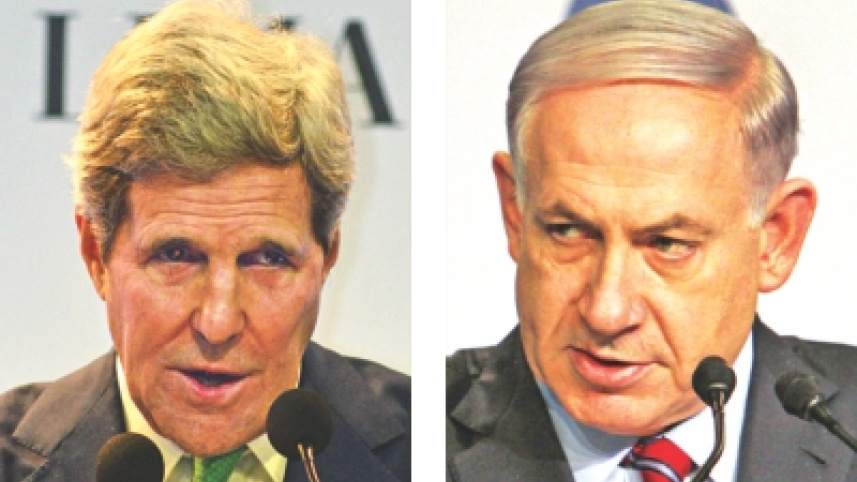
US officials on Wednesday questioned Israeli Prime Minister Benjamin Netanyahu's judgment and said his outspoken condemnation of efforts to secure an Iranian nuclear deal had injected destructive partisanship into US-Israeli relations.
Netanyahu has criticised the US and others for "giving up" on trying to stop Iran obtaining nuclear weapons.

The Israeli PM "may not be correct", US Secretary of State John Kerry said after attending the latest Iran nuclear talks in Geneva.
Netanyahu will address Congress next week, after an invitation by Republican leaders criticised by the White House.
Kerry was reacting to a speech in which Netanyahu had said the US and others were "accepting that Iran will gradually, within a few years, develop capabilities to produce material for many nuclear weapons".
"I respect the White House and the president of the United States but on such a fateful matter, that can determine whether or not we survive, I must do everything to prevent such a great danger for Israel," he said in a speech in Israel.
Having just concluded the latest round of nuclear talks with Iran in Geneva, Kerry told senators President Obama had made it clear the policy was not to let Iran get nuclear weapons and Netanyahu's might therefore not be correct.
The invitation for Netanyahu to speak before Congress has angered Democrats.
A spokesman for the White House warned against reducing US-Israeli relations to a party-political issue. Earlier, US National Security Adviser Susan Rice had gone further and said Netanyahu's visit was "destructive to the fabric of the relationship".
Netanyahu was invited by House Speaker John Boehner in what is seen as a rebuke to US President Barack Obama's Iran policy.
Meanwhile, The United States and Iran have a "mutual interest" in defeating the Islamic State group but the long-time foes are not cooperating to do so, Kerry said Wednesday.
"They are totally opposed to ISIL and they are in fact taking on and fighting and eliminating ISIL members along the Iraqi border near Iran and have serious concerns about what that would do to the region," Kerry told lawmakers, referring to ISIS by another acronym.
"So we have at least a mutual interest, if not a cooperative effort."
Kerry, who has been pivotal to Washington's drive to strike a deal to curb Iran's nuclear ambitions, said the United States had not asked Tehran to get involved in the fight against the ISIS group.
 For all latest news, follow The Daily Star's Google News channel.
Comments