The first reports of a political assassination: Revisiting newspaper coverage of Zia's killing

The Complete Reporter is an essential book for journalism students worldwide. Written by Julian Harris, Stanley Johnson and Kelly Leiter, the book includes Philip L. Graham's definition of news: 'News is the first rough draft of history.' The preliminary draft of history is contained in the pages of newspapers. It may not be authentic history, but it is certainly an important element of history. Few events in Bangladesh's political history have generated as much interest as the assassination of President Ziaur Rahman. Newspapers offer a valuable record of those turbulent days. Let us revisit the events through newspaper reports published immediately after his assassination in Chittagong.
Banner headlines and press notes on President Zia's assassination
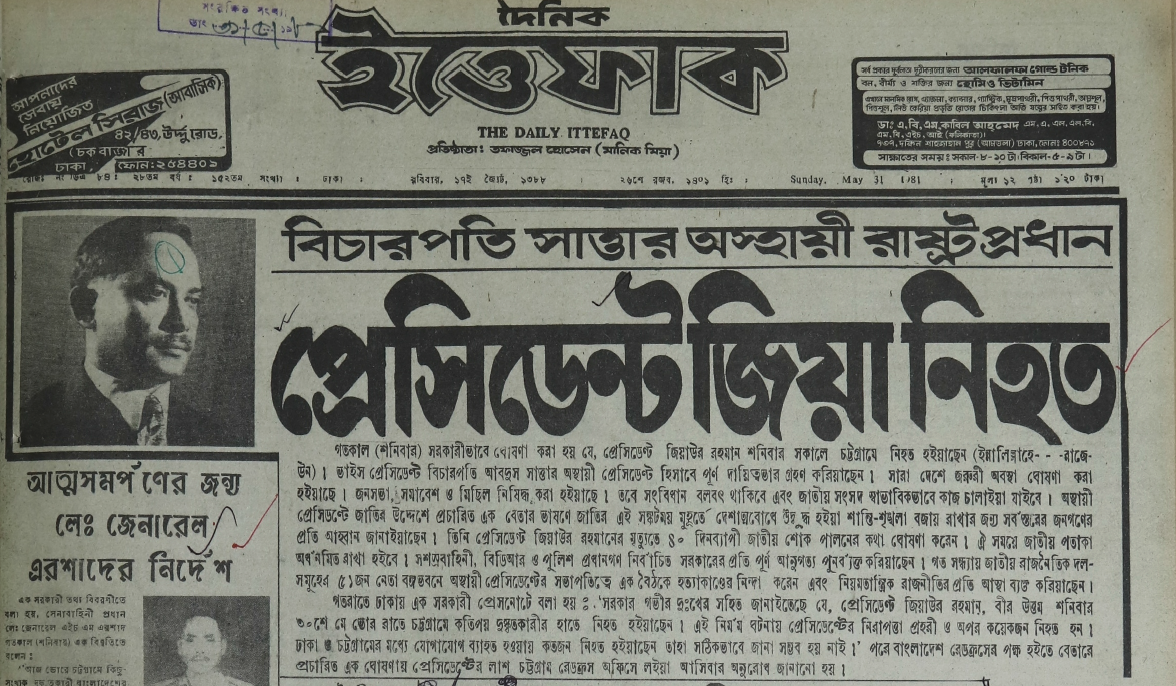
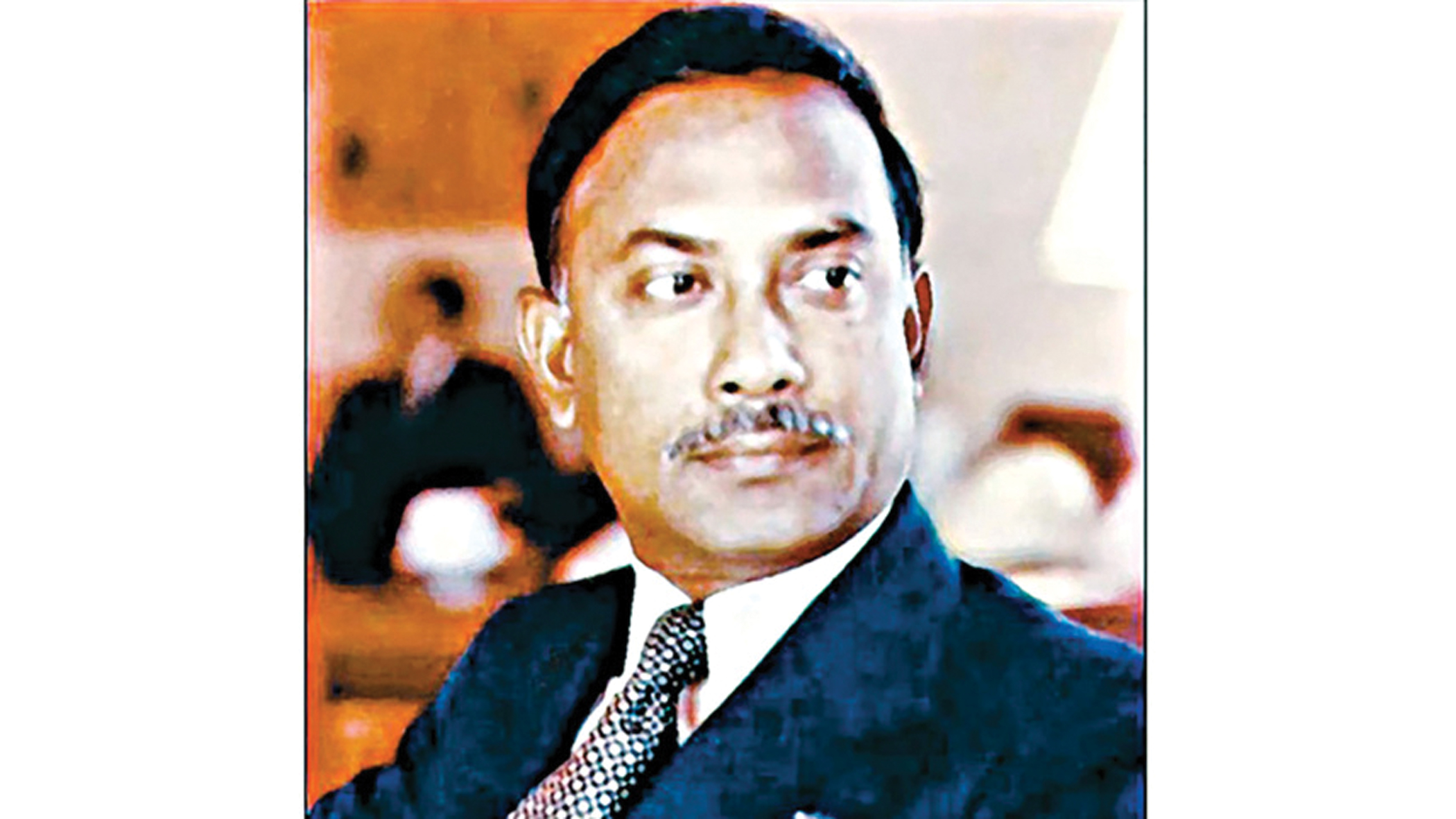
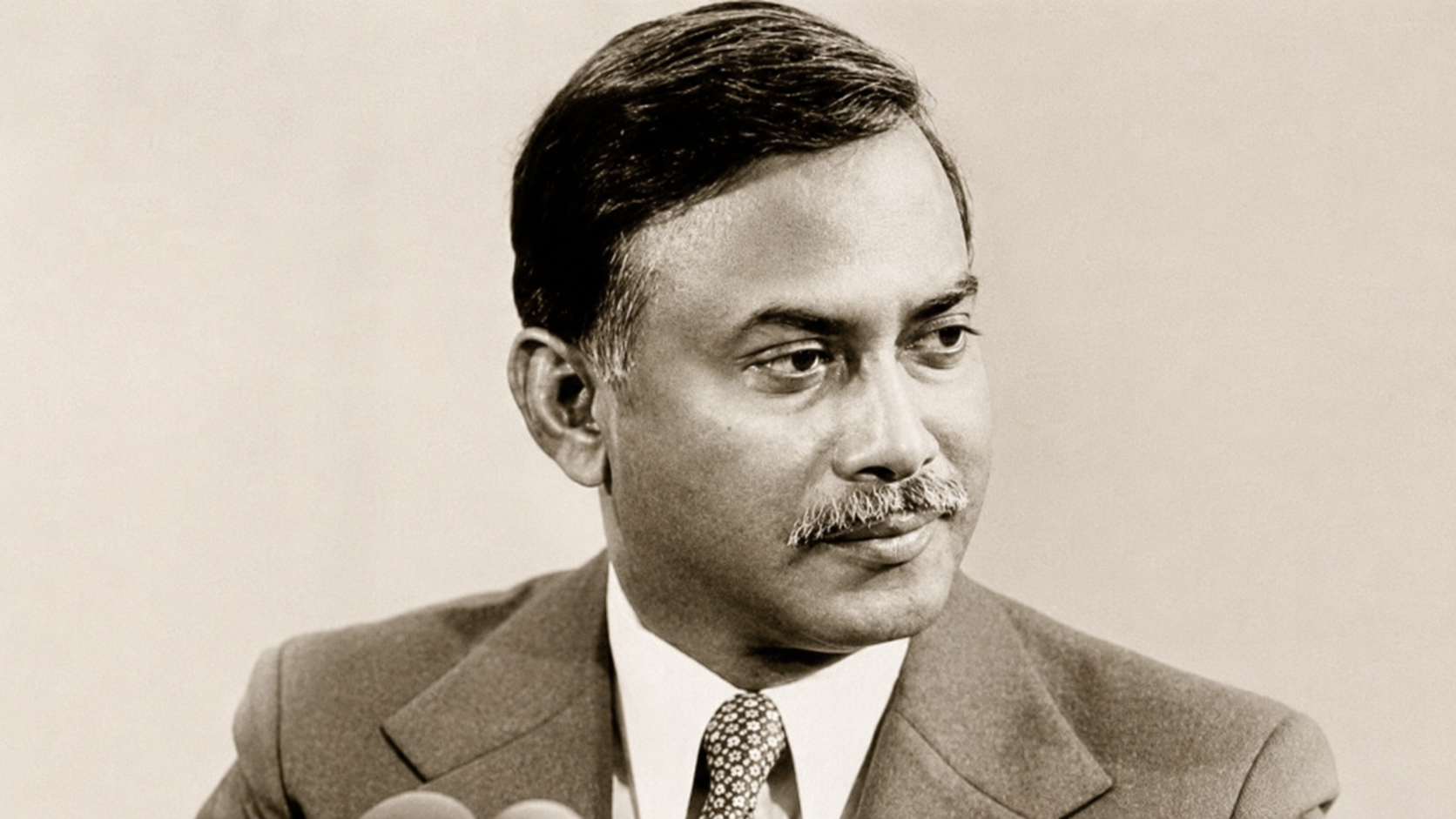
President Ziaur Rahman was assassinated at the Chittagong Circuit House in the early hours of May 30, 1981. The news of the assassination was first published in newspapers on Sunday, May 31. On that day, almost all of Bangladesh's daily newspapers carried eight-column banner headlines about the assassination of President Zia. For example, The Daily Ittefaq's main headline read: প্রেসিডেন্ট জিয়া নিহত (President Zia killed). At the same time, the news of Vice President Justice Sattar taking charge as interim President was also given prominence. In addition, news of the declaration of a nationwide state of emergency was published in the newspapers.
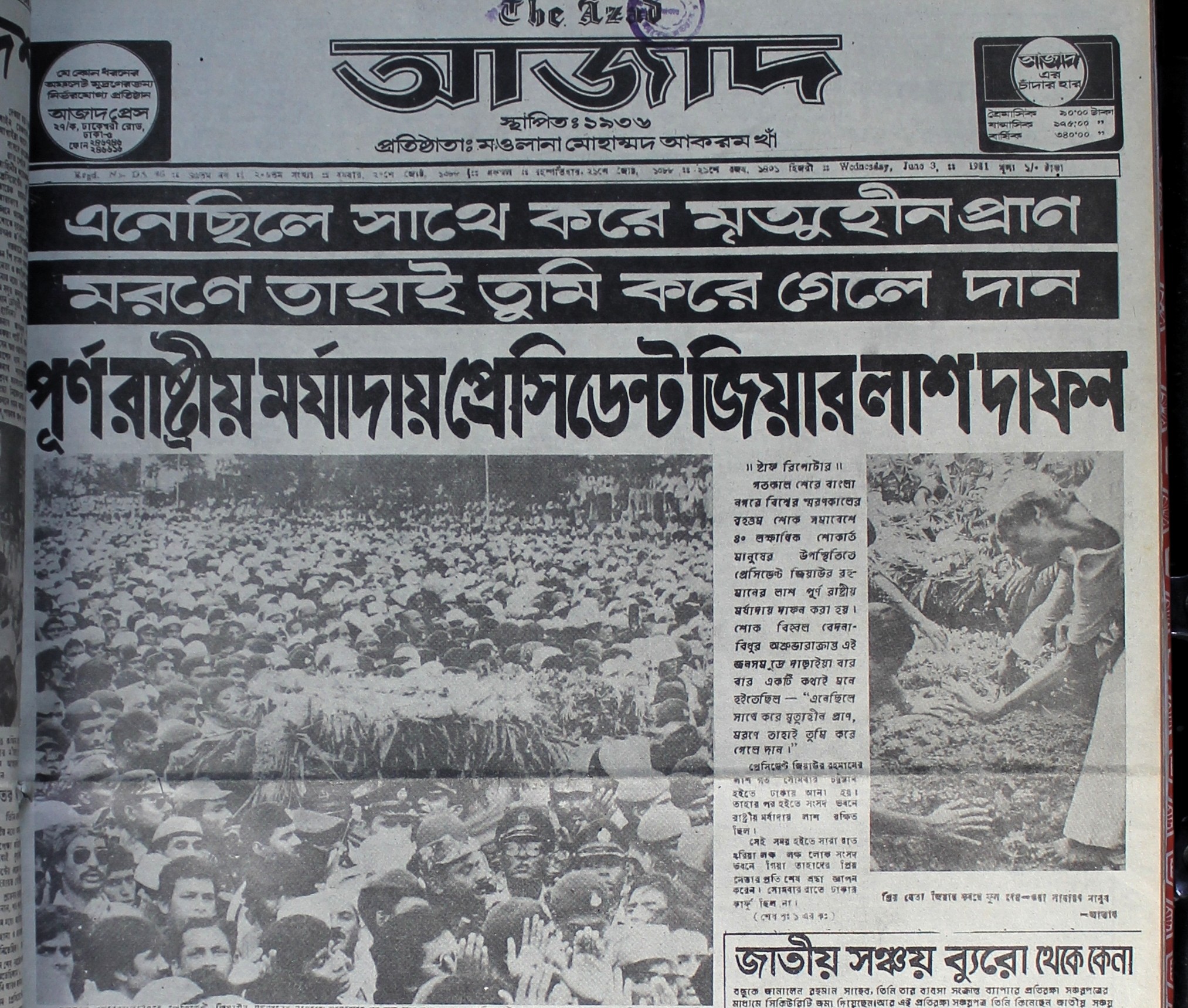
In 1981, Azad was one of the leading daily newspapers in the country. The newspaper also published the news of the assassination of President Ziaur Rahman with notable prominence. The main headline in Azad's eight-column banner was প্রেসিডেন্ট জিয়া নিহত (President Zia killed). The main news report in Azad stated: 'President Ziaur Rahman was killed by miscreants in Chittagong yesterday morning (Inna Lillahi wa Inna Ilayhi Raji'un). In accordance with Article 55(1) of the Constitution of the People's Republic of Bangladesh, Vice President Justice Abdus Sattar has assumed the responsibilities of the President. A state of emergency has been declared in the country. Justice Sattar announced his assumption of this responsibility in a radio address. The interim President has declared a 40-day national mourning period on the death of our great leader. During this time, the national flag will be flown at half-mast. The interim President said in his radio address that all regional and international agreements between the Government of Bangladesh and other countries will remain in force. The interim President appealed to the countrymen to maintain peace and order, inspired by patriotism. He said that all the ministers of the Council of Ministers were continuing their duties as usual' (The Azad, May 31, 1981).
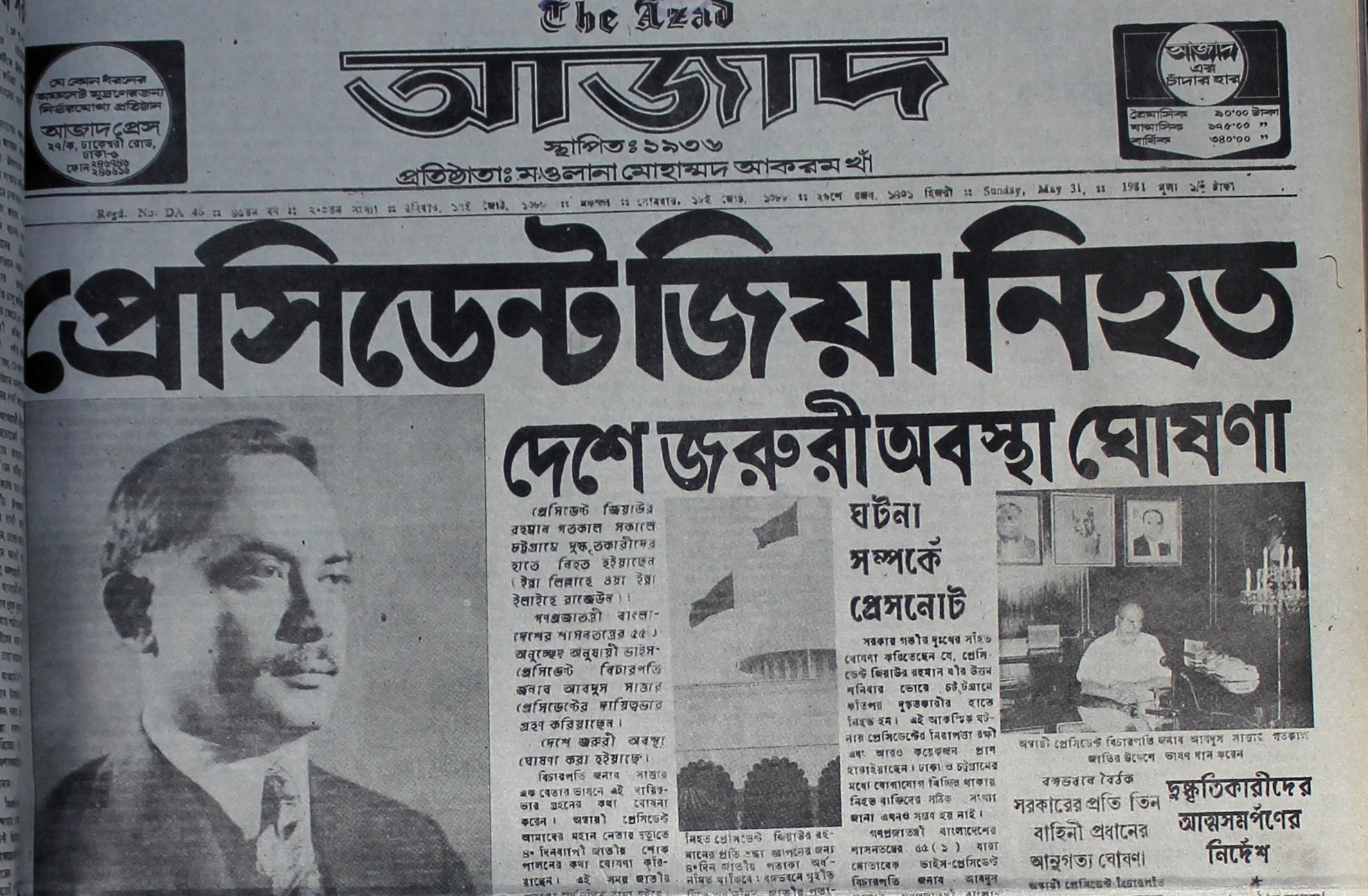
Another news item published in the newspaper on May 31, 1981, was noteworthy. At that time, it was the Government's custom to publish press notes on major incidents. Especially in cases of major political killings, and even when someone was killed in police firing during movements, a press note would be published on behalf of the Government. On May 31, 1981, such a press-note-based news report was published about the assassination of President Ziaur Rahman. It said: 'The Government announces with deep sorrow that President Ziaur Rahman Bir Uttam was killed by some miscreants in Chittagong early on Saturday morning. The President's security guards and several others lost their lives in this sudden incident. Since communication between Dhaka and Chittagong was cut off, it is not yet possible to know the exact number of those killed.
In accordance with Article 55(1) of the Constitution of the People's Republic of Bangladesh, Vice President Justice Abdus Sattar has assumed the duties of the President of the People's Republic of Bangladesh. An emergency meeting of the Council of Ministers was held immediately afterwards, and after reviewing the situation, the Acting President issued a nationwide declaration of a state of emergency. The Acting President and his Cabinet members monitored the situation throughout the day. The chiefs of the armed forces, Bangladesh Rifles, and the police reiterated their full allegiance to the country's constitutional Government. The Acting President and the Army Chief ordered the miscreants in Chittagong, who called themselves the Revolutionary Council, to surrender to the Government immediately. The Acting President informed the leaders of all national political parties about the situation yesterday evening. The assembled leaders condemned the assassination of President Ziaur Rahman in Chittagong and the politics of terror. The leaders expressed deep sorrow at the demise of President Ziaur Rahman and conveyed their condolences to the bereaved family. They prayed for the forgiveness of the soul of the President' (The Azad, May 31, 1981).
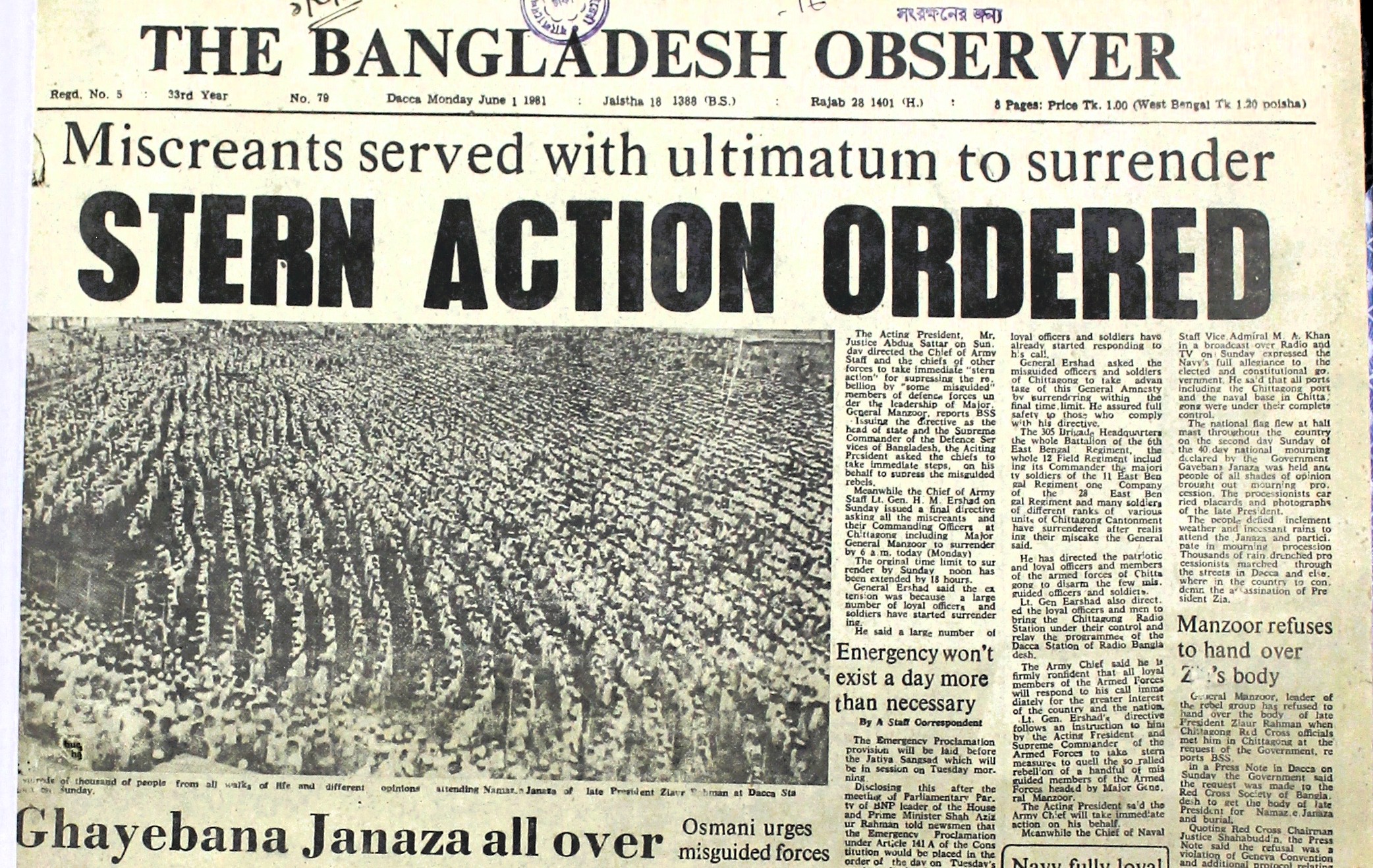
The newspaper of June 1, 1981, carried news of the assassination of President Ziaur Rahman, as it had on the previous day. On that day, the newspapers published photographs and reports of the President's funeral prayers in absentia. At the same time, there was a stern warning to GOC Major General M A Manzoor and his loyal officers to end the rebellion. Several news reports quoted Acting President Justice Abdus Sattar, Army Chief Hussain Muhammad Ershad, and General Muhammad Ataul Gani Osmani, commander-in-chief of the Bangladesh Armed Forces and of the Liberation Forces during the Liberation War. Their main theme was the need to end the rebellion. At the same time, there was a warning of stern action if the rebels did not surrender quickly.
On that day, the main headline of The Bangladesh Observer was 'Stern Action Ordered'. The report stated: The Acting President Justice Abdus Sattar on Sunday directed the Chief of Army Staff and the chiefs of other forces to take immediate "stern action" for suppressing the rebellion by "some misguided" members of the defence forces under the leadership of Major General Manzoor, reports BSS. Issuing the directive as the Head of State and the Supreme Commander of the defence services of Bangladesh, the Acting President asked the chiefs to take immediate steps, on his behalf, to suppress the misguided rebels. Meanwhile, the Chief of Army Staff, Lt Gen H M Ershad, on Sunday issued a final directive, asking all miscreants and their commanding officers in Chittagong, including Major General Manzoor, to surrender by 6 am today (Monday).
The original deadline for surrender by Sunday noon had been extended by 18 hours. General Ershad said the extension was due to a large number of loyal officers and soldiers beginning to surrender' (The Bangladesh Observer, June 1, 1981).
The Bangladesh Observer's description of the state's highest alert to suppress the rebellion in Chittagong was loud and clear. The coverage of this news was extensive and prominent, and a statement by the Chief of the Navy was later added. In it, the Chief of the Navy, Vice Admiral M A Khan, said in a radio and television address that the navy was completely loyal to the elected Government. At the same time, he announced that Chittagong Port and the naval base were under his complete control.
On that day, The Bangladesh Observer also published an important report about Manzoor's refusal to hand over the body of President Ziaur Rahman. The headline was: 'Manzoor refuses to hand over Zia's body'. The report stated: General Manzoor, leader of the rebel group, has refused to hand over the body of late President Ziaur Rahman when Chittagong Red Cross officials met him in Chittagong at the request of the Government, reports BSS. In a press note issued in Dacca on Sunday, the Government said it had requested the Bangladesh Red Cross Society to arrange for the late President's body to be brought for Namaz-e-Janaza and burial.
Quoting Red Cross Chairman Justice Shahabuddin, the press note said that the refusal violated the Geneva Convention and the Additional Protocol relating to non-international armed conflicts.
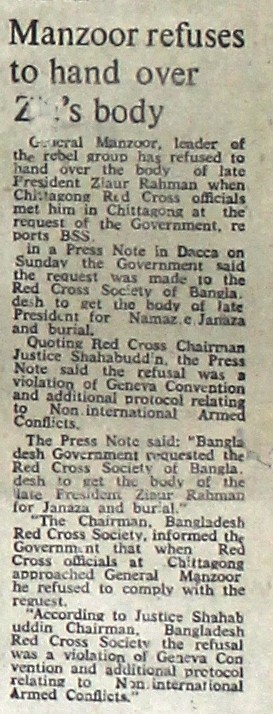
The press note stated: The Bangladesh Government requested the Bangladesh Red Cross Society to recover the body of the late President Ziaur Rahman for Janaza and burial. The Chairman of the Bangladesh Red Cross Society informed the Government that, when Red Cross officials in Chittagong approached General Manzoor, he refused to comply with the request. According to Justice Shahabuddin, Chairman of the Bangladesh Red Cross Society, the refusal was a violation of the Geneva Convention and the Additional Protocol relating to Non-International Armed Conflicts (The Bangladesh Observer, June 1, 1981).
This report deserves particular attention. Following the assassination of President Ziaur Rahman, GOC Major General M A Manzoor and his fellow officers refused to hand over the President's body. This remains one of the starkest facts surrounding the events of May 1981. The body of Ziaur Rahman, along with those of two security officials killed in the attack, was buried near Chittagong in a manner that reflected a profound disregard for the dead. After the rebellion was suppressed, the bodies of President Ziaur Rahman and the two security officials were recovered from a shallow ditch in Rangunia.
The end of the rebellion and media coverage
Following the killing, Major General MA Manzoor assumed responsibility for the incident. However, some former army officers have argued that Manzoor may not have been involved in planning the assassination. In his memoir Amar Sainik Jiban: Pakistan Theke Bangladesh, retired army officer Manzur Rashid Khan quotes another officer who had spoken directly with Manzoor. When asked about the killing of President Zia, Manzoor reportedly replied: 'It was beyond my control, they have done it, but I owned it. I'm responsible for everything' (p. 143). That, however, is a separate chapter of the story.
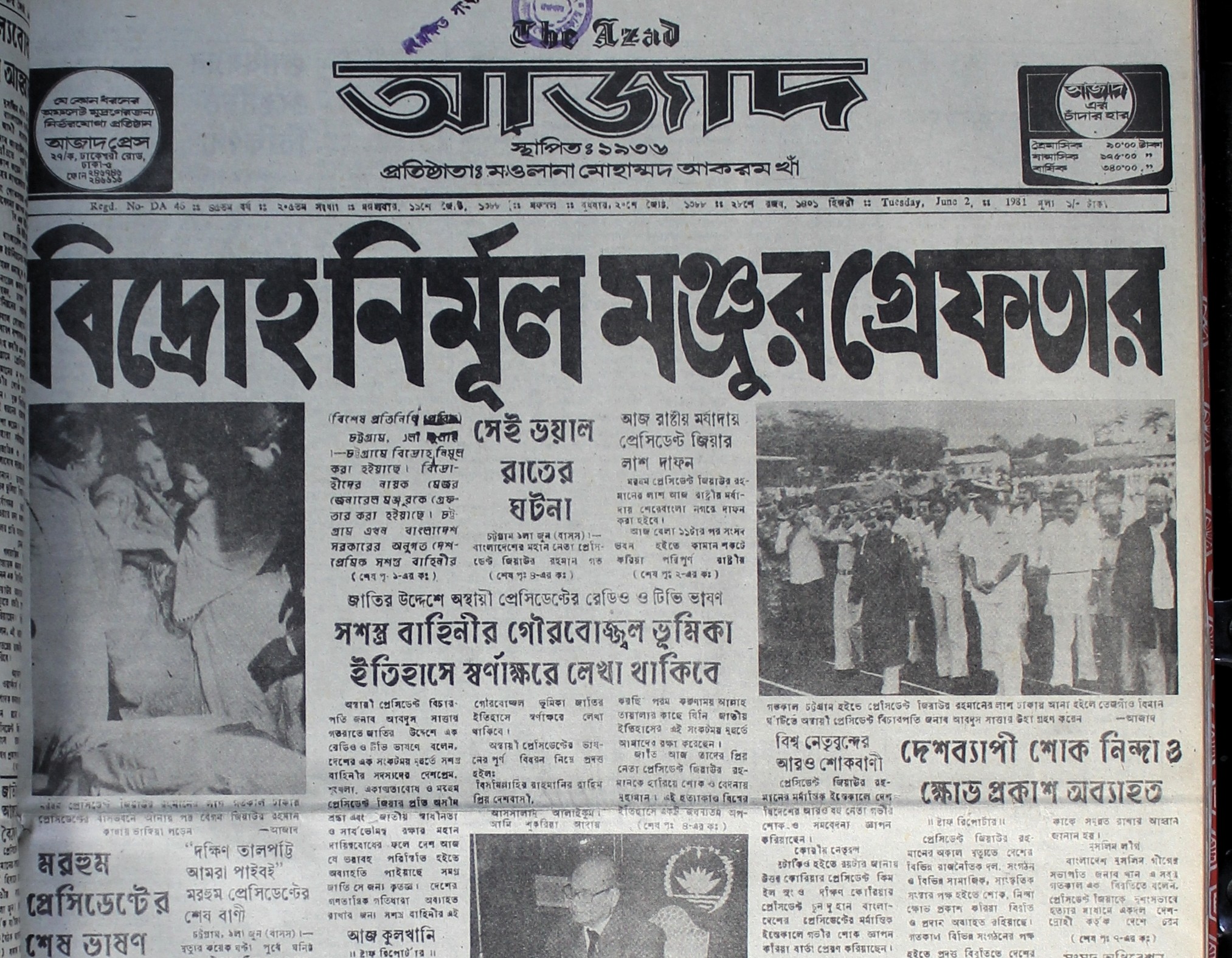
During the failed rebellion, Chittagong was cut off from Dhaka. As a result, people across the country were eager to know what had actually happened there. Once the rebellion ended, newspapers began reporting the circumstances surrounding this tragic killing.
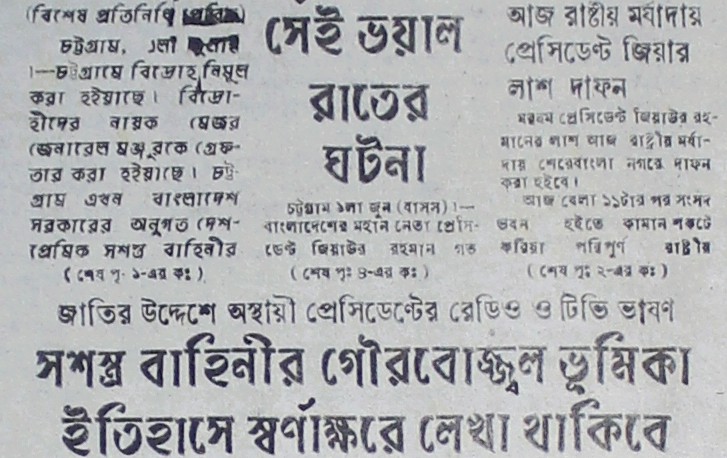
We can refer to a report published in The Azad on June 2, 1981. The report, titled সেই ভয়াল রাতের ঘটনা (The incident of that terrible night) and supplied by the government news agency Bangladesh Sangbad Sangstha (BSS), stated: The great leader of Bangladesh, President Ziaur Rahman, was killed by a group of errant army commandos at the Circuit House in Chittagong at around 4 am on May 30. The commandos first fired several rockets at the Circuit House. They shot and killed several police guards before entering the protected area. The miscreants surrounded the Circuit House from all sides and first killed a police officer named Dulal.
They immediately went upstairs in the Circuit House under the cover of heavy gunfire. BNP Secretary-General Professor Badruddoza Chowdhury said that the night had been completely normal and that he had sensed nothing unusual until the tragic incident occurred. He said that at around 4 am, he woke from his sleep to the sound of a sudden rocket attack and tried to understand what was happening outside. But within a few minutes, the entire Circuit House area started shaking from the explosions, and nothing could be seen except smoke. Professor Badruddoza Chowdhury, along with former State Minister for Social Welfare Syed Mohibul Hasan, was staying in the room opposite the President's on the second floor of the Chittagong Circuit House.
Mr Hasan said that the miscreants were firing so rapidly that nothing could be heard except the terrible sound of gunfire. Within a few minutes, the miscreants reached the second floor. He said that they were waiting for death amid the rain of bullets. Within moments, the miscreants killed the sentry guarding the door of the President's room. Professor Badruddoza Chowdhury said that hundreds of bullets were entering their room and striking their beds and windows. They were simply waiting for the final moment of their lives. He further said that, after this, the late President's personal secretary, Colonel Mahfuz, was the first to realise that the miscreants had left the Circuit House.
Former Women's Affairs Minister Mrs Amena Rahman was at the Circuit House that night. She said that the miscreants killed the President within a few minutes and left. At the time of the incident, hundreds of bullets entered her room through the door, and she went to the bathroom to perform ablution before offering prayers.
BNP Sramik Dal leader Mizanur Rahman was also at the Chittagong Circuit House that night. He said that, after the miscreants had killed the President and others and left, he came out of his room and met Colonel Mahfuz. Later, they saw the President's bloodied body lying on the floor.
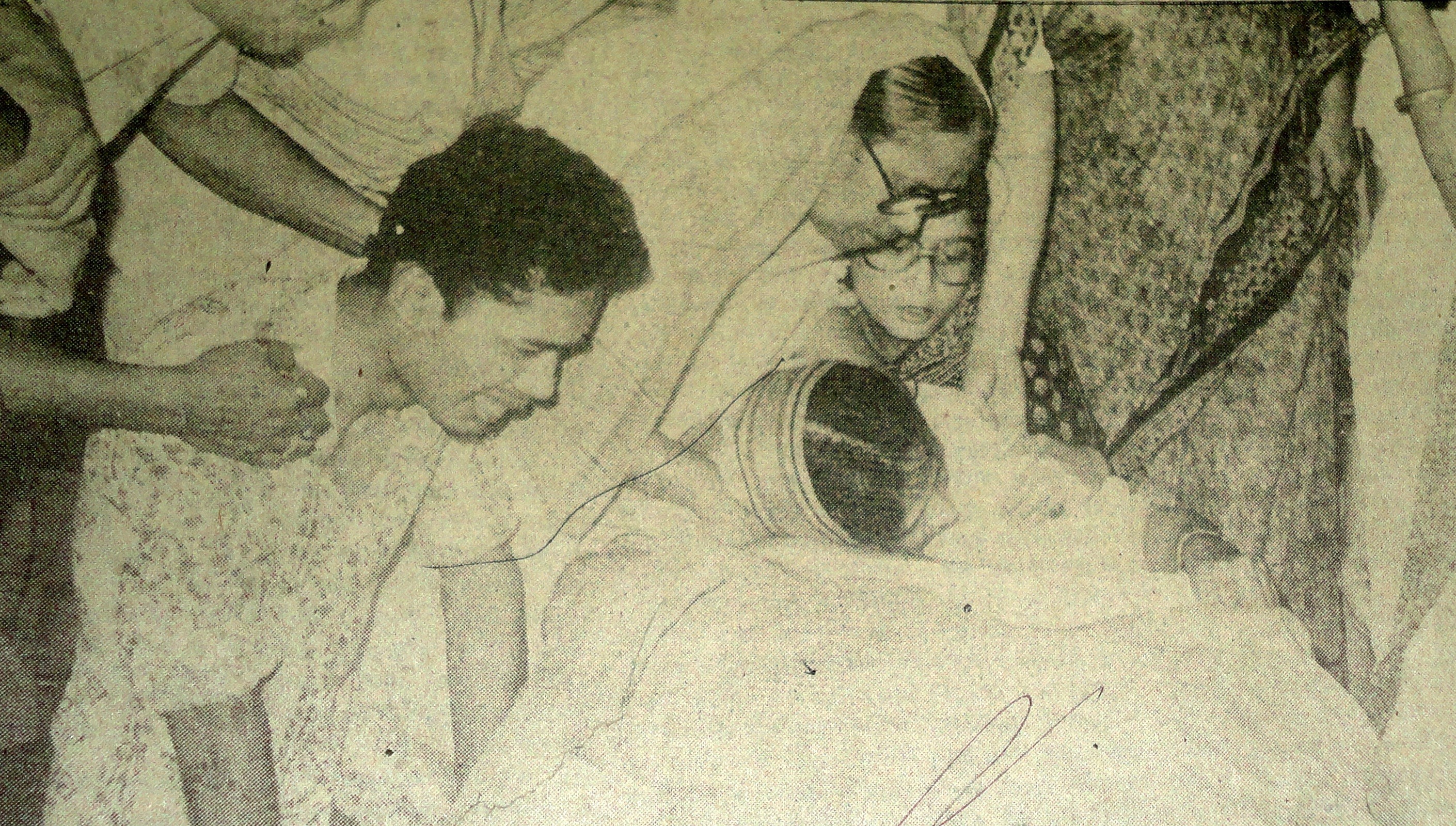
Professor Badruddoza Chowdhury said that at around 4:30 in the morning, he and Mohibul Hasan came out of their room and saw the bloodied body of the President. The body was lying a step away from the door of the President's room.
He said that the President had probably come out of the room after hearing the sound of gunfire and was immediately shot dead by the miscreants. He was wearing white pyjamas and a Punjabi (Azad, June 2, 1981).

Following the assassination of Ziaur Rahman, a three-member civilian commission was formed to investigate the incident. After its report was published in August 1981, newspapers across the country carried more detailed accounts of the President's assassination.
More than four decades later, these newspaper reports remain valuable historical sources for understanding one of the most consequential episodes in Bangladesh's political history. Yet much work remains to be done. A deeper examination of contemporary newspaper accounts, official documents, personal memoirs, and archival records may help future researchers develop a more complete understanding of the events surrounding the assassination of President Ziaur Rahman and its wider implications for Bangladesh's political trajectory.
Rahat Minhaz is an Assistant Professor of Mass Communication and Journalism at Jagannath University. He can be reached at minhaz_uddin_du@yahoo.com
Send your articles for Slow Reads to slowreads@thedailystar.net. Check out our submission guidelines for details.
Professor Anisur Rahman: The economist who put people at the centre
APO 433: Dhaka’s forgotten post office of World War II
Dadabhai Naoroji: The man who exposed the economics of British colonialism

Untold stories of 1971 through private letters
The extraordinary journey of Atish Dipankar Srigyan

Forgotten story of Jeanette Van Tassel, the American woman who flew over Dhaka in 1892
Beyond 1947 / A personal essay
Abul Mansur Ahmad / A global quest in search of a nation

Chand Bibi and the forgotten history of Muslim women’s political resistance