


As Iran war boosts Netanyahu politically, Gaza pays the price

In the near future, when historians will look back on the 2026 Middle East conflict, they will probably note many consequences -- global oil markets in turmoil, a scramble among regional powers, and the terrifying expansion of war across state borders.
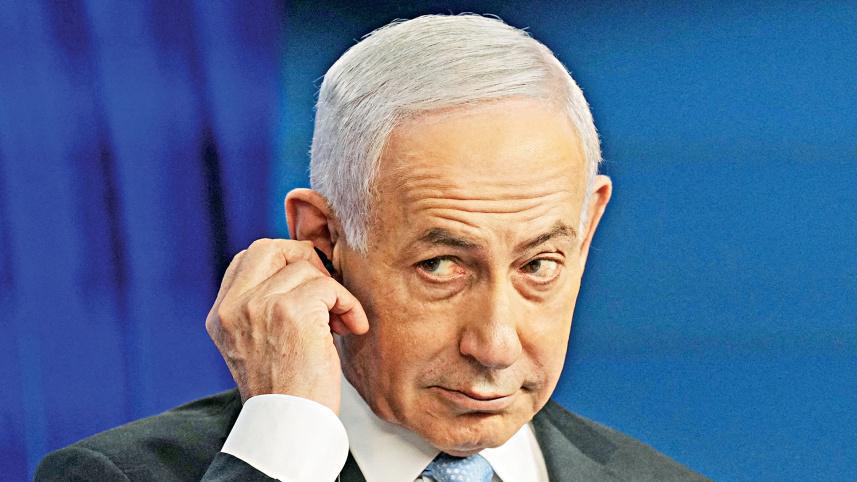
But one truth already stands out: Benjamin Netanyahu is emerging as the war’s biggest political winner. The biggest loser? Gaza, yet again.

Only months ago, Netanyahu appeared politically vulnerable. His government was widely blamed for the catastrophic intelligence failures that enabled the Hamas attack on October 7, 2023. At home, mass protests over judicial reforms, corruption charges, and growing public anger had eroded his credibility.
All these factors were putting his prospect in the next election in jeopardy.
Then came the Iran war, and everything changed.
The joint US–Israel military campaign on Iran, and Iran’s subsequent retaliation, have not only escalated the conflict regionally but also reshaped Israeli domestic politics in Netanyahu’s favour.
Four out of every five Israelis (82%) now support the war on Iran. Among Jewish Israelis, more than nine out of ten (93%) back the strikes, and nearly three out of four (74%) trust Netanyahu to lead the military campaign effectively.
Even his former political rivals have rallied.
Yair Lapid, Israel’s former prime minister and once Netanyahu’s fiercest critic, said: “In moments like these, we stand together and we win together. There is no coalition and no opposition, only one people and one IDF, with all of us behind them.”
Naftali Bennett, another former prime minister and former political competitor of Netanyahu, echoed the sentiment: “I’ve never been prouder to be an Israeli. I give my full backing to the government and its leader. There is no left and no right.”
Their support signals the war’s power to unify Israeli politics around Netanyahu in a way that few other events could.
Netanyahu has long built his political identity around this so-called “existential threat” to Israel. For decades, he warned that Iran posed the gravest danger to Israel, opposed the 2015 nuclear deal, and lobbied the United States for military confrontation.
Now, that confrontation is underway -- largely on his terms -- and it has delivered exactly what he needed: political consolidation, renewed public trust, and the appearance of national unity.
With a soaring approval, Netanyahu’s prospect in the next election has certainly increased. Israeli Minister of Science and Technology Gila Gamliel recently said that national elections will likely be brought forward to late June or July -- a move that could allow the Netanyahu bloc to leverage the ongoing Iran war.
Also, Netanyahu now has the domestic mandate to continue military operations not only in Iran but also in Gaza, allowing policies that have already devastated the Strip to persist with minimal pushback at home.
And Gaza is not the only Palestinian territory facing intensifying pressure. In the occupied West Bank, settlement expansion has accelerated dramatically, accompanied by infrastructure and road-building projects that critics say could permanently fragment the territory.
Earlier this year, Israel’s finance minister Bezalel Smotrich declared that tightening Israel’s grip on the West Bank was meant “to kill” the idea of a Palestinian state.
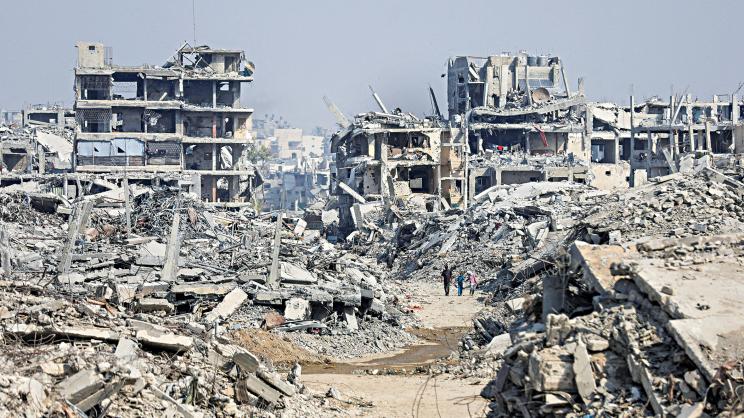
Since October 2023, more than 72,000 Palestinians have been killed and over 170,000 injured. Even amid the Iran war, violence in Gaza continues unabated.
Between February 26 and March 8, at least 18 Palestinians were killed and more than 40 injured in airstrikes, shelling, and gunfire across Gaza. On March 8, Israeli strikes killed six people, including two women and a young girl, and wounded at least ten more, many of them displaced families sheltering in tents when shells hit.
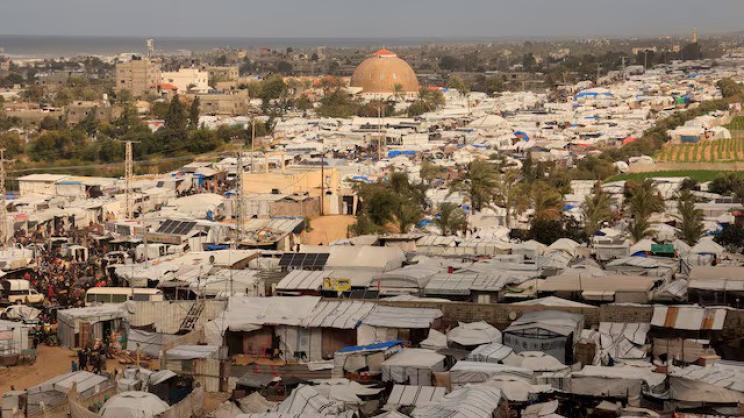
The overall humanitarian crisis too has worsened.
 For all latest news, follow The Daily Star's Google News channel.
 About three out of every four residents (77%) face severe food insecurity, while water shortages and limited electricity cripple hospitals and sanitation services.
NGO operations, which provide half of food aid and three-fifth of field hospital services, are hampered by closures and administrative hurdles. Tens of thousands remain homeless, and healthcare for chronic illnesses, maternal care, and cancer treatment is critically disrupted.
Diplomatic efforts have stalled as well. Ceasefire and disarmament talks with Hamas are on hold as the Iran war dominates headlines, and global attention -- including the UN and Western powers -- has shifted northward. Gaza’s plight is increasingly invisible, deprioritised even as the crisis deepens.
In previous decades, Washington often attempted to impose some restraints on Israeli policy toward Palestinians. Today, however, the United States has largely fallen silent as the war with Iran reshapes regional priorities.
Meanwhile, the Palestinian Authority -- long criticised for its weakness -- appears increasingly marginalised and unable to influence events on the ground.
Against this backdrop, with every political gain Netanyahu achieves, one question lingers: what becomes of a people whose suffering goes largely unseen, whose daily lives are throttled not only by bombs but by scarcity, administrative barriers, and a world whose attention has moved elsewhere?
Comments