


From kingmakers to the margins: Miya community’s fight for survival in Assam

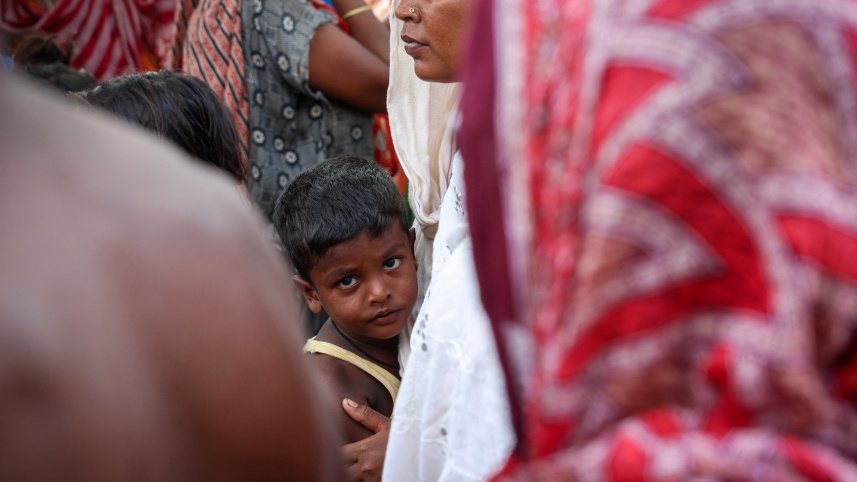
As Assam approaches the Assembly elections this Thursday (April 9, 2026), the Miya community -- Bangla-speaking Muslims who form the majority of the state’s Muslim population -- faces an unprecedented crisis of political and social survival.
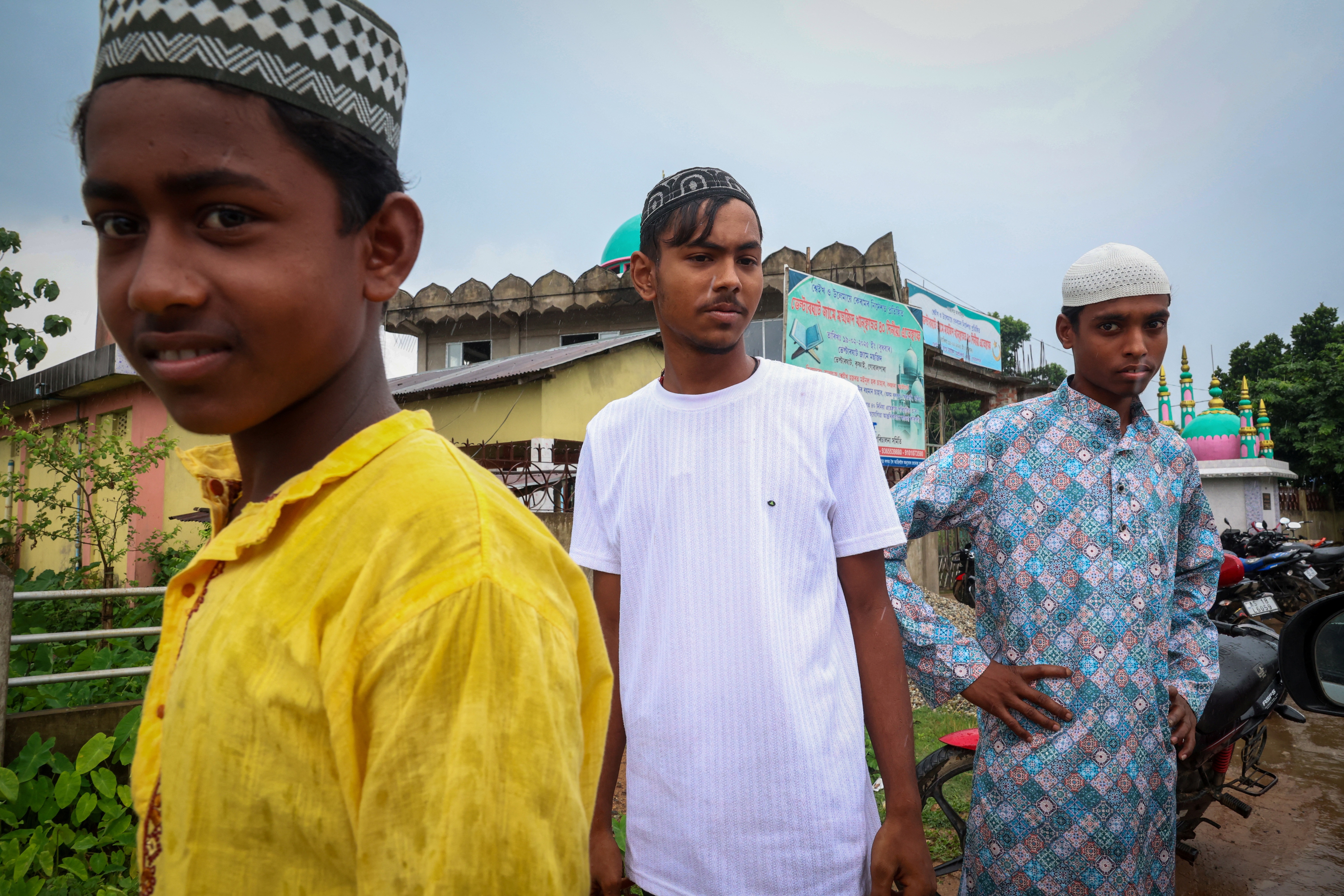
Descendants of early 20th-century migrants from then-East Bengal districts such as Mymensingh, Rangpur, Tangail, Comilla and Rajshahi, the Miya were settled by the British in the Brahmaputra Valley to cultivate “waste lands,” riverine char areas, and low-lying flood-prone tracts that many local cultivators avoided.

Over generations, they became integral to Assam’s agricultural economy and adopted Assamese as "Na-Asamiya", or Neo-Assamese, in the 1951 census to facilitate local integration.
However, despite decades of settlement, the community is still portrayed as foreigners or illegal migrants, with anti-Bangladesh rhetoric framing them as a demographic threat rather than long-settled residents.
Muslims make up roughly 35 percent of Assam’s population, and the Miya community constitutes an estimated 60 to 65 percent of them, or around 70 to 80 lakh people. They are concentrated primarily in lower Assam districts such as Barpeta, Dhubri, Goalpara, Nagaon, and Morigaon, while their presence in upper Assam remains limited.
This geographical concentration has shaped their political role, allowing them to dominate certain constituencies in lower Assam while having little influence in upper Assam, which has increasingly become the political stronghold of the BJP.
Historically, the Miya community wielded decisive political influence. Their consolidated support underpinned the Indian National Congress’s dominance, particularly under leaders like Tarun Gogoi, whose party won a record 78 seats in 2011.
For decades, they acted as kingmakers, their votes capable of swinging elections across lower Assam and parts of central Assam. Yet their very success made them a target. Assam’s politics frequently conflated the Miya with migrants from Bangladesh, using this perception to mobilise voters in upper Assam and consolidate a broader anti-immigrant sentiment.
The turning point came in 2016. A split in the Miya vote between the Congress and the All India United Democratic Front enabled the BJP-led alliance to come to power for the first time. That election marked not just a regime change but a shift in political narrative, where anti-Bangladesh rhetoric became central to electoral mobilisation.
From 2016 to 2021, the BJP consolidated its base, particularly in upper Assam, by combining identity politics with welfare outreach and organisational strength. The Miya community, concentrated in lower Assam, found itself increasingly boxed into fewer constituencies, its influence limited to pockets rather than spread across the state.
The trend deepened after 2021, when the BJP retained power and governed Assam through to 2026. During this period, identity-based politics hardened further. Even a unified opposition alliance, the Mahajot, failed to counter the BJP’s consolidation.
In the meantime, the Miya community remained numerically significant but politically constrained, as electoral battles became less about swing votes and more about fixed blocs.
In 2026, the stakes are existential. Between May 2021 and 2026, the state government carried out at least 33 documented eviction drives. More than 22,000 structures -- mostly homes -- were demolished, displacing 20,387 families, many of whom are now living in temporary shelters with no legal recourse.
Administrative measures, including the Special Intensive Revision of voter rolls and restrictions on Aadhaar registration in Barpeta and Dhubri, have further curtailed their civic rights. Anti-Bangladesh narratives underpin these policies, framing the Miya as illegal settlers and legitimising structural marginalisation.
At the same time, Assam has intensified border enforcement operations. Government sources cited in Indian media reports indicate that thousands of alleged undocumented migrants have been “pushed back” across the Bangladesh border since May 2025, following a nationwide crackdown.
While authorities present these actions as necessary for border security and maintaining demographic balance, they have deepened an atmosphere of suspicion that affects even long-settled communities like the Miyas.
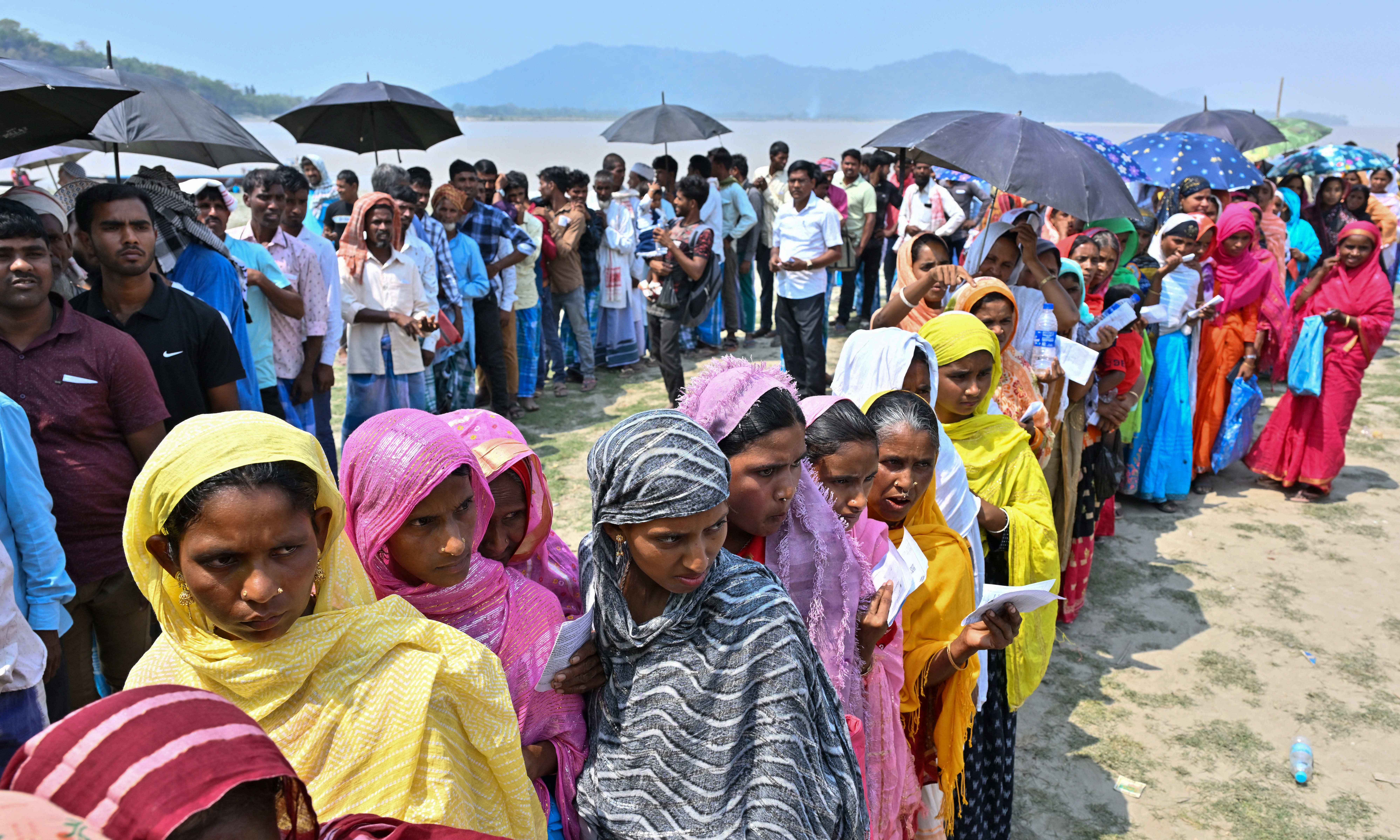
Thus, what was once a conversation about electoral influence has become one about survival and belonging for them.
 For all latest news, follow The Daily Star's Google News channel.
 Structural interventions have also weakened their political power. The 2023 delimitation exercise fragmented Miya concentrations in lower Assam, reducing Muslim-decisive seats from roughly 35 to about 20 to 22. At the same time, upper Assam remained largely unaffected, preserving the BJP’s stronghold.
The 2024 Lok Sabha election illustrated this shift. AIUDF leader Badruddin Ajmal suffered a historic 10-lakh-vote defeat in Dhubri, reflecting both the consolidation of anti-AIUDF votes and the shrinking strategic space for Miya-led politics.
Pre-election surveys confirm that these changes have rendered the Miya vote largely irrelevant in determining Assam’s overall outcome. While opposition parties retain strength in Miya-heavy constituencies in lower Assam, projections place the BJP-led National Democratic Alliance (NDA) comfortably in the 80 to 90 seat range, driven largely by dominance in upper Assam and gains in mixed regions.
There is also a strong possibility that economic programmes such as Orunodoi have further fragmented community cohesion, producing a silent but significant shift toward the incumbent party among families prioritising survival over resistance.
The elections this Thursday, therefore, are not just about seats for the Miyas. They are a test of recognition, security, and dignity for a community long settled in Assam yet increasingly marginalised in its politics.
Comments