


Why are Pakistan and Afghanistan at war now?

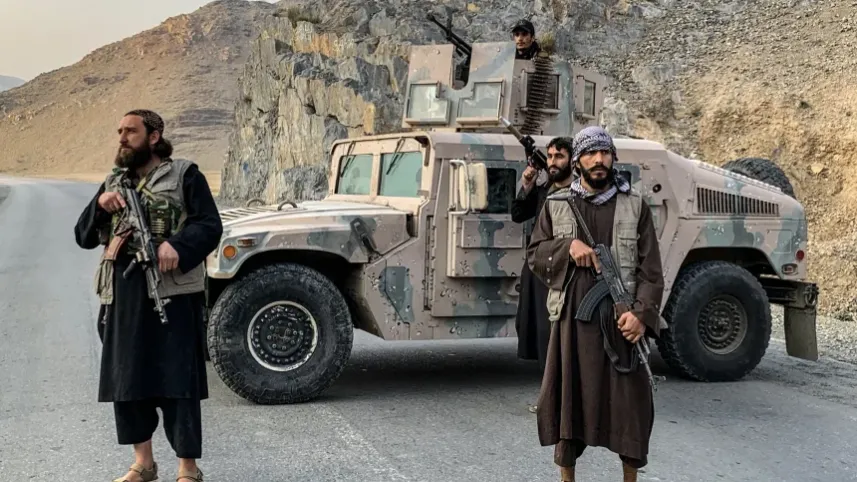
Geography often conspires with history to produce inevitabilities masquerading as accidents.
But the confrontation between Pakistan and Afghanistan that broke out on February 27 is something far more paradoxical -- unfolding not as a sudden aberration but as the culmination of decades of mutual suspicion, strategic duplicity, and unintended consequences.

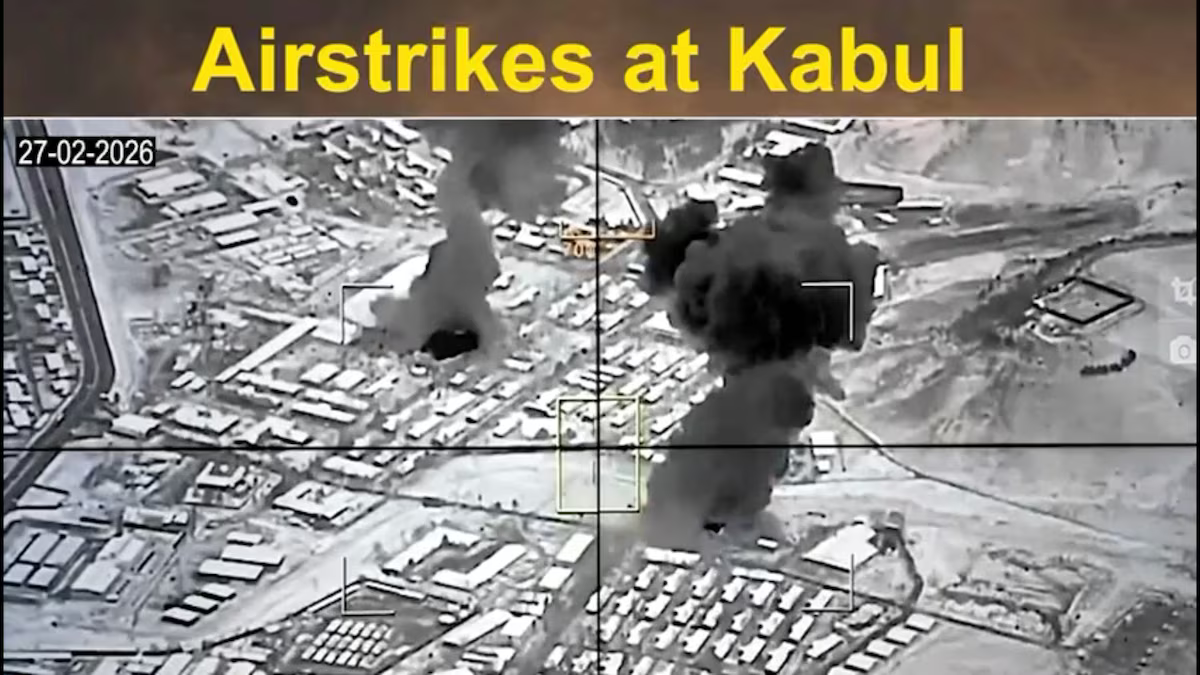
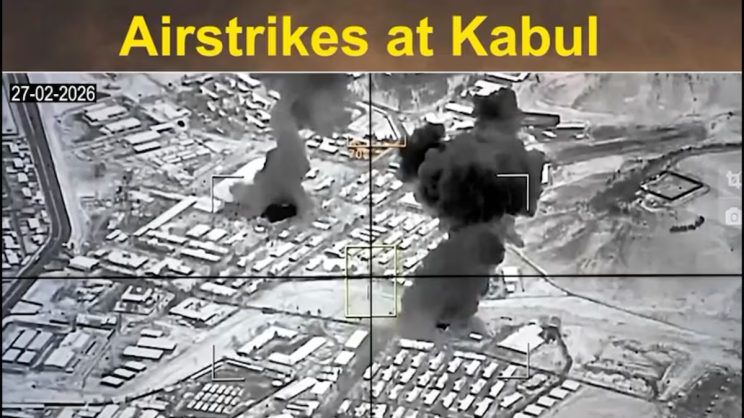
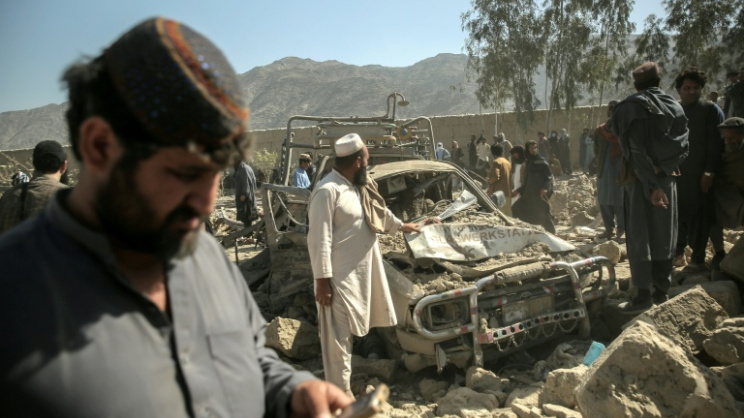
Pakistan bombed Taliban government targets in Afghanistan’s major cities overnight, officials from both countries said on Friday, with Pakistan’s defence minister describing the conflict as “open war”.
According to AFP, the operation was Pakistan's most widespread bombardment of the Afghan capital and its first airstrikes on the southern power base of the Taliban authorities since they returned to power in 2021.
Pakistan claims it killed 274 Taliban soldiers since Thursday night, while Afghanistan claims 55 Pakistani soldiers were killed, according to Reuters.
Their shared frontier, the Durand Line -- an arbitrary colonial incision stretching roughly 1,600 miles across forbidding mountains and deserts -- has never been accepted by Kabul as a legitimate international boundary.
This contested geography has functioned less as a border and more as a porous membrane through which fighters, ideology, resentment and revenge have passed with disquieting ease.
Patron and protégé
The roots of this confrontation lie in Pakistan’s strategic calculus during the late 20th and early 21st centuries. After the Taliban were ousted from power by US and NATO forces in 2001 for harbouring the architects of the 9/11 attacks, Pakistan emerged as one of the Taliban’s principal backers, according to CNN.
Taliban fighters found sanctuary across the Pakistani border, allowing them to regroup and launch a prolonged insurgency against the west-backed Afghan government. This support was neither purely ideological nor altruistic. Pakistan’s military establishment regarded the Taliban as a means to secure influence in Afghanistan and prevent Indian strategic encirclement.
Yet, like all patronage systems grounded in expediency rather than genuine allegiance, it contained the seeds of its own destruction. For decades, Pakistan saw Afghanistan less as a neighbour than as strategic depth -- a hinterland that could provide buffer and influence in its rivalry with India. Afghanistan, in turn, viewed Pakistan with wary resentment, seeing in Islamabad not a benign neighbour but an overbearing manipulator of Afghan sovereignty.
What is unfolding now is not merely a military confrontation but the violent culmination of a geopolitical relationship steeped in patronage, dependence and eventual estrangement.
The Taliban’s eventual victory in 2021, following the chaotic withdrawal of US forces, transformed protégés into sovereign actors no longer beholden to Pakistani priorities. Afghanistan under Taliban rule ceased to be an instrument and became instead an autonomous ideological state, guided by its own theological absolutism rather than Islamabad’s strategic convenience.
The spectre within
Central to the current hostilities is the Tehrik-i-Taliban Pakistan (TTP), a militant organisation distinct from but ideologically aligned with the Afghan Taliban. Islamabad accuses Kabul of providing sanctuary to TTP fighters who have intensified attacks inside Pakistan.
The Pakistani military reported that more than 1,200 people, including civilians and soldiers, were killed in militant attacks in 2025 alone -- twice the number recorded in 2021, CNN reported.
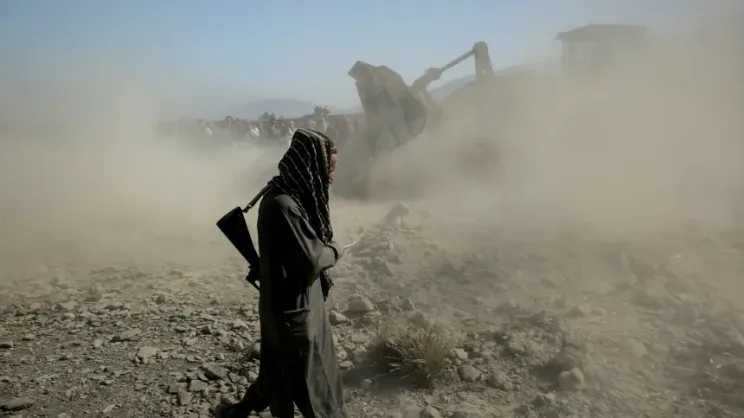
Pakistan’s Information Minister Attaullah Tarar went further, alleging direct linkages between Afghanistan’s Taliban regime and terrorist attacks within Pakistan. The Afghan Taliban deny harbouring the TTP. Yet denial alone has done little to assuage Pakistan’s security anxieties. In Islamabad’s eyes, Afghanistan has become both sanctuary and incubator for insurgents seeking to destabilise Pakistan from within.
Retaliation and escalation
The present escalation emerged through the familiar choreography of accusation and retaliation. Afghan Taliban forces launched attacks on Pakistani border positions, which Kabul described as retaliation for Pakistani airstrikes on alleged militant camps inside Afghanistan that killed at least 18 people.
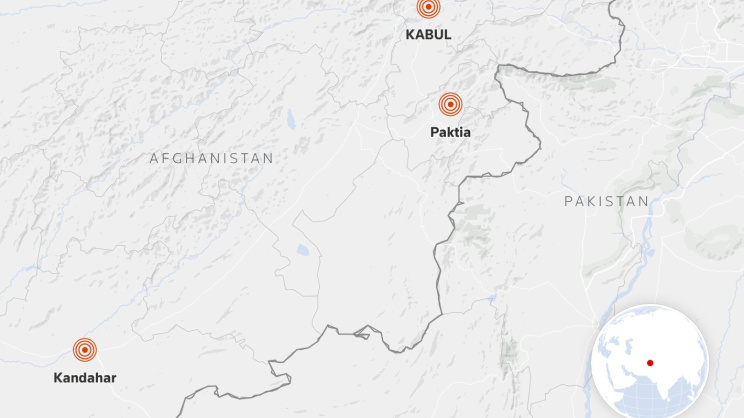
Pakistan responded with "Operation Ghazab Lil Haq" or "Righteous Fury" -- targeting Taliban military facilities in Kabul, Kandahar, and Paktia in a significant escalation of its retaliatory doctrine, according to Dawn.
Pakistani officials declared that their patience had run out, with the defence minister saying bluntly that “now it is open war between us and you.” What had once been episodic skirmishes had now been rhetorically elevated into open war.
 For all latest news, follow The Daily Star's Google News channel.
 Technology versus tenacity
On paper, Pakistan enjoys overwhelming military superiority. According to the International Institute for Strategic Studies’ Military Balance 2025, Pakistan fields approximately 660,000 active-duty troops supported by nearly 300,000 paramilitary personnel.
Its arsenal includes advanced fighter jets such as US-made F-16s, French Mirages, and jointly produced JF-17. Pakistan’s military is also nuclear-armed, representing one of the most formidable defence apparatuses in the Islamic world.
In contrast, Afghanistan’s military structure consists primarily of Taliban fighters numbering fewer than 200,000, lacking a formal air force and relying largely on ageing helicopters and drones abandoned after the US withdrawal.
Yet military strength is not measured solely in hardware. The Taliban possess something equally potent -- ideological cohesion and decades of experience in asymmetric warfare. They defeated not merely Afghanistan’s previous government but also survived the military might of NATO and the United States.
The Taliban’s greatest weapon is endurance.
Ideology, nationalism and incompatibility
Beyond immediate tactical concerns lies a deeper psychological rupture rooted in ideology and nationalism.
Pakistan views itself as a sovereign state threatened by insurgency emanating from Afghan territory. Afghanistan’s Taliban, however, see themselves not as Pakistan’s clients but as victors in a divine struggle.
The Taliban’s ideological framework does not recognise the same constraints that govern modern nation-states. Their loyalty is to faith and movement rather than territorial diplomacy. This fundamental incompatibility renders conventional diplomacy fragile.
The paradox of proximity
Perhaps the most tragic dimension of this conflict is its intimacy. These are not distant adversaries separated by oceans or ideology alone. They share language, ethnicity, culture, religion, and history.
Many Taliban leaders have lived in Pakistan. Many Pakistanis share tribal lineage with Afghan communities. This is not merely a war between states. It is a war between neighbours who know each other too well.
In this symmetry of mutual suspicion, the greatest casualty may not be territorial control, but the illusion that proximity guarantees peace.
Comments