


Bagerhat farmers turn to green coconuts for higher profits

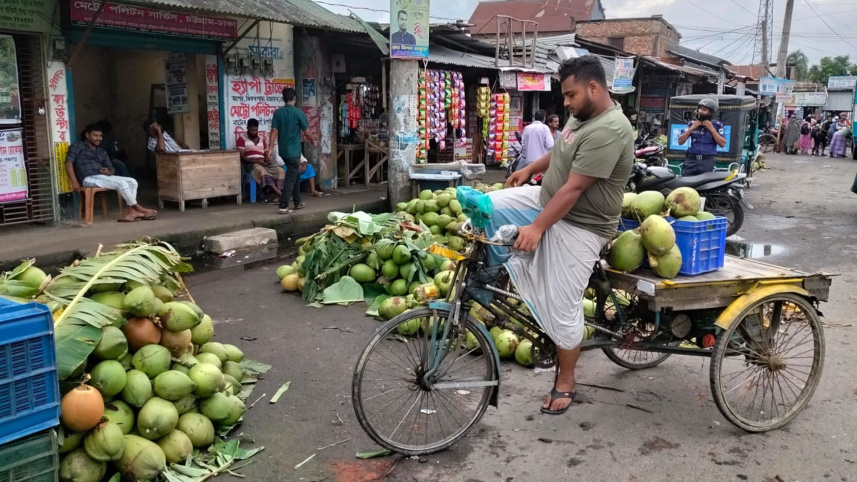
Farmers in Bagerhat are increasingly turning to green coconut (daab) production over mature coconuts, driven by higher profit margins and changing market demands.
According to agricultural officials, the district has approximately 1.1 million fruit‑bearing coconut trees, up from 950,000 recorded during the 2021‑22 period. This growth is attributed to climate‑smart agricultural initiatives and efforts to revitalise the region’s coconut groves.

The shift is primarily economic. Farmers harvest coconuts at the green stage — roughly every three to four months — allowing for three harvests a year.
Farmers are finding green coconuts more lucrative, local traders and growers in Badhal and Tangrakhali areas of Kachua upazila said. A single green coconut can fetch Tk 50–60 at the farm level. In contrast, waiting for a mature coconut — which requires four to five months — yields only about Tk 80. Given the frequency of the green harvest, the financial incentive to prioritise daab is clear.
The decline of the local coconut oil industry has also reduced demand for mature coconuts. With many traditional oil mills shuttered, the market for mature coconuts has become largely seasonal, limited mainly to culinary use during winter.
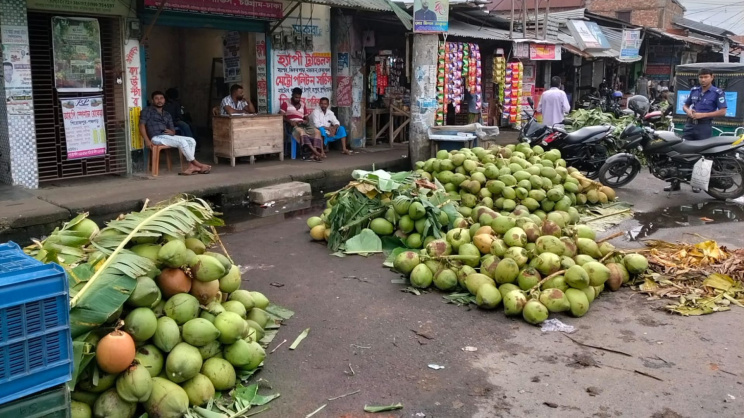
Md Abul Hossain Khan, a farmer from Afra area in Kachua upazila who owns about 200 trees, explained: “We mainly sell green coconuts, as we get many and the price is about Tk 60 per piece.”
Another farmer from Tangrakhali, Abu Bakar Siddique, shared a similar view, noting that dried coconuts had become a “loss project,” forcing them to turn to alternatives like green coconuts.
Some growers still cater to the mature coconut market. Jafor Sheikh of Sangdia area continues to sell dried coconuts year‑round at Tk 250 for every two pieces.
Trader Aklus Sheikh explained the supply chain dynamics: “We buy green coconuts for Tk 80 and send them to Cumilla, Dhaka, Rajshahi, and Rangpur — wherever the price is higher. Now, during dengue season, prices are much higher.”
Despite the growth in tree numbers, the sector faces hurdles, most notably the spiral whitefly. The Department of Agricultural Extension (DAE) in Bagerhat, led by Deputy Director Md Motahar Hossain, is working on a proposal to provide farmers with specialised tree‑climbing equipment for better pest management and canopy disease control.
Experts say productivity is also hindered by poor soil nutrition. “These trees have been producing for years without adequate soil management,” an official noted. “We are encouraging farmers to adopt organic fertilisers, potash, and TSP to prevent premature fruit drop and ensure long‑term health.”
The recovery of Bagerhat’s coconut population — in areas like Morrelganj, Signboard, and Sharankhola — marks a rebound from past disasters such as Cyclone Sidr. Through government‑led replanting projects and improved management practices, the district has expanded its coconut cultivation.
As Bagerhat continues to supply a significant portion of the country’s green coconut demand, the focus is shifting toward sustaining this growth through better agricultural infrastructure and continued support for farmers.
 For all latest news, follow The Daily Star's Google News channel.
Comments