


‘Budget for everyone’
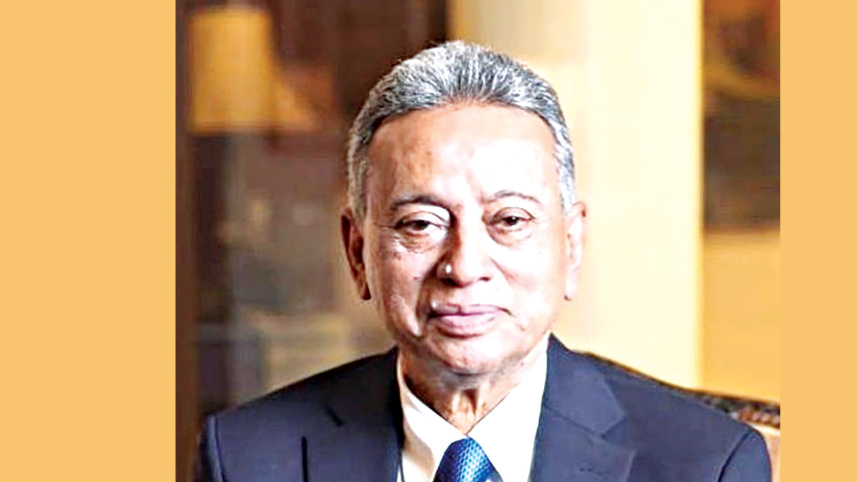
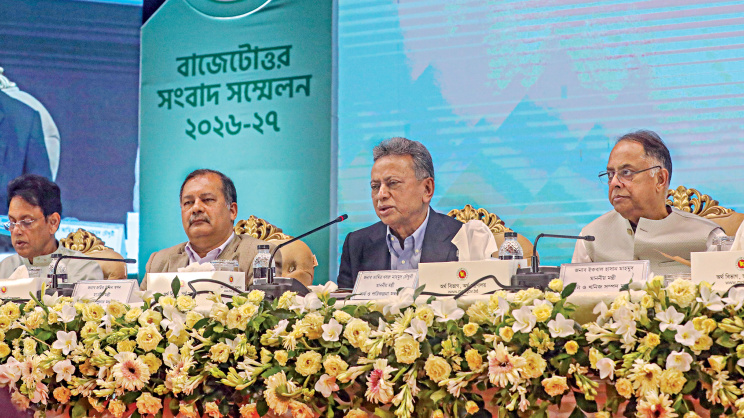
The government is committed to shifting Bangladesh from a debt-driven to an investment-led economy, as attracting private investment is essential for sustainable growth, said Finance Minister Amir Khosru Mahmud Chowdhury.
“Whatever we need to do for that, we will do it,” he said at the post-budget press briefing yesterday, a day after he placed a mammoth Tk 938,000 crore budget for fiscal 2026-27.

“At one point, we have to come out of this political culture of favouritism -- this government is committed to maintaining political neutrality in economic and financial decision-making, including appointments in the financial sector.”
Its reflection was seen in the budget, he said, adding that a high-powered task force would oversee the implementation of deregulation measures and take immediate action against bureaucratic delays or violations to boost investment.
A dedicated online platform will also allow businesses and citizens to report obstacles, enabling authorities to respond promptly.
Strict accountability mechanisms would be introduced to ensure the timely implementation of reforms and development projects, with progress tracked through digital dashboards accessible to policymakers.
The government’s focus is on reducing the cost of doing business as the bureaucratic delays, high financing costs and inefficiencies in ports and customs clearance ultimately raise the prices for consumers.
Getting approval to start a company can take six months to a year, involving multiple agencies and unnecessary costs, he said.
Businesses incur significant expenses from port clearance to delivery, while regulatory and tax-related hurdles further increase costs.
The three-month-old BNP government, elected with a more than two-thirds majority in parliament, faces high public expectations and has sought to reflect those aspirations in its first budget.
“This budget is different in its approach and context,” he said, adding that the government had tried to bring every segment of society into its budgetary thinking.
The proposed budget was not designed to benefit any particular political party, he said, adding that it was intended to serve all Bangladeshis.
“At one point, we have to come out of this political culture of favouritism,” he said, adding that the government is committed to maintaining political neutrality in economic and financial decision-making, including appointments in the financial sector.
He cited the government’s flagship Family Card programme as a case in point: the beneficiaries were selected by government officials based on eligibility criteria rather than political affiliation.
No profession, social group, religion, or community was left outside the budget’s scope.
The government aimed to improve living standards and create opportunities for all citizens despite limited resources.
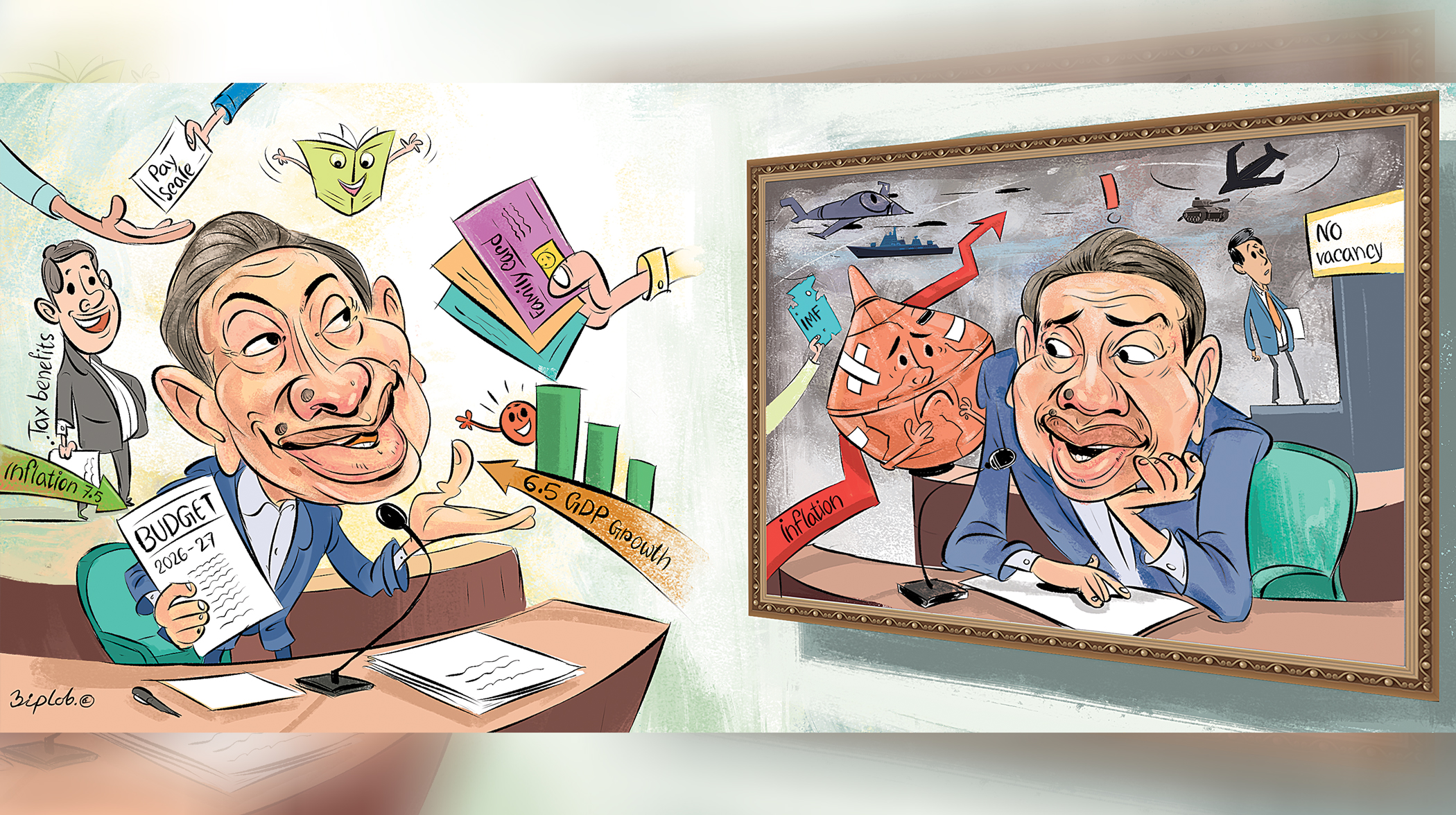
Khosru attributed persistent inflation to both external shocks and domestic inefficiencies, saying consumer prices have remained above 9 percent for nearly three years.
Global factors, including conflict in the Middle East, have pushed up the prices of imported goods, while weaknesses in the banking sector, particularly capital shortages caused by defaulted loans, have increased the cost of funds, adding to inflationary pressure.
Khosru argued that market prices cannot be controlled through enforcement drives alone.
 For all latest news, follow The Daily Star's Google News channel.
 “Prices cannot be controlled by police, RAB or government officials. They have to be managed through sound policies and effective management.”
Acknowledging concerns over declining living standards, Khosru said the government is pursuing a two-pronged approach.
While investing in skills development for long-term employment, it is also expanding social protection programmes to support those struggling to make ends meet.
The government is placing strong emphasis on investment and skills development, particularly through increased allocations to education.
A more skilled workforce would improve employment prospects both at home and abroad, he said, while pointing to the prevalence of high unemployment among graduates.
Future public spending and development projects would be assessed against four criteria: value for money, return on investment, job creation and environmental considerations.
The government plans to introduce a monitoring system to ensure development projects are completed on time and within budget.
Under the proposed system, project progress will be tracked through a dashboard accessible to the Prime Minister’s office and relevant ministries.
The dashboard will show the status of individual projects, identify delays and pinpoint those responsible for implementation failures.
“We may not be able to achieve 100 percent of our targets, but if we can implement even 80 percent, Bangladesh will move to a different level economically,” Khosru added.
Responding to a question about capacity payments in the power sector, Energy Minister Iqbal Hassan Mahmood Tuku said the agreements were signed under sovereign guarantees to make the private power projects bankable.
The contracts heavily favoured investors while offering little protection for the government.
“I have personally sat with the investors. They told us that if capacity payments are stopped, their banks will immediately demand repayment of loans. In that case, they would not be able to continue operating the power plants.”
Any abrupt move to suspend payments could disrupt electricity supply and create a new power crisis, he said.
The government has sought an opinion from the law ministry and will consider legal action if it receives favourable advice.
The previous governments neglected maintenance of state-owned power plants while relying heavily on electricity purchases from private producers, leaving around Tk 56,000 crore in unpaid liabilities, Tuku said.
Citing examples of problematic projects, he said the Rural Electrification Board had ordered 500,000 digital meters and received 250,000 of them, but only 65 had been synchronised over the past three years. The rest remain in storage.
Cancelling the remaining order could expose the government to legal challenges because shipping instructions had already been issued.
The minister also referred to a Dhaka Power Distribution Company project aimed at upgrading the capital’s electricity distribution network through underground cabling and 65 substations.
Although the project’s tenure is set to expire in June, only 38 substations have been installed so far, he said.
Resources had been spent on facilities outside the project’s core objectives, including the construction of a twin-tower building, while implementation of key components ranged between 30 and 60 percent.
“If we stop these projects now, a large amount of public money already spent will go to waste. But continuing them is also difficult. The previous government left behind these burdens. We have been in the office for only a few months, yet we must deal with all of them,” Tuku added.
On the new pay scale for government employees, Khosru said the higher pay could help reduce corruption by easing financial pressures on public servants.
No new pay scale has been introduced in about 11 years despite rising living costs.
Khosru acknowledged concerns that excessive government borrowing from local banks could crowd out private-sector lending.
The government plans to gradually reduce its reliance on bank borrowing and turn to alternative financing sources, including bonds, to fund the budget deficit, he added.
Every ministry will brief journalists on how they will implement their budget, said Information Minister Zahir Uddin Swapon.
Agriculture Minister Mohammed Aminur Rashid; Health Minister Sardar Md. Sakhawat Husain; Education Minister ANM Ehsanul Hoque Milon; State Minister for Planning Zonayed Abdur Rahim Saki; Prime Minister’s Adviser Mahdi Amin; Finance Secretary Md Khairuzzaman Mozumder; and National Board of Revenue Chairman Md. Abdur Rahman Khan were also present at the event.
Comments