


Bangladesh’s withheld IMF tranche and the limits of stabilisation

When the IMF’s Asia-Pacific director signalled to Bangladesh’s delegation in Washington last week that the expected $1.3 billion tranche would not be released in June, the key message was not financial but what Bangladesh can credibly offer in return, and what it cannot.
The Spring Meetings’ macro position was the strongest in three years. Gross reserves are roughly $35 billion, the BPM6 measure is above $30 billion for the first time since mid-2023, and March remittances reached a record $3.75 billion. At this level, the IMF pause signals reform credibility rather than liquidity.

The four unmet conditions remain unchanged: revenue mobilisation, banking governance, removal of electricity and gas subsidies, and a market-determined exchange rate. All were agreed under the $4.7 billion programme approved in January 2023 and expanded to $5.5 billion in June 2025. All have been monitored. None has moved materially in eighteen months. The interim administration stabilised the currency and rebuilt reserves, but did not deliver structural reform.
Pakistan in 2014 is a relevant comparison. It entered a three-year IMF programme in September 2013 with reserves near $6 billion, an 8 percent fiscal deficit, and similar reform conditions. By mid-2014, reviews had stalled on comparable structural issues.
The difference was what Pakistan could offer. I worked on the privatisation of state oil and gas firms during that programme. The value was not only revenue but a pipeline of sellable state assets. When the Oil and Gas Development Company’s follow-on was delayed in November 2014 due to falling oil prices, the IMF accepted it because the broader privatisation programme remained intact. A credible monetisation pipeline strengthens negotiating position.
That lever is absent in Bangladesh. It has never issued a Eurobond. Commercial borrowing is around 11 percent of external debt, with the rest largely concessional. This worked when multilateral flows were predictable, but becomes a vulnerability as LDC graduation on November 24, 2026 (or delayed) shifts financing terms, and IMF support is uncertain.
There is also no asset pipeline. The BSEC has identified fifteen profitable state-owned enterprises and multinational subsidiaries for listing over three years, but none have progressed. Banks are under restructuring, with the ADB’s $500 million banking-sector support focused on stabilisation, not privatisation. The Sammilito Islami Bank merger, formalised in December, remains far from saleable.
The core constraint is fiscal, not external. Tax-to-GDP fell to 6.56 percent in FY25, below the programme assumption of 7.9 percent for FY24, with projections reaching 10.5 percent only by FY35. The Centre for Policy Dialogue has repeatedly highlighted this, and Fahmida Khatun has stressed rising debt-service pressure as LDC graduation approaches. Without revenue mobilisation, remittance-led stabilisation will fade, and monetary policy will carry an unsustainable burden.
A programme lapse would not cause immediate stress, given strong reserves, but the structural cost would be significant. ADB and World Bank operations are cross-conditioned on IMF continuity and would be reoriented if it fails. The policy anchor would weaken just as graduation removes concessional financing advantages.
Between now and the October Annual Meetings, a credible alternative is needed. A B2/negative Eurobond would be costly. More viable options include a remittance-backed Sukuk, a diaspora instrument, or partial listing of a profitable state entity. The Finance Ministry could task the central bank and Privatisation Commission with a monetisation pipeline before the June ECOSOC meetings.
Stabilisation without reform is a rolling arrangement. The challenge is what can credibly be placed on the table in return.
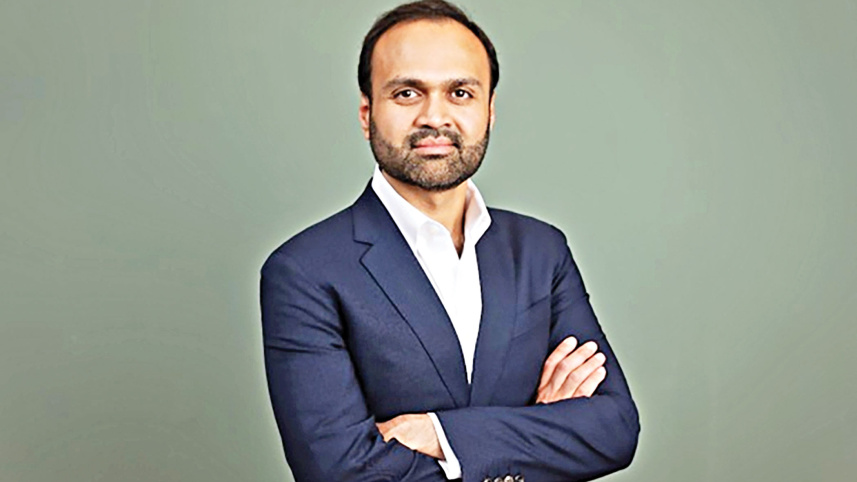
The writer is managing director at RetailBook, a platform on London Stock Exchange backed by Rothschild & Co and Jefferies, and has worked on over 500 transactions raising more than $200 billion across more than 30 markets.
 For all latest news, follow The Daily Star's Google News channel.
Comments