


Renewable energy crucial for Bangladesh’s sustainable future: BB governor
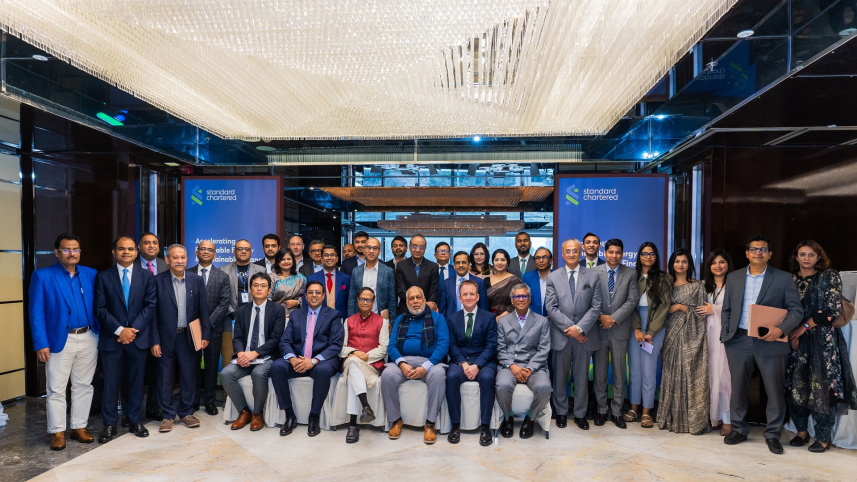
As Bangladesh strives toward a more sustainable future, renewable energy stands out as the key driver of progress, Ahsan H Mansur, governor of Bangladesh Bank, said at a roundtable.
However, achieving true sustainability in this sector requires more than just ambition—it necessitates financial viability, structural reforms, and a clear path forward, he also said.

He made the comments at a roundtable organised by Standard Chartered Bangladesh at the Renaissance Dhaka Gulshan Hotel recently.
To unlock the full potential of renewable energy, the country must prioritize policy consistency, reduce costs, and address challenges such as land acquisition and financing gaps, Mansur said.
By fostering collaboration with international partners and exploring innovative financial solutions, such as blended finance and tax reforms, Bangladesh can create a thriving energy sector that benefits both investors and consumers, he added.
Muhammad Fouzul Kabir Khan, adviser to the Ministry of Power, Energy, and Mineral Resources, said, "Bangladesh is moving from subsidies and inefficiencies to a new era of transparency and accountability in energy—a transformation necessary to power our future sustainably."
"We all recognise the need to fast-track the transition. Standard Chartered's Opportunity 2030 report highlights a staggering $74 billion in private investment needed in Bangladesh's power sector to ensure affordable and sustainable energy for all," said Naser Ezaz Bijoy, CEO of Standard Chartered Bangladesh.
"Any delay in securing this financing means the annual run rate required will only continue to rise," he added.
Farzana Mamtaz, secretary to the Power Division of the Ministry of Power, Energy, and Mineral Resources; Chen Shaolei, managing director of HDFC Sinpower Limited; Hironori Yamanaka, country manager of Sumitomo Corporation; Arif Khan, director of Spectra Solar Park Ltd; Nurul Aktar, president of the Bangladesh Sustainable and Renewable Energy Association; Alamgir Morshed, executive director and CEO of the Infrastructure Development Company; Tareq Refat Ullah Khan, deputy managing director and head of corporate banking at BRAC Bank; Mashrur Arefin, managing director and CEO at City Bank; participated in the discussion.
Participants emphasised the need for collaboration and strategic reforms to meet these ambitious goals.
Policymakers shared that the government is advancing a Merchant Power Policy to enable direct electricity sales between producers and consumers, expanding net metering to include single-phase and high-voltage customers, and developing Solar Parks with land and evacuation facilities to reduce investor risk.
John Murton, senior sustainability adviser at Standard Chartered; Kazi Farhan Zahir, senior country officer of the International Finance Corporation; Mashiur Rahman, energy specialist at the Asian Development Bank; Md Rezaul Karim, chairman of Bangladesh Power Development Board; Khandker Md Abdul Hye, chairman (additional charge) of the Sustainable and Renewable Energy Development Authority; among others, were also present.
 For all latest news, follow The Daily Star's Google News channel.
Comments