


Investment confidence still missing

Bangladesh is yet to see recovery in investor confidence even though the current government has taken some good initiatives to improve the business environment and encourage investment.
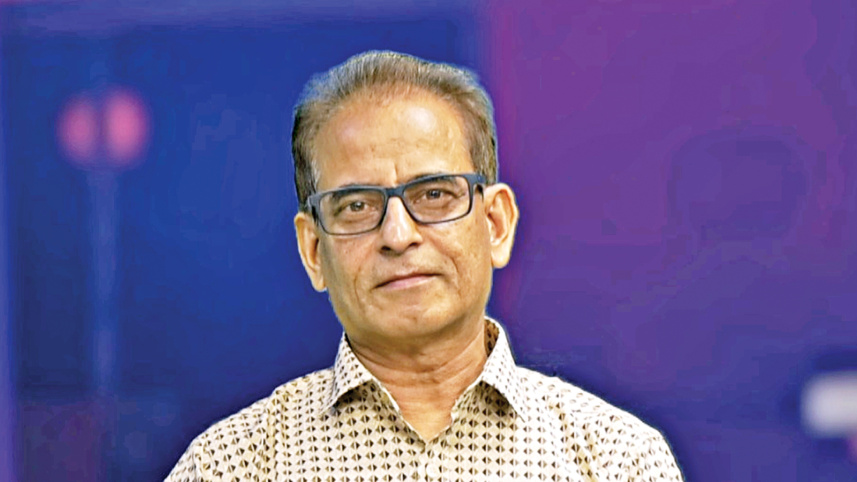
Without investment revival, the economy, which has been suffering from sluggish growth for the last four years, will struggle to gain momentum, said Birupaksha Paul, a professor of economics at the State University of New York in Cortland, US.

In an interview with The Daily Star recently, he said Bangladesh needs stronger institutions and political inclusivity for a manufacturing revival to put the economy back on the growth path.
As the government marked six months in office, he said weak domestic and foreign investment, factory closures and growing frustration among young people show that the economy is yet to regain confidence.
“Neither foreign direct investment nor domestic investment has shown an exponential rise. Without a significant increase in investment, Bangladesh will struggle to achieve the growth required to become a trillion-dollar economy,” said the economics professor.
Stating that growth fell to 3.49 percent in fiscal year (FY) 2025 and stood at 4.14 percent in the following year, Birupaksha noted that a minimal recovery would largely represent a rebound from a weak base.
CONFIDENCE IS THE MISSING LINK
For Birupaksha, who is also a former chief economist at the Bangladesh Bank, the problem is not simply the cost or availability of credit. Investment depends heavily on confidence -- what economist John Maynard Keynes described as ‘animal spirits’.
“That confidence is missing,” he said.
When businesses are uncertain about demand, policy direction, political stability or the investment climate, they postpone expansion. An investor may have financing but still decide not to build a factory, expand production or hire workers.
Birupaksha pointed to the early 1990s as an example of how reform can change economic expectations. After the BNP came to power in 1991, bank privatisation, reforms in hospitals and universities, VAT and the rapid expansion of mobile phones helped reshape economic activity.
“That reform momentum is not visible today,” he said.
POLITICAL UNCERTAINTY DELAYS INVESTMENT
Birupaksha believes political inclusivity is also necessary to restore investor confidence.
“Wrongdoers must be punished,” he said, stressing that every political party has people who commit wrongdoing.
He said if businesses remain unsure about the political and economic environment, they are likely to delay major investment decisions. That is why political accommodation cannot simply be postponed until the end of the government’s five-year term. “It has to begin now.”
FACTORY CLOSURES DEEPEN CRISIS
Hundreds of factories have closed, and workers have lost their jobs in recent years, according to Birupaksha.
“Being unemployed is one kind of pain. But once you are employed and then lose your job, that pain is 10 times greater,” he said.
The employment challenge is becoming more urgent as around 22 to 23 lakh young people enter the labour market every year. The government cannot employ everyone, Birupaksha said, and cannot even provide jobs to one lakh people directly.
 For all latest news, follow The Daily Star's Google News channel.
 That leaves private investment and business expansion as the main mechanisms for absorbing new workers. But businesses cannot create jobs on a large scale without investing.
The economist questioned the government’s emphasis on services. A healthy economy, he argued, first develops strong manufacturing and then expands services around that productive base.
“You cannot build a service economy without a manufacturing base,” he said. A stronger service economy should grow around productive industries through logistics, finance, transportation, trade, exports and imports.
Birupaksha noted that China and Vietnam have demonstrated the importance of manufacturing, while Bangladesh still has factories that have not reopened. The government’s employment target will be difficult to achieve when a large share of jobs is expected to come from services. He described the strategy as ‘impractical’.
BANKS AND INSTITUTIONS NEED REFORM
Banks should primarily provide working capital to SMEs, startups and the creative economy.
Calling for institutional reforms, Birupaksha recommended that revenue collection be separated from the finance ministry and placed under a new ‘Ministry of Revenue’.
He also suggested separating the Planning Commission from the planning ministry.
Greater autonomy for the Bangladesh Bank would help prevent excessive fiscal pressure on monetary policy, he added. “Sometimes you need to lose power to be strong.”
INVESTMENT BEFORE GROWTH TARGET
Birupaksha also questioned whether Covid-19 can still explain Bangladesh’s economic weakness. The pandemic caused severe supply disruptions, but he said it cannot account for all of the country’s continuing problems.
A temporary GDP rebound will not be enough if businesses remain reluctant to invest, factories continue to close and young people struggle to find productive employment.
Investment is the bridge between economic recovery and sustainable growth, stated Birupaksha.
The economist, therefore, sees political inclusivity, institutional independence and manufacturing revival as parts of the same investment challenge.
“If you do not create an environment of inclusivity, you will have problems on the investment front,” he said.
For Bangladesh, the real test of recovery is not simply whether growth returns, but whether investors regain the confidence to invest for the future, he added.
Comments