


BB orders swift merger of five Islamic banks
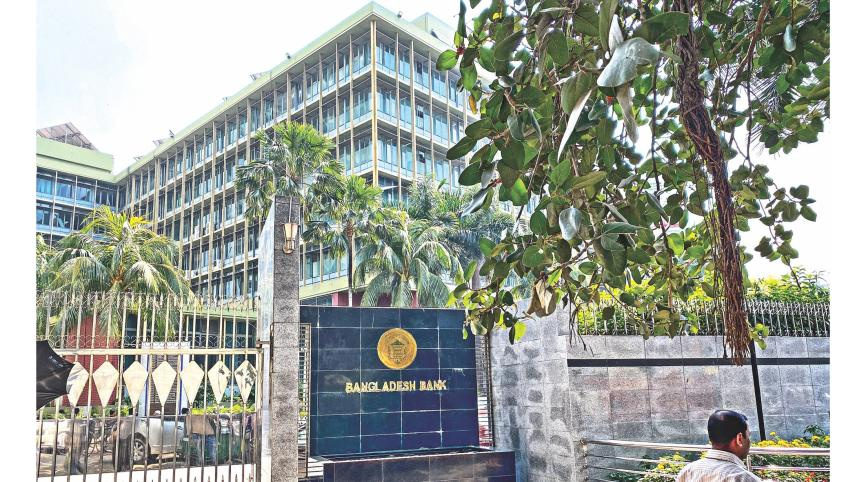
Bangladesh Bank (BB) has instructed administrators and officials to expedite the ongoing merger of five struggling shariah-based banks, including completing IT integration, as part of the wider banking sector reforms.
“There is no alternative to completing the merger quickly as part of broader banking sector reforms,” BB Governor Md Mostaqur Rahman told officials during a meeting yesterday with administrators appointed to oversee the five banks.

The meeting, chaired by the governor, was attended by the administrators of the five banks, their supporting teams, and central bank officials.
The directive came just hours after Mohammad Ayub Mia, chairman of the board of the state-owned Sammilito Islami Bank PLC -- formed through the merger of the five troubled shariah-based lenders -- resigned.
He submitted his resignation to the secretary of the Financial Institutions Division under the finance ministry, citing personal reasons.
Central bank officials at the meeting said the governor inquired about delays in IT integration. The banks currently use different software systems and data structures, making it technically complex to consolidate all data onto a single platform.
Officials assured the governor that efforts are ongoing to complete the process as quickly as possible.
Some members of the administrator teams said rumours were circulating in the market about the merger. In response, the governor stressed that banking sector reforms remain a key government priority.
He added that the government had injected Tk 20,000 crore into the new bank, while Tk 12,000 crore from the deposit insurance fund is being used to repay depositors of the five banks up to Tk 2 lakh each.
“There is no scope for reversing the merger,” he added, stressing that the entire process must be completed as soon as possible, central bank officials and administrators told The Daily Star.
On March 3, the governor had assured administrators that the integration would continue uninterrupted and that a managing director would be appointed soon.
He also instructed them to follow regulations, accelerate recovery of defaulted loans, and take steps to reopen factories financed by the five banks that remain closed.
BACKGROUND OF THE MERGER
Last December, EXIM Bank PLC, Social Islami Bank PLC, First Security Islami Bank PLC, Global Islami Bank PLC, and Union Bank PLC merged to form Sammilito Islami Bank PLC.
A seven-member board, headed by former secretary Ayub Mia, was formed on December 7, making him the bank’s first chairman.
The merger followed the prolonged failure of these banks to return depositors’ money.
In November, BB appointed administrators to integrate operations, including IT systems, assigning each bank one administrator supported by four officials from various levels of the central bank.
Among the five banks, EXIM Bank was controlled by Nazrul Islam Mazumder, chairperson of the Nassa Group. He also served for many years as chairman of the Bangladesh Association of Banks, a forum for bank directors.
The other four banks were controlled by the Chittagong-based S Alam Group, a controversial business conglomerate.
The merged bank started operations during the interim government period with an authorised capital of Tk 40,000 crore and a paid-up capital of Tk 35,000 crore -- Tk 20,000 crore from the government and Tk 15,000 crore from depositors’ shares.
 For all latest news, follow The Daily Star's Google News channel.
 The five banks collectively have around 75 lakh depositors, with deposits totalling Tk 1.42 lakh crore and loans of Tk 1.92 lakh crore, 77 percent of which are defaulted.
Although depositors had long been unable to access their savings, the central bank began repaying up to Tk 2 lakh per depositor from January 1 under the merged bank arrangement.
The payments are made through a special scheme announced on December 30, funded by the deposit insurance trust.
Depositors with balances above Tk 2 lakh can withdraw an additional Tk 1 lakh every three months, up to a total of Tk 7 lakh. Patients with kidney failure or cancer can withdraw any amount needed by submitting the necessary documents.
Comments