


With cold storages nearly full, farmers sell potatoes at a loss


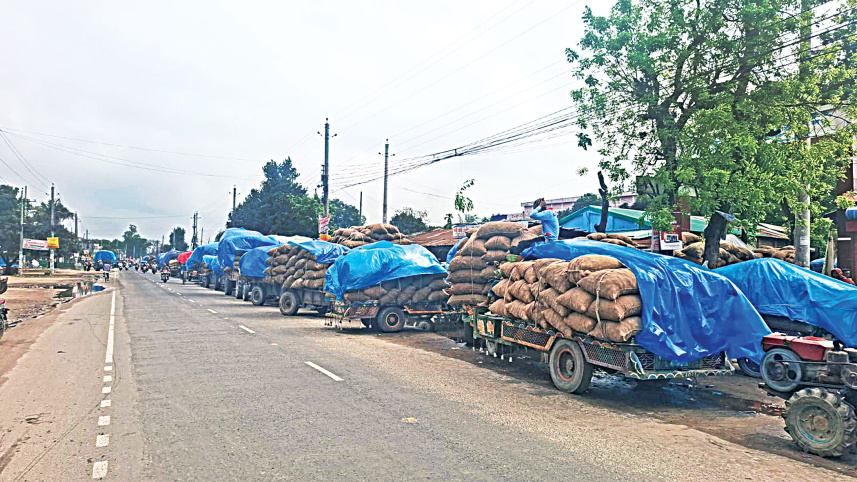
A surge in potato supply at the peak of the harvest season has pushed cold storage facilities close to full, leaving farmers with little choice but to sell at rock-bottom rates.
Potato stocks at cold storage facilities across the country have already reached 80 percent of capacity, according to the Bangladesh Cold Storage Association.

In the north, many facilities are packed to the brim. Only about 20 percent space remains in Munshiganj, one of the country’s largest potato-growing districts, said Mostofa Azad Chowdhury Babu, president of the association.
At the field level, prices have slid sharply within days. Potatoes that fetched Tk 13 to Tk 14 per kg earlier are now selling for Tk 8 to Tk 10. However, production costs this season were between Tk 13 and Tk 15 per kg.
Babu said untimely rain damaged part of the crop, which could lift prices in the June-July period this year.
For that to happen, farmers would need to store their harvest and wait until rates climb to around Tk 30 per kg. If that materialises, growers may earn Tk 3 to Tk 5 per kg after covering production and storage costs, he estimated.
Many farmers say that the option is out of their reach.
Potato growers across northern districts said that storage space has dried up. With rain threatening further damage and temperatures soaring, they are rushing to offload produce before it spoils.
For some, this season’s hardship compounds last year’s losses.
For example, Tarikul Islam, a farmer at Thakurgaon Sadar upazila, is still trying to recover from a poor season. He borrowed money and planted potatoes on 3.50 acres, harvesting about 1,470 maunds (one maund equals roughly 40 kg).
Of that, he managed to store only 125 maunds. To pay labourers and clear dues, he sold 292 maunds early at Tk 9 per kg.
“I planned to store the rest of the produce and sell it later at a better price,” said the farmer. “But I couldn’t secure storage slips due to space shortages. Now, with potatoes starting to rot, I have no option but to sell them quickly.”
Such cases are quite common across Thakurgaon, Panchagarh and Dinajpur.
In those three districts, 46 public and private cold storage facilities can hold about 4 lakh tonnes in total.
The Department of Agricultural Extension (DA) estimates production this season at 23.20 lakh tonnes in Dinajpur, Thakurgaon and Panchagarh alone. Storage, therefore, covers just 17.62 percent of output.
Rafiqul Islam, another farmer from Thakurgaon Sadar upazila, said he expanded potato cultivation from 4 to 6 acres this season, hoping to recoup earlier losses. He sold 100 sacks at Tk 10 per kg to meet initial expenses. Although he stored 600 sacks, another 400 remain at home.
I thought prices would improve after a month or two, he said. “But frequent rain and rising temperatures have already begun to damage the stock.”
The farmer said that even at Tk 8 to Tk 8.5 per kg, buyers are scarce. Selling at such a loss is painful, but he does not see any alternative.
Malin Chandra Roy, a farmer at Bochaganj upazila in Dinajpur, said he returned home empty-handed after failing to secure space in storage facilities.
At Boda upazila of Panchagarh, farmer Abdullah Al Masum cultivated potatoes on 1 acre but found room for only 20 sacks after visiting several facilities.
 For all latest news, follow The Daily Star's Google News channel.
 “The rest will have to be sold at low prices,” he said, adding that traders are wary of rain-affected potatoes for fear they may spoil.
Traders are also feeling the strain. David Roy, a trader at Thakurgaon Sadar upazila, said he bought potatoes at Tk 8.75 per kg and sent 340 sacks to Jashore by truck two days ago. Intense heat ruined 15 to 16 sacks during the journey.
Meanwhile, cold storage owners say their hands are tied.
Delwar Hossain, managing director of Shahi Himagar Limited under Selim Reza Group, said their ten facilities in Thakurgaon and Dinajpur, with a combined capacity of 85,000 tonnes, are full.
Enamul Haque, general manager of IJAB Group, said their 11,000 tonne plant has also reached capacity, forcing them to turn farmers away.
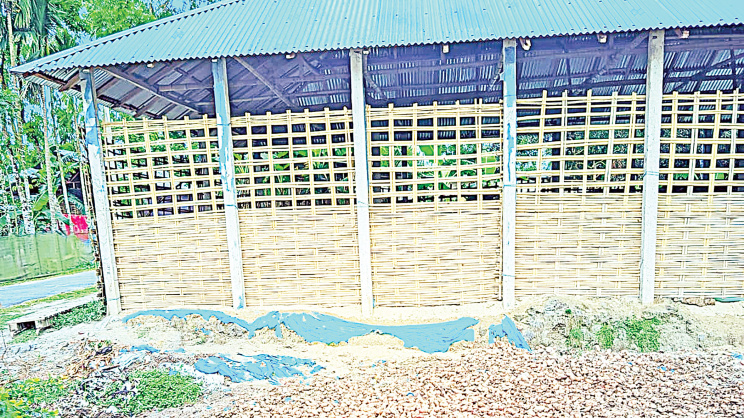
Alongside large refrigerated units, the Department of Agricultural Marketing (DAM) has set up 152 non-refrigerated model potato stores in northern districts since 2022. Each 15 by 25-foot structure can hold 25 to 30 tonnes for up to four months.
Sakhawat Hossain, district agricultural marketing officer (in-charge) of Thakurgaon, said the project aims to promote diversified use, storage and marketing of potatoes.
Nurul Huda, adviser to Thakurgaon Potato Growers and Traders Welfare Association, called for expanding processing industries, boosting exports and including potatoes in relief programmes to help steady the market.
Comments