


Eid boosts remittance inflow despite Middle East war
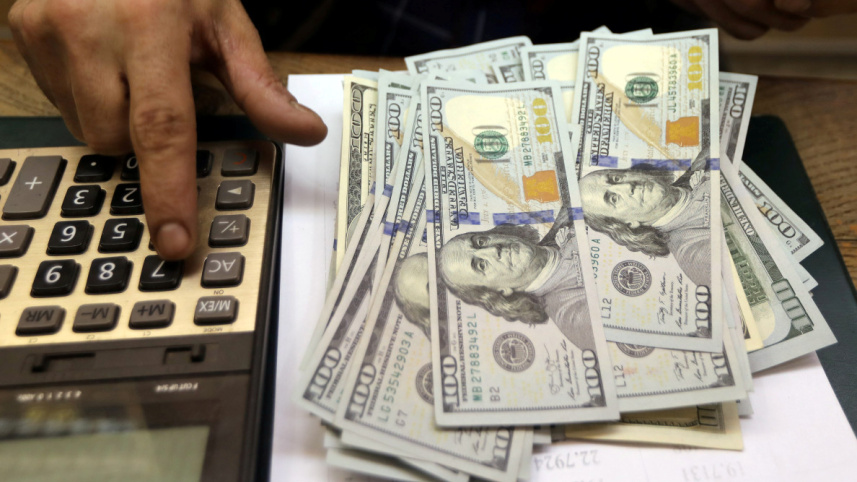
Remittance inflows rose sharply in the first two weeks of March ahead of the Eid-ul-Fitr, despite tensions in the Middle East stemming from the US-Israel war on Iran.
Expatriates sent home $2.2 billion in the first 14 days of March, up 36 percent from $1.62 billion during the same period last year, according to Bangladesh Bank (BB) data.

Bankers expect remittances to exceed $3 billion by the end of the month, as expatriates typically send more money home during Eid. Full data for the month will be available after the Eid holidays.
In February, remittances stood at $3.02 billion.
In the current fiscal year, inflows have remained strong.
Between July and March 14, remittances reached $24.65 billion, marking a 22.6 percent year-on-year growth.
However, industry insiders and economists warn that inflows may slow in the coming months due to the Middle East crisis.
A BB quarterly report also projected a possible slowdown in remittances amid migration disruptions and economic uncertainty in the region.
The escalating tensions in the Gulf have already driven up prices of oil, liquefied natural gas, fertiliser and sulphur, as Iran controls the Strait of Hormuz, a key route for about one-fifth of global oil exports and nearly one-third of fertiliser shipments.
During March 1-14, Islami Bank Bangladesh handled the highest inflow at $395 million, followed by BRAC Bank with $228 million, state-run Agrani Bank with $165 million, and Trust Bank with $163 million.
The steady rise in remittances is helping ease pressure on the balance of payments and stabilise the foreign exchange market.
Under the International Monetary Fund’s calculation method, reserves were $29.64 billion, up from $19.74 billion in the same period last year.
However, signs of volatility have emerged in the foreign exchange market after more than a year, with the taka weakening against the US dollar since early March amid rising uncertainty over the war in the Middle East.
 For all latest news, follow The Daily Star's Google News channel.
Comments