


Geopolitical risk
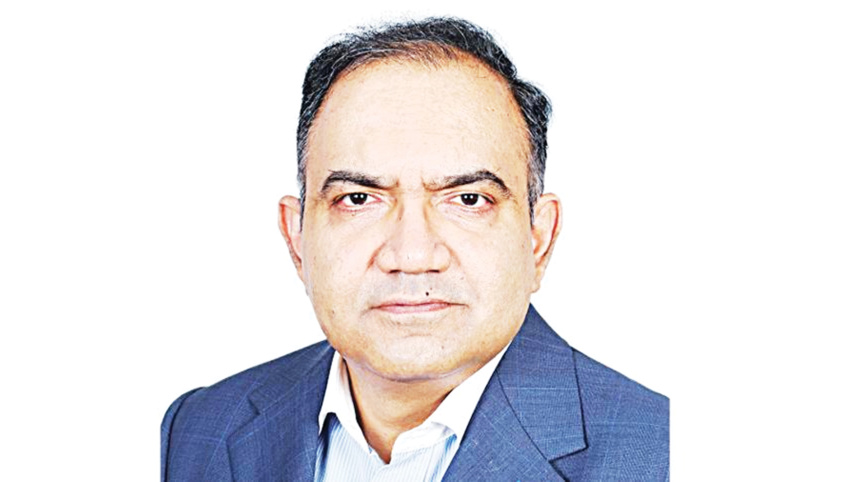
In February 2022, I was working as a regional business head for a global bank based in Singapore. I was on a call with a senior manager in Russia to discuss winding down our credit exposures there as Russian troops gathered near the border with Ukraine. The very next week, Russia invaded. For weeks beforehand, many believed the troop build-up was merely a pressure tactic by Moscow. At the bank, however, we did not wait for events to overtake us. We prepared for the possibility of conflict and drew up an action plan to manage the evolving situation well before the invasion took place.
Geopolitical risk is often ignored or underestimated because there is a natural human tendency to expect the status quo to continue. Stability feels permanent until it suddenly is not. “Black swan” events, a term popularised by Nassim Nicholas Taleb after 9/11, do happen. In an era of globalisation, their impact rarely remains confined to the country or region where they originate. The effects are transmitted across markets and borders, as we are witnessing first-hand with the US-Israel war on Iran. Energy prices, commodity markets and investor confidence respond almost immediately, showing how interconnected the global economy has become.

Financial institutions should always be prepared for the consequences of geopolitical conflict. There are flashpoints across the world that could flare up at any time. The Korean peninsula and the Taiwan Strait are two potential fault lines in North Asia with significant global implications. Taiwan and South Korea are among the world’s largest producers of semiconductors. Any eruption of violence in that region would have a severe impact on the global economy and supply chains, which are heavily dependent on chips to sustain the AI-driven boom and modern manufacturing.
One of the key lessons from the Covid-19 pandemic was the urgent need for supply chain diversification. Over-concentration in a single geography proved costly when disruptions struck. The tariffs imposed by the Trump administration in 2025 have accelerated the rewiring and realignment of global supply chains. Manufacturing has increasingly shifted from China to countries such as Vietnam, Thailand and Mexico. This has further hastened the move towards nearshoring and friendshoring.
For banks and financial institutions, exposure management and rapid portfolio reviews are critical to mitigating geopolitical risk. Global banks that oversee their Middle East and Africa operations from Dubai may need to reconsider their regional location strategies. After Brexit, several banks moved parts of their global functions from London to Dubai. Yet geopolitical tensions can alter the risk landscape quickly. Contingency plans for alternative regional hubs are essential, particularly as more banks and fintech companies rely on hyperscalers such as Amazon Web Services, whose data centres in the region could be affected during periods of instability.
Before the US-Israel war on Iran, the US Federal Reserve indicated the possibility of further interest rate cuts in 2026 and beyond. The conflict may now complicate that outlook. Higher energy and commodity prices risk fuelling inflation, potentially forcing the Fed to maintain or even tighten its policy stance. As many central banks tend to follow the Fed’s direction, the ripple effects would be felt across the global economy. Slower growth combined with persistent inflation would raise the risk of stagflation.
Whether it was the Russia-Ukraine war in 2022, the tariffs imposed by the Trump administration in 2025, or the more recent US-Israel war on Iran, the central lesson for banks, financial institutions, businesses and countries remains the same: preparedness is essential. We live in a disruptive world where unforeseen geopolitical events can create upheaval at any time. As Andy Grove, former chief executive of Intel, famously said, “Only the paranoid survive.”
The writer is a senior consultant for banks and financial institutions
 For all latest news, follow The Daily Star's Google News channel.
Comments