


Local prefabricated steel industry hits demand slump

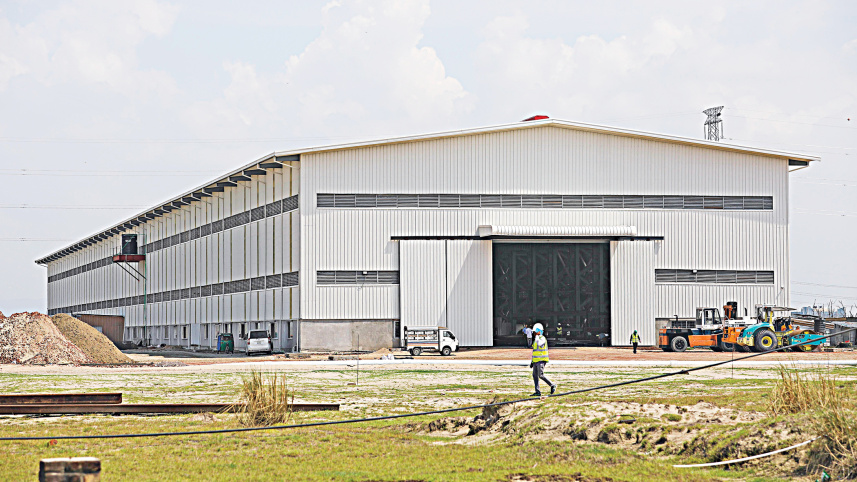
Bangladesh’s prefabricated steel industry faces a severe downturn driven by a sharp contraction in public infrastructure spending, sluggish private investment, and rising competition from duty-free imports, executives said.
Prefabricated steel structures -- pre-engineered components assembled on-site -- are heavily used across commercial and industrial projects. However, demand has collapsed alongside a broader national development slowdown.

Implementation of Bangladesh’s Annual Development Programme fell to a 53-year low in fiscal year 2025-26, with authorities executing just 67.52 percent of the revised budget.
Public sector demand for locally manufactured prefabricated steel has dropped by nearly 90 percent, according to Md Sarwar Kamal, managing director of McDonald Steel Building Products Ltd.
Industry insiders estimate the domestic market at Tk 4,000 crore, with industrial projects accounting for 80 percent of demand, followed by commercial (15 percent) and residential (5 percent) construction.
Despite a government directive mandating local construction materials in public projects, industry officials allege foreign-funded developments continue to import finished steel duty-free.
“This creates a serious disadvantage for local investors,” Sarwar said.
Foreign suppliers are often able to bring finished structures into the country under duty-exempt arrangements, undermining local producers, he added.
In response to the market imbalance, McDonald Steel has urged the National Board of Revenue (NBR) to either offer concessional customs duties on imported raw materials used in structural steel production or levy equivalent duties on imported finished components.
“This policy does not support the growth of the local prefabricated steel structure industry,” Sarwar stressed.
He emphasised that the duty disparity is especially damaging given the substantial capital domestic firms have already invested in modern manufacturing plants, machinery, advanced technology, and workforce training.
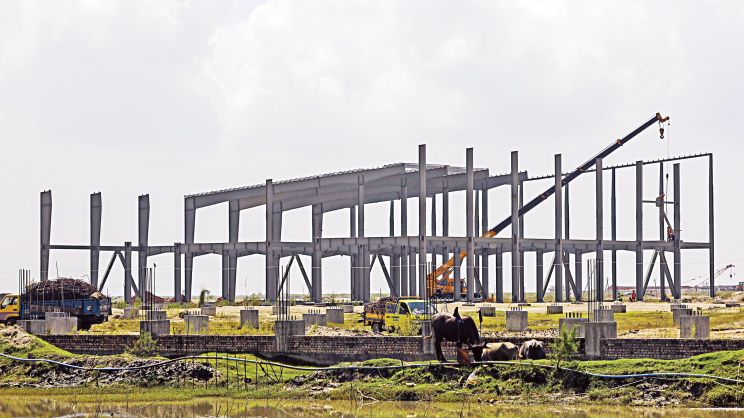
Local producers have demonstrated the capacity to meet international standards and have previously supplied major national infrastructure projects, according to Sarwar.
Local manufacturer Tiger Steel invested roughly Tk 180 crore in 2021 to build a facility in Bhaluka, Mymensingh, anticipating a surge in industrial expansion.
However, the fallout from the Russia-Ukraine war, a weakening domestic economy, dollar shortages, and subsequent political instability severely disrupted those growth plans. New investment largely dried up, driving demand for industrial construction materials down to near zero.
“I am looking for a buyer for the factory because it has become a burden for me,” said Liton Kumar Sharma, managing director of Tiger Steel.
Liton noted that the plant is currently operating at no more than 15 percent of its capacity, forcing the company to slash its workforce from 250 to approximately 110 employees amid slim prospects for a near-term market recovery.
The factory’s retrenchment underscores a broader vulnerability across the sector: when industrial investment slows, demand for prefabricated steel falls in tandem.
The downturn has impacted major producers across the board, though some market segments show signs of resilience.
PEB Steel is currently operating at roughly 60 percent of its production capacity after industrial orders dropped by about 20 percent, according to Jowher Rizvi, managing director of the company and president of the Steel Building Manufacturers Association of Bangladesh.
To adjust, the firm has cut operations from two shifts to one, producing around 2,000 tonnes of steel structures per month.
 For all latest news, follow The Daily Star's Google News channel.
 While Jowher characterised the slowdown as a reflection of broader economic cooling rather than a critical failure, he noted that investment decisions typically pause ahead of the national budget as businesses await policy clarity on taxes and duties.
He also criticised the misuse of duty-free import privileges by some companies operating in Export Processing Zones (EPZs) and special economic zones, alleging that surplus duty-free steel enters the domestic market to unfairly compete with local makers.
Despite weaker orders, Jowher said his company would survive, although business “could have been much better.”
Meanwhile, certain players are tapping into alternative sources of demand. Steelpac, an Energypac concern, is reporting steady order inflow driven primarily by defence infrastructure and solar energy developments.
The firm, which holds an annual production capacity of around 15,000 tonnes, is currently producing about 800 tonnes a month and executing a 2,500-tonne contract at the Rajendrapur Cantonment. Almoy Biswas, chief engineer at Steelpac, said rising inquiries from defence authorities and prospective utility-scale solar projects are expected to generate additional momentum.
Comments