


Modern mango processing plant opens in Gabtoli

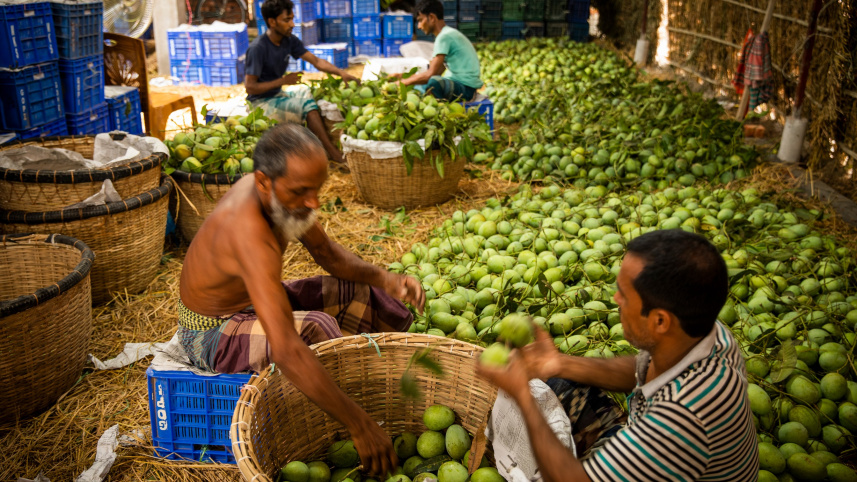
Bangladesh is set to strengthen its fresh fruit exports with the launch of a modern vapour heat treatment (VHT) plant in Gabtoli, Dhaka, marking a key step towards expanding access for locally grown mangoes to premium international markets.
The plant can treat and process up to 12 tonnes of mangoes a day using internationally accepted phytosanitary protocols, paving the way for higher exports.

The facility, established by the Bangladesh Agricultural Development Corporation (BADC), was inaugurated yesterday by Agriculture Minister Mohammed Amin Ur Rashid. It is the first treatment plant of its kind in Bangladesh, according to the agriculture ministry.
A VHT plant is a chemical-free quarantine facility that uses high-humidity hot air, typically between 42°C and 50°C, to eliminate pests such as fruit flies and larvae from fresh produce. It complies with stringent international phytosanitary standards, enabling the export of fruits such as mangoes and dragon fruits to premium markets.
The minister said discussions had already been held with Biman Bangladesh Airlines to reduce export costs, while talks would be initiated with other international airlines to expand cargo facilities.
Mohammed Amin Ur Rashid said purification, quarantine certification and packaging would all be carried out at the facility, providing exporters with a one-stop service.
There would be no need to visit any other location to complete the export process. Once processed, the mangoes would be loaded directly from the facility and transported to the airport, he said.
A temperature-controlled short-term storage facility will be established at the airport to preserve the quality and freshness of export-bound agricultural produce, including mangoes, until shipment, he added.
China has expressed interest in importing jackfruit from Bangladesh and has already received a trial shipment. Several countries, including Japan, Australia, the United Kingdom and the United States, have also expressed interest in importing Bangladeshi mangoes, he added.
A senior BADC official said the plant would process around 3 tonnes of mangoes or other agricultural produce per batch. After treatment, the fruits would be washed for 30 minutes before being dried. The process would enhance their colour, preserve quality and extend shelf life by eight to 10 days.
JUST 0.1% OF BANGLADESH’S MANGOES ARE EXPORTED
Mango exports remained stagnant at 230-310 tonnes a year between FY2017 and FY2020 before surging more than tenfold to a peak of 3,100 tonnes in FY2023, according to Department of Agricultural Extension (DAE) data.
The growth has been uneven. Exports fell to 1,321 tonnes in FY2024 before recovering to 2,194 tonnes in FY2025. Even at their peak, exports accounted for barely 0.1 percent of Bangladesh’s total mango production.
Exports have reached 1,408 tonnes so far this fiscal year.
Mohammad Monsur, general secretary of the Bangladesh Fruits, Vegetables and Allied Products Exporters’ Association, told The Daily Star that establishing the VHT plant at Gabtoli was a positive step.
However, locating the facility closer to the airport would have made logistics far more efficient and significantly reduced transportation and handling costs, he said. Its current location has made many exporters hesitant as it is likely to increase export costs.
The government has also yet to arrange for phytosanitary certificates to be issued directly from the facility. Introducing the service without delay would make the plant a genuine one-stop export hub and further streamline the export process, he added.
Bangladesh ranks seventh among the world’s mango-producing countries, producing between 24 lakh tonnes and 26.72 lakh tonnes annually for a domestic market worth Tk 13,000 crore to Tk 14,000 crore.
Exports initially catered mainly to Bangladeshi communities in the UK, Italy and the Middle East but have since expanded, particularly after China expressed interest in sourcing more Bangladeshi mangoes.
Mexico, India, Brazil, the Netherlands and Peru remain the world’s leading mango exporters. Industry insiders believe Bangladesh could raise exports to 8,000 tonnes with government support.
 For all latest news, follow The Daily Star's Google News channel.
Comments