


Titumir blames AL govt for energy crisis, high inflation
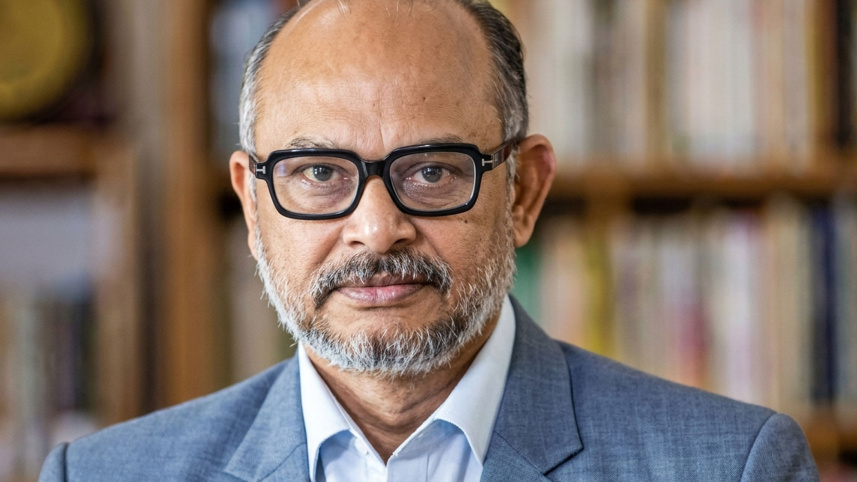
“The plundering of resources during the AL regime increased the money supply without a corresponding rise in production, thereby accelerating inflation.”
The ousted Awami League-led government is responsible for the current energy crisis and high inflation, said Rashed Al Mahmud Titumir, adviser to the prime minister on finance and planning.

“The main causes of the energy crisis are dependence on imports, failure to conduct any gas exploration, and continuing the culture of nepotism and patronage to create an oligarchic system through plunder,” he said at a seminar yesterday at the Economic Reporters’ Forum (ERF) auditorium.
The plundering of resources during the AL regime increased the money supply without a corresponding rise in production, thereby accelerating inflation, he also said at the programme jointly organised by the ERF and the Centre for Policy Dialogue (CPD).
Stating that the recent rise in LNG prices was driven by the prolonged conflict in the Middle East, the PM’s adviser said Bangladesh might not have to bear such high costs if it had sufficient domestic gas supplies and was not dependent on imports.
He called on economists and researchers not to just criticise the policies of the AL government but to also calculate and publish the cost of “inaction”, “wrongdoing”, and siphoning of funds abroad through energy-sector corruption.
Such an assessment would show the financial burden accumulated from wrong policies or inaction, and the resulting impact on investment, employment and future generations, he said.
Titumir said the BNP government is taking actions for the energy sector that should have been done earlier.
For instance, he said the government is promoting solar power, including offering to purchase solar power.
He stated that while it will cost someone Tk 8.5 per unit to install solar power, the government will buy it at Tk 10.50 per unit from them. “Through this, we want to see electricity consumers as electricity producers.”
On inflation, the PM’s adviser said some of it stemmed from normal economic growth, but excessive pressure had come from past plunder and corruption, including irregularities in imports and exports that pumped money into circulation.
A long-term target of 5-6 percent inflation while maintaining growth was realistic for a developing economy, he said.
National Professor Mahbub Ullah, meanwhile, said a “plunder economy” had developed in Bangladesh since independence, with influential groups benefiting by redistributing existing resources rather than engaging in production, hindering investment and growth.
In the past, many infrastructure projects were funded at two or three times the necessary cost, he said, letting influential groups take a cut of project funds while pumping money into the market without a matching rise in output, fuelling inflation.
“The problem is that production or output did not increase at the same rate as these investments. As a result, the excess supply of money in the market puts pressure on inflation,” said the professor.
Such an economy had contributed to the high inflation, he said, calling for moving the economy away from a plunder-based system towards production and fairness.
Mahbub also linked money stolen from banks to inflation.
He said a portion of the funds siphoned abroad were converted into dollars or other hard currency first, leaving a large amount of local currency in the domestic market.
The national professor also spoke on the rising poverty. As per the World Bank’s latest report, the number of poor people increased by an estimated 14 lakh in Bangladesh in 2025.
Mahbub said the recent rise in poverty reflected falling real incomes, pushing people to cut non-essential consumption, a trend that could weaken demand and economic activity.
 For all latest news, follow The Daily Star's Google News channel.
 On the low tax-to-GDP ratio, the economist said it was incorrect to assume that Bangladeshis did not pay taxes. Rather, people paid various forms of informal “taxes”.
“Extortion in the country is a form of taxation. It is a kind of tax,” he said, adding that, however, that money goes to political and influential groups rather than the state treasury.
Bringing the money that people are effectively forced to pay from the hands of informal groups into the state’s revenue system could help resolve major economic problems, he said.
Md Fazlul Hoque, administrator of the Federation of Bangladesh Chambers of Commerce and Industry (FBCCI), said simply raising interest rates would not be enough to control inflation.
Extortion, market control, supply-chain weaknesses and the law-and-order situation also drive up prices, he said, adding that ensuring fuel supply was crucial since energy shortages were disrupting production, particularly in oil refining and sugar processing.
The government’s top priority should be keeping operating factories open, he said, while also working to reopen closed ones.
He called for the immediate reopening of coal- and furnace-oil-fired power plants to boost electricity generation, reduce gas dependence in power generation, and free up gas for factories and other priority sectors.
Fahmida Khatun, a distinguished fellow of the CPD, said there were some areas of relief in Bangladesh’s economy in the last six months, but it remained facing several challenges.
The weak contribution of the industrial sector was a major reason behind the decline in GDP growth in the January-March quarter, she said.
Both short-term and long-term solutions are needed to address the energy crisis. Structural reforms in the energy sector are therefore also necessary, she added.
Comments