


Trade deficit widens 24% on rising imports
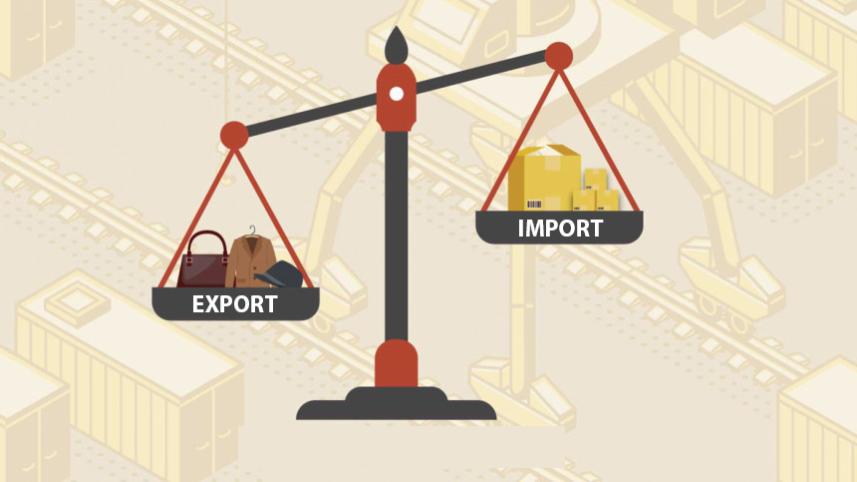
- Trade deficit widens 24 percent on higher import costs
- Fuel price volatility pushes petroleum import bill up
- Remittance surge narrows current account deficit to $397m
The country’s trade deficit widened by 24 percent in the July-March period of the current fiscal year, due mainly to stronger import growth and weaker export earnings.
The gap between imports and exports stood at $19.17 billion in the first nine months of FY 2025-26, up from $15.44 billion in the same period a year earlier.

In the July-March period, import payments rose 4.6 percent year-on-year to $51.55 billion, according to Bangladesh Bank (BB) data.
Within this, petroleum imports increased sharply by 54 percent to $6.29 billion. Crude petroleum alone jumped 81 percent to $933 million, according to the central bank.
Economists linked the rise to volatile global fuel prices in March amid the US-Israel war on Iran and wider conflict across the Middle East.
During mid-March, crude oil prices climbed to about $102-$109 per barrel, compared with below $100 in the previous month, pushing up the import bill.
Export earnings fell 4.4 percent to $32.38 billion over the same period.
Despite the wider trade gap, the country’s current account deficit narrowed. This indicator tracks net flows of goods, services and income between a country and the rest of the world.
The deficit stood at $397 million in July-March of FY26, compared with $878 million a year earlier.
Industry insiders said higher remittance inflows helped ease pressure on the current account. Expatriates sent more than $3 billion a month for five consecutive months up to April, according to BB data.
The financial account also strengthened during the period. It rose to a surplus of $3.81 billion from $570 million a year earlier, reflecting increased inflows from loans, credit and other cross-border financial transactions.
Analysts said the surplus was largely driven by borrowing and trade credit rather than stable investment. Foreign direct investment remained moderate, while portfolio investment stayed negative, reflecting weak investor confidence.
During the period, net foreign direct investment stood at $1 billion, down from $1.31 billion in the same months of the previous fiscal year.
Net trade credit rose to $3.23 billion during the nine months, compared with a negative $1.61 billion a year earlier.
According to industry insiders, the growing reliance on debt-based inflows could increase repayment risks in the future.
These developments together pushed Bangladesh’s overall balance of payments (BoP) into a surplus of $3.65 billion, compared with a deficit of $1.10 billion in the same period last year.
 For all latest news, follow The Daily Star's Google News channel.
Comments