


Turning bad balance sheets into great companies

The recent restructuring of one of Bangladesh’s largest and most respected business groups has drawn criticism. I believe the opposite. It would have been discouraging, disrespectful and disturbing had such restructuring not been considered. The group has suffered largely because of external shocks. What can a company do when gas supply remains below the pressure needed to run factories? What can it do when the taka loses nearly half its value in a short period? The larger the company, the greater the blow. A small balance sheet bleeds quietly. A large one bleeds in public.
Criticism has also been directed at bankers. I disagree. Lending to industry has always involved risk. A banker is not merely processing documents but taking a view on the future, trusting that factories will have power and gas and businesses will remain viable. Without that optimism, both bankers and entrepreneurs will retreat.

Those of us in manufacturing know how difficult the past six years have been. The pandemic, supply chain disruptions, freight shocks, wars, energy shortages, high interest rates and the sharp devaluation of the taka all eroded working capital and increased debt burdens. Yet, despite these pressures, most industrialists kept factories running, workers employed and salaries paid. They deserve recognition for protecting livelihoods through extraordinary circumstances.
I also appreciate the role of the new government, particularly the Bangladesh Bank and financial institutions, for standing by businesses. But the job has only begun. Recovery will take three to five years, and Bangladesh must now confront an uncomfortable truth. Capital erosion in the private sector is real. The challenge is no longer one company or one loan. It is a financing structure that relies too heavily on debt. Businesses need financing options as diverse as those available in competing economies. Otherwise, repeated loan restructuring will become the norm.
Bangladesh may not yet be ready for every sophisticated financial instrument, but strengthening the equity market should be an immediate priority. Our capital market remains too small for the size of the economy. A shallow equity market limits investment options and forces companies to depend on bank loans. Excessive reliance on debt increases exposure to interest rates, making every economic shock a potential debt crisis.
Around the world, equity has not only financed new businesses but also rescued established ones. General Motors, Chrysler and South Korea’s Hynix Semiconductor all emerged stronger after restructuring that included debt-for-equity swaps. Countries become industrial leaders not because companies never stumble, but because they have systems that help viable businesses recover.
If a viable company cannot service its debt, adding more interest rarely solves the problem. Converting part of that debt into equity can strengthen both the company and the lender. This is not loan forgiveness. It is a proven restructuring tool used successfully in countries including Japan, the United States and South Korea.
Bangladesh should develop a clear debt-to-equity conversion framework involving the Finance Ministry, Bangladesh Bank, BSEC, BIDA, DSE, CSE, DCCI and CCCI. The framework must distinguish wilful defaulters from businesses genuinely hit by external shocks. Fraud and money laundering must be punished, while viable companies should have a sustainable path to recovery.
Companies undergoing approved restructuring should be allowed to raise equity under appropriate disclosure, valuation and governance rules. The same approach should apply to well-managed greenfield projects, enabling them to access equity earlier.
Bangladesh also has significant domestic capital lying idle. Properly designed policies could channel that money into productive enterprises through transparent, taxable investment. The country has no shortage of entrepreneurs, workers or ambition. What it lacks is a financial architecture equal to that ambition. Questions will rightly be asked. But the defining one is this: can we recognise the great companies that lie behind today’s bad balance sheets?
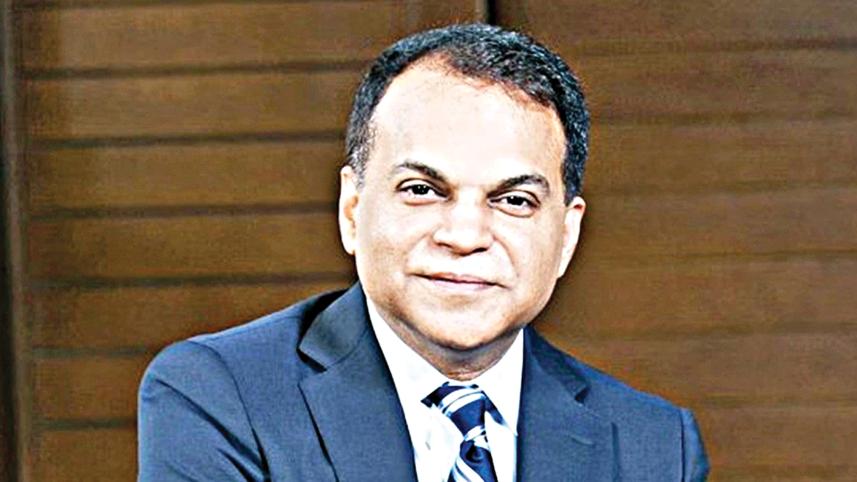
The writer is chairman of Anwar Group of Industries
 For all latest news, follow The Daily Star's Google News channel.
Comments