


War, energy crisis force UK into fossil fuels rethink
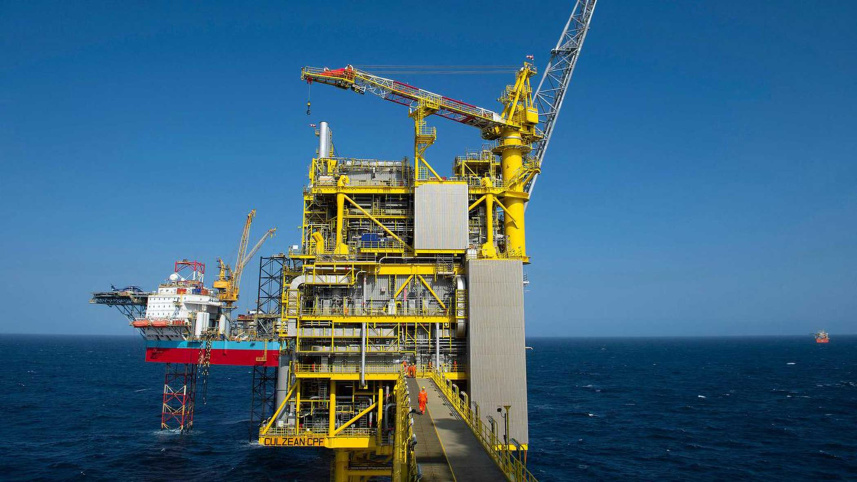
Given the climate emergency, the UN chief says that investing now in fossil fuels is "moral and economic madness". But given the energy shock from the war in Ukraine, Britain is set to do just that.
Prime Minister Boris Johnson's government will on Thursday release a much-delayed energy strategy that will call for more renewable power from nuclear, offshore wind and solar.

But it will also invite new licences to drill for North Sea oil and gas and help alleviate price pressures "in the nearer term", according to an outline of the plan released in advance by the government.
The strategy "will reduce our dependence on power sources exposed to volatile international prices we cannot control, so we can enjoy greater energy self-sufficiency with cheaper bills", Johnson said in a statement.
When Britain hosted the COP26 climate summit in November, the prime minister sounded as ominous as any environmentalist in warning governments about the dangers of inaction.
But the government says the market shock from sanctions on Russia requires a temporary reappraisal of fossil fuels, as rocketing energy prices leave Britons facing the worst cost-of-living crisis since the 1950s. "Scaling up cheap renewables and new nuclear, while maximising North Sea production, is the best and only way to ensure our energy independence over the coming years," Business and Energy Secretary Kwasi Kwarteng said.
But for UN secretary-general Antonio Guterres, there is lunacy in backing fossil fuels at all, as he spelt out Monday at the release of the latest UN report on climate change. The 3,000-page report warned that countries risk ending up with trillions in worthless assets such as offshore platforms and pipelines when demand for fossil fuels wanes in coming decades.
For the UK government, however, political pressure to tackle the energy crisis is heating up ahead of nationwide local elections on May 5.
The new strategy envisions enough offshore wind production to power every UK home by 2030, and one-quarter of all electricity coming from both large and smaller "modular" nuclear reactors.
It also projects a five-fold increase in solar power and a doubling in energy derived from "low-carbon" hydrogen.
If all the bets come off, according to the statement, Britain could derive 95 percent of its electricity from low-carbon sources by 2030.
No costings were given, but the government said it was underpinned by 100 billion ($130 billion, 120 billion euros) of private-sector investment in "clean energy" leading to 480,000 new jobs by 2030. Up to eight large-scale reactors could begin to be built this decade under the plan.
Modular reactors power the Royal Navy's nuclear submarines but are untested at scale, and their part in the energy strategy is "subject to technology readiness from industry", the statement said. Since the invasion of Ukraine, the government is also reviewing a long-stalled plan to harness the enormous tidal power of the Severn Estuary between Wales and southwest England.
 For all latest news, follow The Daily Star's Google News channel.
Comments