


China’s coal-based urea shields farmers from global fertiliser turmoil
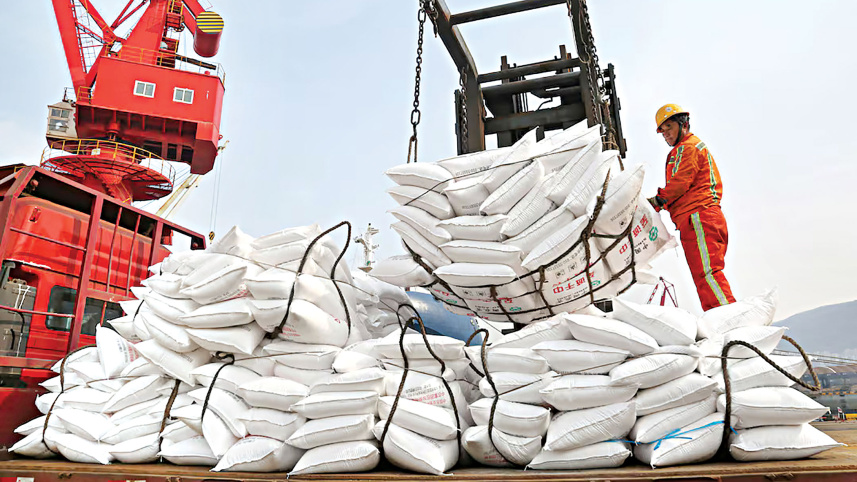
Farmers around the world may be switching to less nutrient-hungry crops as the Iran war hits the supply of fertilisers, but in China, they’re sitting pretty with plenty of stock thanks to the country’s rather unique reliance on coal to produce urea.
However, some analysts say China may not allow exports of urea - the most widely used fertiliser globally - after spring planting as it normally does, as that could drive up local prices. Beijing typically waits to see if there is a surplus in May before assessing how much can be shipped abroad.

Whereas other big exporters of urea - a nitrogen-based plant nutrient - like Russia, Qatar and Saudi Arabia use gas to produce it, some 78 percent of China’s urea output is produced with coal - a relatively cheap resource it has in abundance.
“China is largely self-sufficient in urea and it is less exposed to natural gas price volatility than many other producing regions,” said Willis Thomas, head of fertilisers analysis at CRU.
China’s vast deployment of coal - which it also uses to create oil, gas and other products - has been particularly prescient even if it is more polluting than natural gas, as it reduces the need for energy imports that can be cut off in a conflict.
PRICE SURGES OUTSIDE CHINA
Benchmark prices for urea have surged some 70 percent since the end of February as the war prevents ships from passing through the Strait of Hormuz, a vital route for about 30 percent of the fertiliser’s global trade.
Urea prices last week were trading at around $700-780 per metric ton on a free-on-board basis in Indonesia. In contrast, in northern China, prices were around 1,760-1,840 yuan ($255-$267) a ton last week, CRU’s Thomas said.
US farmers plan to plant less corn - a nitrogen-intensive crop this year than last year, and will plant more soybeans, the US Department of Agriculture said last week. Australian growers are also expected to favour barley over nitrogen-intensive wheat and canola in the upcoming season.
But in China, which has also put curbs on exports of other types of fertiliser and directed the early release of commercial fertiliser reserves, little switching is expected.
F”I’m sticking with corn this year because it’s still more profitable than soybeans,” said a corn farmer with the surname Guo in northeastern Heilongjiang province.
AMPLE UREA SUPPLIES
China is set to produce a record 76.5 million tons of urea this year, up 6.3 percent from last year, with domestic demand estimated at 66 million tons, including 43 million tons for agriculture, according to the China Nitrogen Fertilizer Industry Association.
Nine new plants are expected to commence production this year, adding 4.9 million tons per year, mostly coal-based, Thomas said.
Last year, China exported 4.9 million tons, somewhat below historical norms of 5 to 5.5 million tons which would typically account for around 10 percent of global exports, according to StoneX.
India, which imported more than 40 percent of its urea and DAP, a blend, from the Middle East last year, has asked China to allow the sale of some urea cargoes.
However, China may keep curbs on exports in place over the coming months, some analysts said.
“If China starts exporting, local urea prices will quickly jump in line with the global market. The government doesn’t want that situation,” said StoneX analyst Josh Linville.
China’s General Administration of Customs and its state planning agency, the National Development and Reform Commission, did not immediately respond to Reuters requests for comment.
India is one of the few countries that has also explored coal gasification as a strategic alternative feedstock for urea, but those projects are limited to a handful of early-stage initiatives.
 For all latest news, follow The Daily Star's Google News channel.
Comments