


Iran war chokes petrochemical supply, sends plastic prices soaring
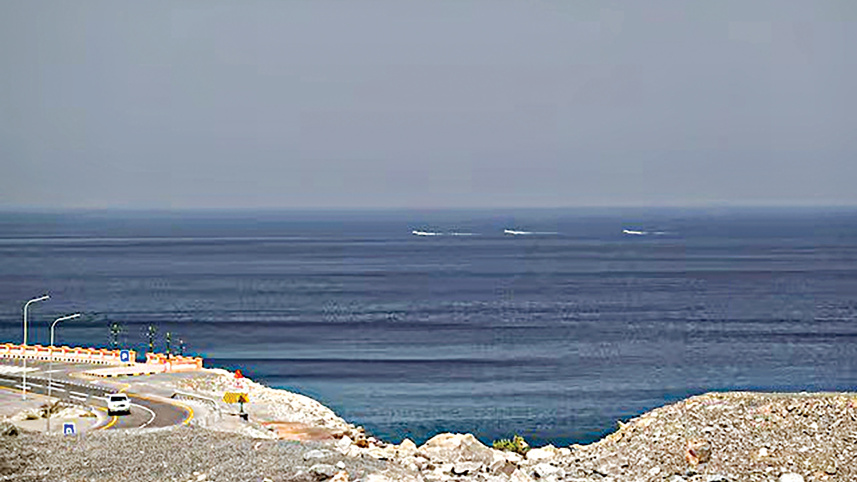
Disruptions to oil and petrochemical flows through the Strait of Hormuz following the outbreak of the Iran war have tightened global chemicals supply and lifted prices of plastics and polymer, used in everything from auto parts to toys, to roughly four-year highs.
About $20 billion to $25 billion worth of petrochemical products pass through the Strait annually, according to Rabobank, underscoring the fact that continued disruptions to this flow would push producers to pass the higher costs on to consumers.

“Anyone who imports from the Middle East, which is pretty much everyone in the rest of the world to a certain extent, has lost a large supplier and is having to scramble to find replacement resin at extraordinarily higher prices,” said Joel Morales of Chemical Market Analytics by OPIS.
The Middle East accounted for over 40 percent of polyethylene exports in 2025, led by Saudi Arabia, and ships to nearly every region outside North America, the next largest exporting region.
Prices for plastics such as polyethylene (PE) and polypropylene (PP) have surged since the Middle East conflict began, tracking higher crude and feedstock costs.
“Global logistics have become uncertain, with up to 50 percent of polyethylene supply either offline, constrained or being impacted following the events in the Middle East,” said Dow CEO Jim Fitterling.
FEEDSTOCK SHOCK RIPPLING THROUGH CHEMICALS
Analysts said the Strait’s closure could disrupt nearly 1.2 million barrels per day of global naphtha export flows, further tightening feedstock availability for the production of petrochemicals.
The war has sent Asia’s naphtha refining margin above $400 a ton over Brent crude from about $108 a ton before the conflict started, according to LSEG data.
Maksim Sonin, energy executive at Stanford University’s Center for Fuels of the Future and Hydrogen Initiative, said the spike in prices reflects a growing “risk premium”, with Asia particularly vulnerable, given its heavy reliance on naphtha as a key petrochemical feedstock in plastics production.
Japan, South Korea and India, among others, are most exposed due to their dependence on imported crude and petrochemical inputs.
ASIA, EUROPE SQUEEZED AS US GAINS EDGE
Plastic manufacturers in Asia and Europe, which are heavily reliant on imported feedstocks and Middle East supply, are facing higher input costs and tighter margins.
Europe is being squeezed by rising feedstock costs and imports, while surging naphtha prices have created a disconnect with contract pricing, leaving producers struggling to pass costs onto customers, LyondellBasell said.
But North America is relatively advantaged, due to its feedstock availability.
Agustin Izquierdo, CFO of US-based petrochemicals maker LyondellBasell, said PE and PP prices, along with oxyfuels linked to crude, have risen significantly since the conflict began, adding that April order books are the strongest in several months despite the price hikes.
“It’s becoming obvious that North America is an advantaged region in terms of feedstock, and we’ll continue to take advantage of that going forward.”
Plastics in the US are largely made from natural gas and related feedstocks, according to the Energy Information Administration, unlike elsewhere, where producers mainly rely on naphtha, a crude-oil derivative.
With more than 50 percent of polyethylene output exported, US producers are seeing “super-normal” profits, said Utpal Sheth of Chemical Market Analytics by OPIS.
CONSUMERS TO PAY
 For all latest news, follow The Daily Star's Google News channel.
 US chemical producers are passing on the higher costs to consumers. Celanese has raised prices across its engineered materials and acetyl lines, while Dow plans polyethylene price hikes in March and April.
European firms such as BASF and Wacker Chemie are also lifting prices to offset higher raw material and transport costs.
Germany’s Lanxess has gone further, hiking prices for flame retardants and other specialty additives by up to 35 percent, and as much as 50 percent for plasticisers, citing sustained cost pressures.
India’s biggest bottled water company, Bisleri, has raised prices by 11 percent, putting a strain on customers as access to clean drinking water remains uneven in the country.
Water solutions company Ecolab said it will impose a 10 percent-14 percent energy surcharge from April, citing higher costs.
Rising input costs for petrochemicals makers could weigh on demand for non-essential goods too, reinforcing broader inflationary pressures.
Sonin added that the plastics market may also consolidate over time, concentrating production among larger, lower-cost producers.
Comments