


Iran war will leave lasting scars on energy market
One day after warning of the end of Iranian civilization, Donald Trump has proclaimed “a big day for World Peace”. The US president’s declaration of a two-week ceasefire to his war with Iran caused oil prices to plunge nearly 15 percent to $94 a barrel on Wednesday morning as investors priced in the prospect of ships once again sailing through the Strait of Hormuz. But even in a best-case scenario, the scars from over a month of extreme trauma in the energy market will remain visible for years.
For a start, the ceasefire is tenuous. Exactly how Iranian and US armed forces will flip from fighting to working together to ensure tankers can safely navigate the narrow waterway which previously handled a fifth of global oil supply is unclear. Iran has an incentive to limit shipping volumes to maximise its negotiating leverage, while any big US vessels in the Gulf will be big potential targets. Tehran’s demands – including lifting of all sanctions, financial compensation for war damage, and the right to continue to enrich uranium – will also be hard to square with what Trump and Israeli Prime Minister Benjamin Netanyahu require to show their war has been strategically worthwhile.

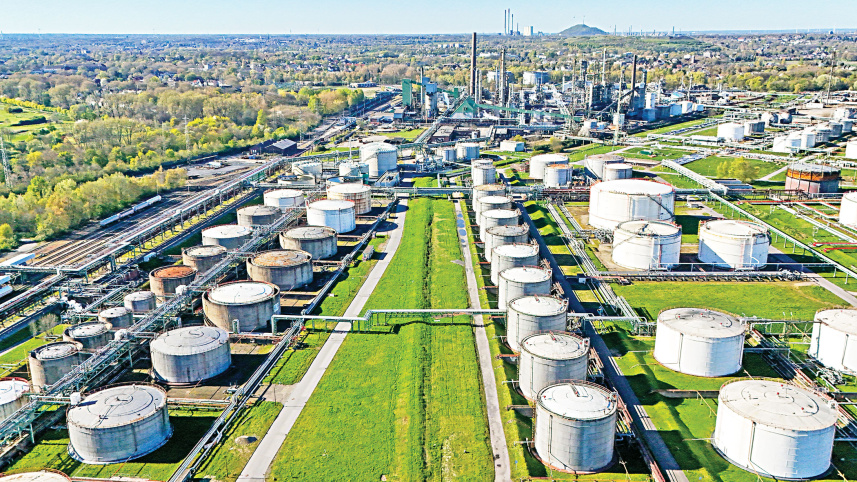
But even if the president and his counterparts in Tehran agree on everything, a return to the pre-war status quo when a barrel of oil changed hands for about $70 faces multiple obstacles. First, the damage to Gulf energy infrastructure has been profound. Qatar has said Iranian attacks knocked out 17 percent of its liquefied natural gas capacity for up to five years. Second, those facilities that escaped attack have shut in production after filling up local storage facilities in the absence of shipments. Big producers such as Saudi Arabia will likely hold back on a return to full production until they have more confidence that the ceasefire has legs – a stance echoed on Wednesday by shipping giant Maersk. It could take up to four months for a degree of normalcy to return, one oil investor told Breakingviews.
A third factor is that countries will need to refill oil reserves that they have been running down for the last month, while some governments will now want to hold bigger buffers. This will raise global demand for crude oil. Iran’s plan to charge ships a toll for safe Hormuz passage, as reported by the Associated Press, will also push up prices. If Tehran charged a $2 per barrel fee on the daily flow of 20 million barrels, it would pocket almost $15 billion a year – and potentially much more. Finally, oil investors will likely add a $10-a-barrel generic risk premium to the price of the black stuff to reflect the possibility of renewed fighting. Even if the US and Iran now end their five-week conflict, the global energy market will bear lasting scars.
Brent crude oil fell by 13 percent to $95 per barrel on April 8, as of 0819 GMT, after US President Donald Trump said on April 7 he had agreed to a two-week ceasefire with Iran, subject to the immediate and safe reopening of the Strait of Hormuz.
“This will be a double sided CEASEFIRE!” Trump wrote on social media, after posting earlier on April 7 that “a whole civilization will die tonight” if his demands were not met.
Iran said on April 7 that transit through the Strait of Hormuz would be possible for two weeks in coordination with Iranian armed forces, according to a statement by Foreign Minister Abbas Araqchi.
The two-week plan includes allowing both Iran and Oman to charge fees on ships transiting through the Strait of Hormuz, the Associated Press reported on April 8, citing a regional official. The official said Iran would use the money it raised for reconstruction, the AP reported.
 For all latest news, follow The Daily Star's Google News channel.
Comments