


Why is the yen so weak and what can Japan do about it?
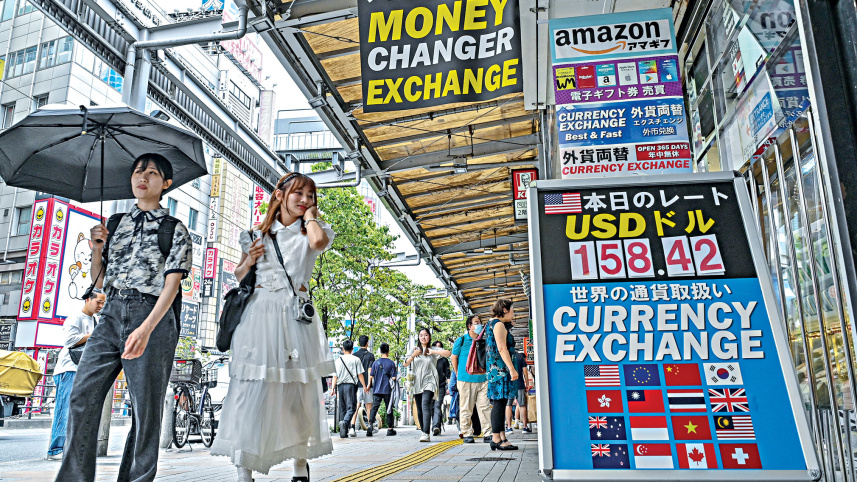
The yen has tumbled past a 40-year low against the US dollar, prompting the Japanese government to vow “appropriate action at any time”.
The currency has been falling for years and has now dropped under 161.96 yen against the dollar, the weakest since 1986, compared to a high of around 75 yen in 2011.
 For all latest news, follow The Daily Star's Google News channel.
 AFP looks at the causes and consequences and how Japan might halt the slide, which mirrors drops in other Asian currencies in the wake of the Middle East war.
Part of the reason is the gap between Japanese interest rates and those of other central banks, especially the US Federal Reserve. While the Bank of Japan (BoJ) began hiking rates above zero in 2024, and raised them to a 31-year high on June 16, they remain low compared to other major economies.
This gap means that investors borrow yen at cheap rates and invest in other assets outside Japan with better returns. This results in capital outflows and pressure on the yen.
The BoJ is expected to hike rates further this year, but expectations are growing that the Fed will also tighten, meaning that the differential will remain.
“The prospect of higher US interest rates has widened the expected policy gap between the United States and many of its major trading partners, increasing demand for dollar-denominated assets,” said IG’s Axel Rudolph.
Further hikes by the BoJ could also meet resistance from Prime Minister Sanae Takaichi’s government, which is anxious not to snuff out growth with higher borrowing costs.
Japan, the world’s fourth-largest economy, is resource-poor and some 95 percent of its oil imports came from the Middle East before the most recent conflict.
Oil is traded in US dollars, meaning that the higher the price, the more yen Japan has to pay for each barrel of crude, further weakening demand for the Japanese currency.
The situation worsened for Japan when oil prices spiked after the United States and Israeli attacks on Iran from February 28 and Tehran’s throttling of the Strait of Hormuz, a key supply route for oil and LNG gas.
One bright spot for Japan is that a weaker yen makes its exports cheaper internationally, which US President Donald Trump has complained about.
Another has been a boom in foreign tourists, lured by cheaper shopping, although not all Japanese are happy with the overcrowding and bad behaviour in some places.
Higher oil prices mean not just higher petrol and energy prices, something that Takaichi’s administration has sought to shield consumers from with subsidies.
It also fuels inflation for other items as companies pass on higher costs to consumers, and as the bill for other imports besides oil and gas rise because of the weak yen.
Anger about inflation contributed to the demise of Takaichi’s two predecessors as prime minister, particularly after rice prices soared.
INTERVENTION
Japan has intervened in the market in the past to support the yen, drawing on its huge reserves of cash or US Treasury holdings to either buy yen or sell US dollars.
Japan spent 11.7 trillion yen ($73 billion) between late April and late May, and data due later on Tuesday was expected to reveal whether it has intervened since.
The Japanese government regularly signals that it is ready to intervene in an attempt to scare currency speculators off betting on further falls in the yen.
OTHER OPTIONS
However, intervention or threats of intervention can only achieve so much.
Michael Wan at MUFG Bank said Tokyo could encourage its pension funds and life insurance companies to repatriate funds back to Japan, given its status as a large net creditor to the world.
“But what would be key is continued commitment to fiscal discipline, coupled with providing the market with confidence the government will not intervene excessively in the Bank of Japan’s conduct of monetary policy to manage inflation,” Wan told AFP.
“The bottom-line issue is that real interest rates in Japan are too low relative to the rest of the world, at a time of robust nominal GDP growth.”


Comments