


Aarong to plant 80,000 saplings for the ultra-poor
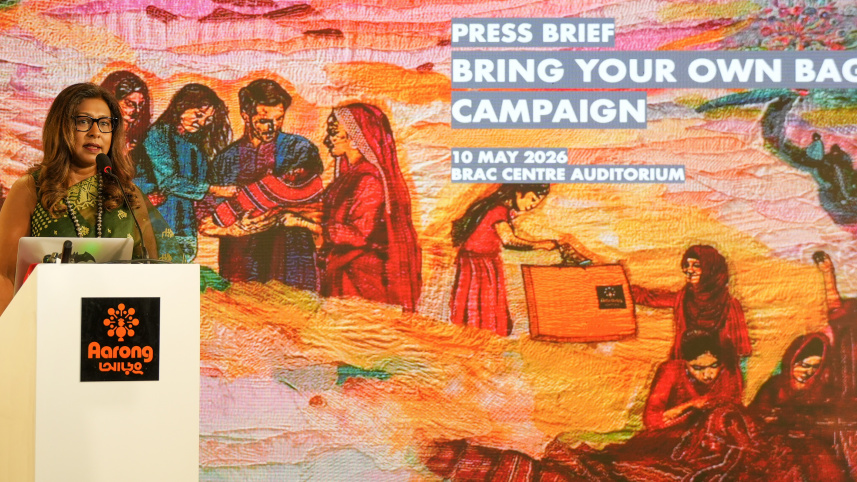
Aarong slashed free bag distribution by 46.79 lakh units in seven months after launching its "Bring Your Own Bag" initiative, and will now channel the proceeds into planting 80,000 saplings among 40,000 ultra-poor households across Bangladesh.
The social enterprise made the announcement at a press conference at the BRAC Centre Inn in Dhaka today.
 For all latest news, follow The Daily Star's Google News channel.
 BRAC Enterprises Managing Director Tamara Hasan Abed said Aarong launched the initiative in September 2025 to curb excessive paper bag consumption.
She said the company had always offered bags free of charge, which prompted customers to request multiple extras, leading to unnecessary waste.
Aarong distributed 69.92 lakh free bags between September 2024 and March 2025. After the initiative began, usage fell to 23.12 lakh over the same period.
Customers who bring their own bags receive a Tk 15 cashback incentive; those who forget may purchase a paper bag for a nominal fee. She noted the practice is common among international retailers in India, Thailand, the United States, and the United Kingdom.
By March 2026, bag sales had generated Tk 2.89 crore, which Aarong committed to donate entirely to environmental and social projects.
Of this, Tk 1 crore will go to the BRAC Ultra-Poor Graduation Initiative to provide 8,000 saplings — including mahogany and fruit trees — to 4,000 women.
Another Tk 50 lakh will support habitat restoration in the Barind region, and a further Tk 50 lakh will go to Mission Green Bangladesh to establish two Miyawaki forests at different locations, including Damra, Rupganj, and public university campuses.
She said the company realised that producing large quantities of paper bags requires cutting down significant numbers of trees, and that organisations must become more conscious about how their practices affect the environment and climate.
She clarified that Aarong had always provided paper bags free of charge and never included bag costs in product pricing. Because the bags were free, customers often requested multiple extra bags or separate bags for individual items, which led to unnecessary waste and overconsumption.
Comments