


Bangladesh, Netherlands team up to make RMG more sustainable
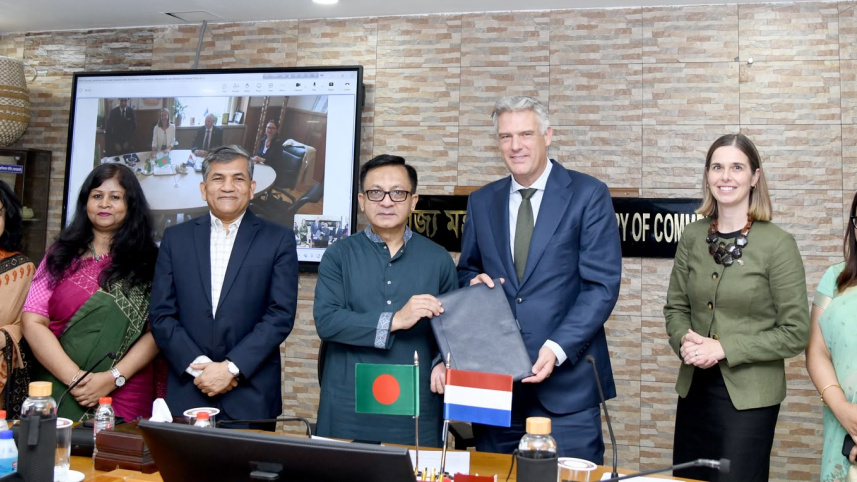
Bangladesh today signed a memorandum of understanding (MoU) with the Netherlands on cooperation in the field of the circular economy, aiming to make the country’s ready-made garment and textile sectors more sustainable, environment-friendly and competitive in global markets.
Through this agreement, the two countries will expand cooperation in efficient resource use across the textile value chain, waste reduction, recyclable production systems and green industrialisation, according to a statement from the commerce ministry.

Commerce Minister Khandakar Abdul Muktadir signed the deal at the commerce ministry along with Dutch Minister of Climate and Green Growth Stientje van Veldhoven-van der Meer.
After signing the agreement, Muktadir said adopting sustainable production systems and circular approaches in the global textile industry has now become a necessity.
As Bangladesh’s ready-made garment and textile supply chains are deeply integrated into the global market, he emphasised the need to further strengthen international cooperation in these sectors.
“This memorandum of understanding is an important milestone in advancing our partnership towards a greener, more resilient and future-oriented economy,” he said.
The circular economy is not only about environmental protection but is also directly linked to strengthening the long-term competitiveness of Bangladesh’s export sector, ensuring maximum resource efficiency, attracting sustainable investment, creating green jobs and responding to new demands in international markets, the minister said.
He further said that Bangladesh is on the path towards graduating from the least developed country (LDC) category.
In this context, strengthening the sustainable capacity of industries, adopting environmentally friendly production systems and complying with international standards will further strengthen Bangladesh’s position in future trade competition, he said.
The Dutch minister said expanding the circular economy is now extremely important.
However, no country can complete this transition alone. International cooperation, commercial partnerships and coordinated initiatives are needed throughout the entire supply chain.
She said officials from the two countries had already discussed priority areas of action and that these discussions now need to be quickly translated into concrete measures.
She also expressed interest in Bangladesh and the Netherlands working together not only bilaterally but also in international forums. At the same time, she expressed hope that cooperation between the two countries would become more effective and results-oriented.
Through this MoU, new opportunities are expected to emerge for the use of green technologies, innovation, sustainable production systems and enhanced international market competitiveness in Bangladesh’s textile and ready-made garment sectors, the commerce ministry said in a statement.
 For all latest news, follow The Daily Star's Google News channel.
Comments