


Energy security, policy continuity key to reviving investment: Titumir
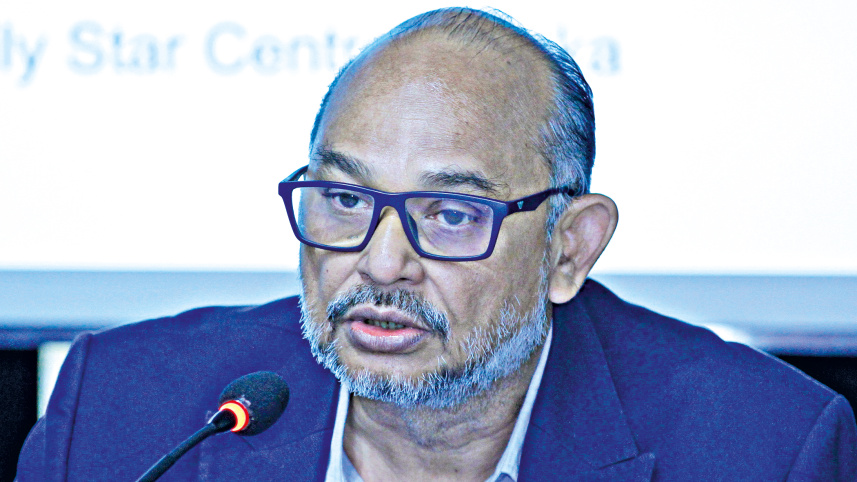
Bangladesh must restore investor confidence, cut red tape, and secure energy supplies to revive investment under the proposed national budget for 2026–27, said Rashed Al Mahmud Titumir, the prime minister's adviser on planning and economic affairs, today.
The budget marks a shift towards a "new economic model" focused on investment, jobs, and public trust, he said at a post-budget dialogue.
 For all latest news, follow The Daily Star's Google News channel.
 The Metropolitan Chamber of Commerce and Industry (MCCI), Dhaka, the Policy Research Institute of Bangladesh (PRI), and Standard Chartered Bangladesh jointly organised the event in Dhaka.
"The first question is confidence," he said, adding that Bangladesh had overcome past economic crises by adopting home-grown strategies rather than textbook prescriptions.
Investors need policy continuity, deregulation, financing, energy security, and connectivity, Titumir said, citing the proposed five-year policy outlook as a key signal to businesses.
The Tk 60,000 crore support package should be performance-based, unlike earlier stimulus schemes that often failed to deliver results, he said.
On energy, he said Bangladesh would pursue a diversified energy mix, including renewable and nuclear power, while expanding onshore and offshore gas exploration. Strategic reserves and a regional energy hub are also planned.
Rail and multimodal transport links must be improved to reduce transaction costs, especially for agriculture and export-oriented industries, Titumir said.
He also called for higher investment in education and health, saying skill mismatches and weak grassroots healthcare remain major constraints.
The government plans to raise education spending to 5 percent of gross domestic product (GDP) and health spending to 2 percent, he said, adding that it also plans to recruit 5,000 doctors and up to 100,000 health workers.
On revenue, the adviser said the government would focus on recovery, restoration, and reconstruction while cracking down on tax evasion, fraud, and unnecessary exemptions to raise the tax-to-GDP ratio to 10 percent by 2030.


Comments