How the Mughal legacy continues to shape South Asia

The Daily Star (TDS): We are now in 2026, five centuries after Zahir-ud-din Muhammad Babur's victory at the First Battle of Panipat. In your recent article, you note that Babur, commanding an army of only around 12,000 men, defeated the much larger forces of Ibrahim Lodi. At the time, he had been displaced from his ancestral homeland in the Fergana Valley and was invited into north India by figures such as Daulat Khan Lodi. How was Babur able to achieve such a decisive victory, and what factors enabled him to lay the foundations of Mughal rule in India?
Syed Ali Nadeem Rezavi (SANR): From a young age, Babur had been engaged in military encounters with powerful enemies: first his own Mongol-Timurid cousins who wanted to dislodge him from his home territory of Andijan in the Fergana Valley, and then the Uzbeks under Shaibani Khan, who dislodged him twice from Samarkand. He then engaged with the Safavid king Shah Ismail to defeat the Uzbeks. From each of his enemies and collaborators, he learned. His defeats at the hands of the Uzbeks did not leave him dejected; he tried to learn from his mistakes and the reasons for the superiority of his enemy. His reconquest of Samarkand with the help of the Persians also taught him things he did not know. He learnt that battle formation was important, and he started organising his own troops in the same fashion: the tulughma formation. He then learnt to use guns and how to use cannon in open battles. When he came towards the Indian borders in 1519, he employed his cannon and hand-held guns in a way of which the Indians were unaware. At Panipat and Khanwa, in 1526 and 1527, his use of new technology (hand-held guns, the use of cannon shielded by araba [wooden carts] and mantelets, protecting them from enemy fire), together with his new battle formation, where his small forces, divided into platoons, surrounded the bulky Indian army, all contributed to his victory over the disorganised and technologically inferior Indian forces, which, moreover, were not operating under a single command.
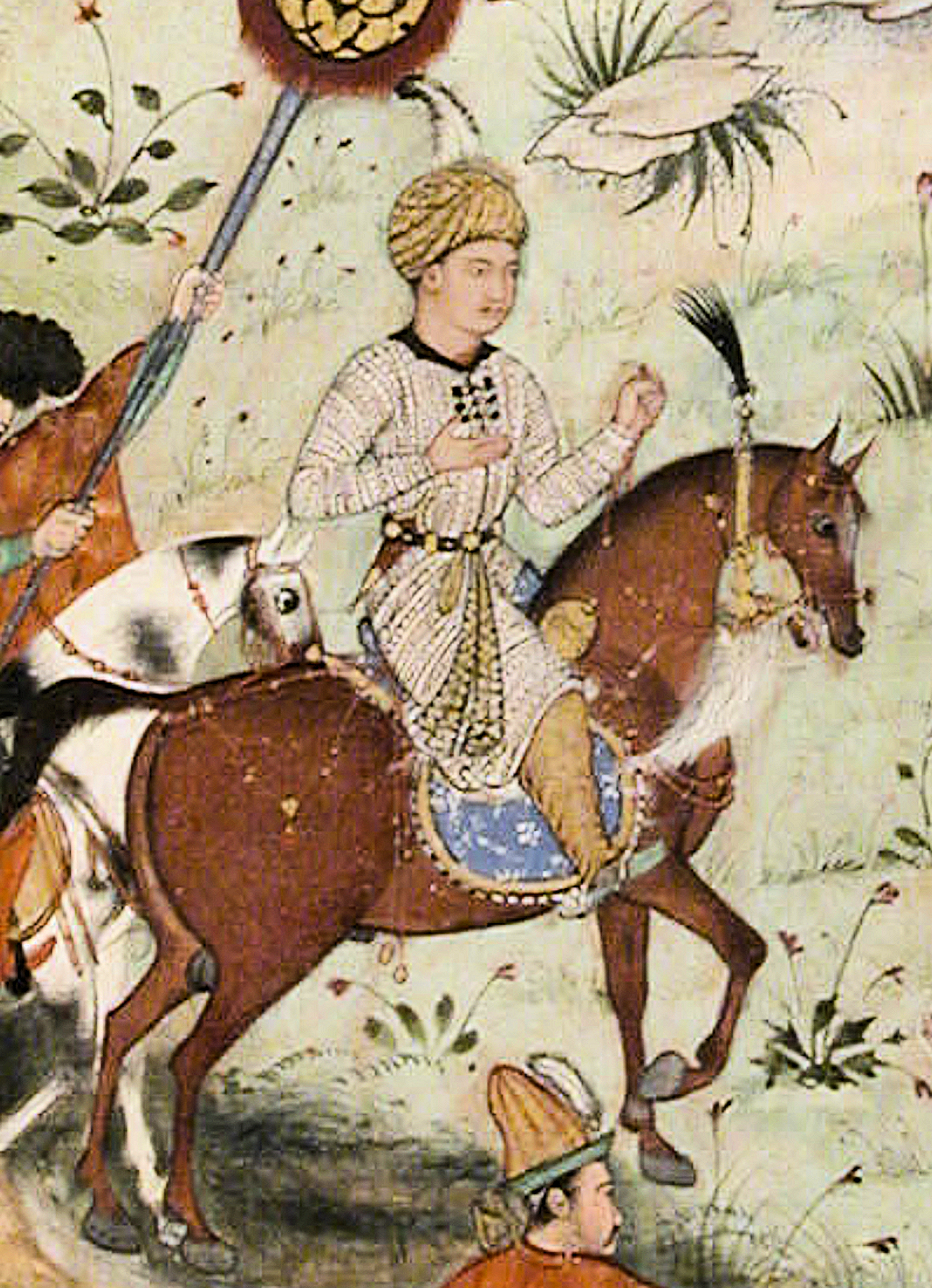
And yes, the idea that he had to come to India was based not only on the fact that he could move only southwards, as the western front, dominated by the Safavids and Uzbeks, left him no option, but also on the opportunities that India presented at the time. An opening was provided to him by at least two emissaries: first, Daulat Khan Lodi, who wanted Babur to secure for his uncle the territory of Punjab; and second, an emissary of Rana Sanga, who wrote to Babur asking him to help contain the Lodi king and thus save his small principality. The support of these two figures, combined with the political and economic rot within the Lodi kingdom, helped Babur to a great extent.
TDS: The Delhi Sultanate and the Mughal Empire were both founded by ruling groups that originated outside the subcontinent. Yet the Mughals succeeded in building a far more durable and stable empire. What distinguished the Mughal system of governance from that of earlier Sultanate dynasties such as the Mamluks, Tughlaqs, and Lodis? What administrative, political, or social factors enabled the Mughals to sustain their rule for much longer and integrate a far wider territory?
SANR: Well, although the general and popular belief, based on the works of certain historians, is that Babur was simply a conqueror and not an administrator, the facts point otherwise. If under the earlier Turkish rulers in India there was an administrative system based on the iqta, a piece of land assigned to an officer who derived his salary demands from it, Babur introduced a new system: the wajh, which meant the revenue, not the territory. The territory from which it would come was the jagir, the place under control. It was not necessary for the wajh to be drawn from the land being controlled by the official. This continued until the early years of Akbar. Akbar introduced two new administrative structures: mansab and jagir. Mansab meant status, while jagir referred to the territory assigned according to that status. Like the iqta, the jagir was transferable, while the mansab was awarded according to expertise. Thus, a person would be appointed at a lower level and then rise in mansab as he gained experience, very much like the modern system. You are appointed, if qualified, as an assistant professor; then you advance to become an associate professor and ultimately a professor. You rise according to your experience and expertise.
Secondly, your birth was not important; skill was. Thus, all ethnic, religious or caste differences vanished: everyone was eligible, and no one was privileged by birth. This was the beauty of the Mughal administration. There was the creation of a cosmopolitan, mobile ruling class. As long as this system remained healthy, so did the Mughal Empire. Yes, it had its limitations: Irfan Habib has pointed out its regressive nature.
We are talking of a time when the concept of nation did not exist. Thus, there were no foreigners or citizens. Whoever lived in the territory and made it his home was an Indian. The concept of foreigners comes only from when the concept of an exclusive nation crept in from Europe.
TDS: The Mughal Empire expanded across an immense geographical expanse, stretching from Kabul and Kandahar in the west to Bengal in the east. This expansion was achieved not only through military conquest, but also through administrative integration, political negotiation, and strategic alliances, including matrimonial ties with influential Rajput houses. How should we understand this process of imperial consolidation in the face of regional resistance from groups such as the Baro-Bhuiyans in Bengal and, later, the powerful Maratha movement under Shivaji?
SANR: As I pointed out, during the 16th century, as in earlier periods, there was no nation or nationhood. However, there were regions and regional identities. Secondly, it was universally accepted that conquest was the criterion for rule. Resistance and counter-resistance were based on military success. One simply had to settle and marry locally. Babur emerged as the ruler of Kabul and entered into marriage alliances with local tribes in order to be accepted. The same thing happened in India. Marriage alliances helped the Mughals gain acceptance among local elites.
Shivaji was not fighting against Aurangzeb on the basis of his being a Muslim or a foreigner. He fought when he felt that his region was threatened. He was joined by Bijapur and Golkonda, all three kingdoms of the Deccan resisting attacks from the north. In fact, Shivaji was full of praise for Akbar. Remember, he did join Mughal service as a mansabdar. However, he later became antagonised when he felt slighted and believed that he had not been treated in the manner he expected. The issues were different. Yes, there was resistance from local groups when they perceived a loss of respect and power. These were all battles of political supremacy, not anything else.
TDS: The Mughal Empire is often celebrated for its monumental architecture and urban planning, from imperial capitals such as Fatehpur Sikri and Shahjahanabad to iconic structures like the Taj Mahal. Yet Mughal urbanism extended well beyond these grand centres, shaping provincial towns, commercial networks, and administrative hubs across the subcontinent. How did the character of Mughal cities differ from that of the colonial cities that emerged later under British rule, and what were the broader implications of these differences for agriculture, trade, governance, and the relationship between urban and rural economies?
SANR: I cannot say whether the implications were very different or significant if one compares them with towns of today. However, Mughal urbanism and colonial urbanism were based on fundamentally different relationships between the city, the countryside, and the state, and these differences had far-reaching consequences for agriculture, trade, and administration.
Mughal cities such as Fatehpur Sikri, Agra, and Shahjahanabad were “consumption cities” embedded within a largely agrarian political economy. They drew their sustenance from a revenue system (jagir/mansab) that appropriated surplus from the countryside and redistributed it through the nobility, artisans, and service groups. As a result, agriculture was shaped by flexible revenue demands and local intermediaries, with urban growth stimulating artisanal production and market gardening rather than fundamentally restructuring agrarian relations. Trade under the Mughals was extensive and integrated, but largely inland-oriented and mediated through bazaars, sarais, and merchant networks, with cities functioning as nodes in a pre-capitalist circulation system rather than as export-driven hubs. Administratively, Mughal cities were not autonomous corporations but extensions of imperial authority, with governance dispersed among officials (kotwals, qazis, and amils) and closely tied to revenue extraction and elite residence.
By contrast, colonial cities such as Calcutta, Bombay, and Madras were “production- and export-oriented” port cities integrated into a global capitalist economy. Their rise reoriented agriculture towards commercialisation and cash crops such as indigo, opium, and cotton, often at the expense of subsistence patterns, and imposed more rigid land revenue systems (Permanent Settlement and Ryotwari) that altered rural hierarchies and increased peasant vulnerability. Trade became maritime, export-driven, and dominated by European agency houses, leading to the decline or subordination of traditional inland commercial networks and artisanal industries.
Administratively, colonial urban centres were institutionalised through municipalities, codified law, and bureaucratic governance. They were spatially segregated (white towns, black towns, and civil lines) and increasingly detached from their rural hinterlands except as sources of raw materials. Thus, while Mughal urbanism reinforced a redistributive agrarian order and a relatively integrated inland economy, colonial urbanism restructured India into a peripheral, export-oriented economy with profound consequences for agrarian distress, deindustrialisation, and centralised bureaucratic control.
TDS: The Indian subcontinent has witnessed the rise of several major imperial formations, among which the Maurya, Mughal, and British empires stand out for their scale and historical influence. How would you compare their respective approaches to governance, statecraft, and political integration? Figures such as Ashoka and Akbar are often remembered as among the region’s greatest rulers. In that broader historical context, where does the Mughal Empire stand in relation to the earlier Mauryan model and the later colonial state established by the British?
SANR: The time periods of the empires of Ashoka, Akbar and the colonial period are so distant from one another, separated by centuries, that there can be no real comparison, especially in the case of the Mauryans and the Mughals. They belonged to vastly different times and circumstances altogether.
However, one way to answer this hypothetical question is to frame the three empires as distinct but comparable experiments in subcontinental governance, each articulating a different relationship between state power, society, and economy, while also noting important continuities in imperial scale and integrative ambition.
The Mauryan Empire (c. 4th–2nd century BCE), especially under Ashoka, represents perhaps the earliest large-scale, centrally articulated imperial formation in South Asia: a highly centralised, bureaucratic state (as reflected in the Arthashastra tradition and Ashokan edicts) that sought direct control over revenue, officials, and provincial administration, while also projecting an ethical kingship through dhamma, a moral-political idiom aimed at social harmony across diverse populations. Its historical significance lies in pioneering subcontinental political unification and in embedding the idea that sovereignty could be both coercive and normatively guided.
The Mughal Empire (16th–18th centuries), particularly under Akbar, differed in structure, though not in scale. It was less uniformly centralised than the Mauryan state and operated through a sophisticated system of graded sovereignty, embodied in the mansabdari–jagirdari framework, where power was shared, negotiated and redistributed, as noted earlier, among a cosmopolitan nobility (Turani, Irani, Indian Muslim, Rajput, and later Maratha elements). Rather than imposing a singular moral code like dhamma, Akbar articulated sulh-i kul (universal peace), a political ethic of accommodation that allowed diverse religious and regional elites to be integrated into imperial service. The Mughal state did not seek to micromanage village society; instead, it relied on existing agrarian structures while standardising revenue assessment (notably under Todar Mal) to sustain a vast redistributive system. Its significance lies in creating one of the most durable early modern empires: economically vibrant, culturally generative, and administratively flexible, with an urban and artisanal economy that linked courtly consumption to regional production.
The British Empire in India (18th–20th centuries), by contrast, marked a decisive rupture. Unlike the Mauryan and Mughal polities, which were territorially rooted and sought legitimacy within the subcontinent, the British Empire was an external colonial formation integrated into a global capitalist system. Its governing style combined bureaucratic centralisation with legal codification, surveillance, and a rhetoric of the “rule of law”, but its primary objective was extraction and the reorientation of the Indian economy towards imperial interests. Land revenue systems such as the Permanent Settlement and Ryotwari fundamentally altered agrarian relations, while colonial cities and infrastructure (ports and railways) restructured trade towards export markets. Administratively, the British created a uniform, impersonal bureaucracy and new institutions (courts and municipalities), but these often distanced governance from indigenous social negotiations that had characterised earlier empires. Its historical significance lies less in integrative statecraft and more in transforming India’s economy and polity into a colonial periphery, while also inadvertently laying the groundwork for modern state institutions and nationalist politics.
In comparison, then, the Mughal Empire occupies an intermediate but distinctive position: unlike the Mauryans, it did not pursue rigid centralisation but instead perfected a system of negotiated imperial sovereignty; unlike the British, it was not an extractive colonial regime but a redistributive, internally anchored polity that fostered cultural synthesis and economic integration. Figures like Ashoka and Akbar stand out precisely because they exemplify two different idioms of imperial greatness—moral universalism and political inclusivity—while the British model, though administratively transformative, lacks that same integrative legitimacy within the subcontinent’s historical experience.
TDS: The Mughal, Safavid, and Ottoman empires emerged as three of the most powerful political formations of the early modern world. What were the major similarities that linked these empires, and what distinctive political, cultural, religious, or administrative features set each of them apart?
SANR: For one thing, all of them were ethnically Turkic, culturally Persian, and part of what Richard Eaton describes as a Persianate world. However, among the three, the Mughals were quite different as well. Their empire was inclusive, with a cosmopolitan ruling class and an openness to religious inclusivity. The policy of Sulh-i Kul distinguished it from what he regards as the religious bigotry of the other two empires. If Akbar tolerated all religions on the premise that all religions were imperfect, Dara Shukoh believed that all religions contained an inherent truth and were therefore equal.
TDS: Five centuries after its foundation, how should we assess the Mughal Empire's historical legacy? While Mughal policies evolved over time and varied across rulers and regions, what do you see as the empire's key strengths and its most significant structural weaknesses?
SANR: The Mughal Empire’s most enduring strength was its capacity to build a large, durable, and culturally integrative polity out of immense regional diversity. It fashioned a cosmopolitan ruling class through the mansabdari system, standardised revenue assessment to sustain a vast redistributive economy, and articulated a broadly accommodative political ethic (most clearly under Akbar, but also under Aurangzeb) that enabled the incorporation of Rajputs, Indian Muslims, and later Maratha elements into imperial service. Incidentally, under Aurangzeb, the state had the largest number of non-Muslims in the highest echelons of the ruling elite. All this, in turn, underwrote remarkable urban growth, artisanal production, long-distance trade, and a shared high culture in language, art, and architecture that outlasted the dynasty.
Equally important was its administrative pragmatism, reliance on existing agrarian structures, flexible use of intermediaries, and capacity to negotiate sovereignty rather than impose it uniformly, allowing the empire to function effectively across varied ecological and social zones. Yet these very features also revealed structural limitations. The jagirdari system not only tied state finance to the continuous expansion or reallocation of revenue assignments, producing chronic pressure on the agrarian surplus, factional competition among nobles, and periodic instability when resources tightened, but was also, as Irfan Habib has pointed out, a highly regressive system. Further, the empire lacked strong mechanisms of institutionalisation beyond the person of the emperor, making succession crises recurrent and often violent. Its military-fiscal system, while formidable, struggled to adapt to shifting patterns of warfare and the rise of regional powers. Its reliance on negotiated authority meant that, as central cohesion weakened in the eighteenth century, provincial elites could convert delegated power into autonomous rule. Finally, while economically vibrant, the Mughal system did not generate the kind of structural transformation in agriculture or technology that might have buffered it against global changes, leaving it vulnerable to the combined pressures of internal fragmentation and the reorientation of trade under expanding European power.
TDS: While Europe underwent a profound transformation following the widespread adoption of the printing press after Johannes Gutenberg's invention in the fifteenth century, Mughal India did not experience a comparable print revolution, despite readily adopting military technologies such as gunpowder and cannon, a contrast noted by Sumit Sarkar. To what extent did the limited spread of print culture and the slower circulation of new intellectual currents contribute to India's relative divergence from Europe, and how far did this shape its vulnerability to European commercial and political expansion in the eighteenth century?
SANR: Let me divide my answer in two parts. As Irfan Habib pointed out long ago, although India had the “potentialities of capitalistic development”, it seriously lacked scientific knowledge. M. Athar Ali, in his paper Passing of an Empire, opined that at a time when scientific developments were taking place in Europe, we were still debating whether Hinduism and Islam were one or not.
Let me now turn to what you asked. Yes, the printing press in Europe helped create what may be called a new infrastructure of knowledge: cheaper books, wider circulation of religious and scientific debate, standardised texts, public controversy, technical manuals, maps, navigational literature, and eventually newspapers. It strengthened the Reformation, the Scientific Revolution, commercial literacy, and bureaucratic communication. In this sense, print did not merely spread information; it altered the speed, scale, and social reach of knowledge.
Mughal India, by contrast, possessed a very rich manuscript culture. Persian, Sanskrit, Arabic, Braj, Awadhi, Bengali, Dakhni, and other literary traditions flourished; there were libraries, calligraphers, madrasas, maktabs, pathshalas, court ateliers, and scholarly networks. But knowledge circulated through elite, scribal, courtly, religious, and mercantile channels rather than through mass print. This meant that learning remained sophisticated but socially narrower. Scientific, technical, legal, and political knowledge was less easily standardised and less rapidly disseminated across society.
The consequences were important. First, the absence of a strong print public sphere limited the emergence of broad intellectual debate comparable to that of early modern Europe. Second, technical knowledge, whether in mathematics, astronomy, navigation, mechanics, military drill, or commercial accounting, did not circulate with the same reproducible speed. Third, political communication remained tied to court, mosque, temple, bazaar, and manuscript networks rather than to newspapers, pamphlets, and printed polemics. Fourth, administrative record-keeping remained highly developed but was not transformed into the kind of print-bureaucratic order that European states and companies increasingly employed.
Yet this should not be overstated. The Mughal Empire did not decline simply because it lacked printing. India was not intellectually stagnant: Indo-Persian scholarship, vernacular literatures, astronomy, medicine, architecture, revenue administration, and artisanal technologies remained highly developed. Nor was Europe’s advantage only intellectual; it was also tied to Atlantic trade, colonial plunder, naval power, joint-stock companies, banking, military-fiscal states, and continuous interstate warfare, which drove technological and organisational innovation.
The more balanced conclusion is that limited print culture contributed to India’s relative disadvantage by slowing the broad social circulation of new knowledge and weakening the formation of a wider critical public and technical culture. But India’s eighteenth-century vulnerability resulted from the convergence of this intellectual limitation with Mughal political fragmentation, fiscal strain, regionalisation of power, European naval-commercial strength, and the militarised corporate power of the East India Company. Print was not the sole cause, but it was part of the deeper asymmetry between a manuscript-based imperial order and a print-capitalist, militarised, globally expanding Europe.
TDS: What do you consider the most enduring legacies of Mughal rule in India? Beyond the political integration of much of the subcontinent and iconic achievements such as Mughal painting and the Taj Mahal, what major cultural, artistic, social, or institutional influences continue to shape the region today?
SANR: The most enduring legacy of Mughal rule lies less in monuments and more in the deep structuring of India’s social, cultural, and institutional life. At the linguistic level, the consolidation of Persian as the language of administration and high culture, alongside its sustained interaction with vernaculars, helped generate new literary idioms, most notably the evolution of Urdu/Hindustani, while also stimulating the growth of Braj, Awadhi, Punjabi, and later Rekhta poetic traditions. This multilingual synthesis continues to shape North India’s cultural and communicative landscape. We should not forget that the Mughal contribution to Persian was such that India produced more books in Persian than Iran itself. This led to the development of ‘Indian Persian’, known to this day as sabk-e-Hindi, the Indian style of Persian.
In administration, the Mughal system of revenue assessment, record-keeping, and territorial organisation, including standardised measurement, the pargana-sarkar framework, and a trained scribal bureaucracy, left a durable imprint, much of which was adapted and reworked under colonial rule and still echoes in modern land revenue practices and district administration.
Equally significant was the creation of a composite, service-based elite through the mansabdari system, which normalised the political incorporation of diverse ethnic and religious groups and helped establish a long-lasting idiom of negotiated sovereignty and elite cooperation.
In the social and economic sphere, Mughal patronage fostered extensive artisanal specialisation in textiles, metalwork, paper, book arts, and carpets, embedding regional craft traditions into wider commercial networks. Many of these skills, designs, and production clusters survive to this day. Urban forms, bazaars, sarais, gardens, and water systems shaped patterns of habitation and commerce, with the idea of the city as a node of consumption and cultural exchange persisting in later urban development.
In the realm of everyday culture, Mughal influence permeated cuisine (techniques, dishes, and courtly food culture), dress, etiquette (adab), and aesthetic sensibilities, creating a shared repertoire that cuts across religious and regional boundaries. Perhaps most enduring, however, was the articulation, however uneven in practice, of a political ethic of accommodation, most clearly expressed in sulh-i kul, which informed later notions of pluralism and coexistence in the subcontinent.
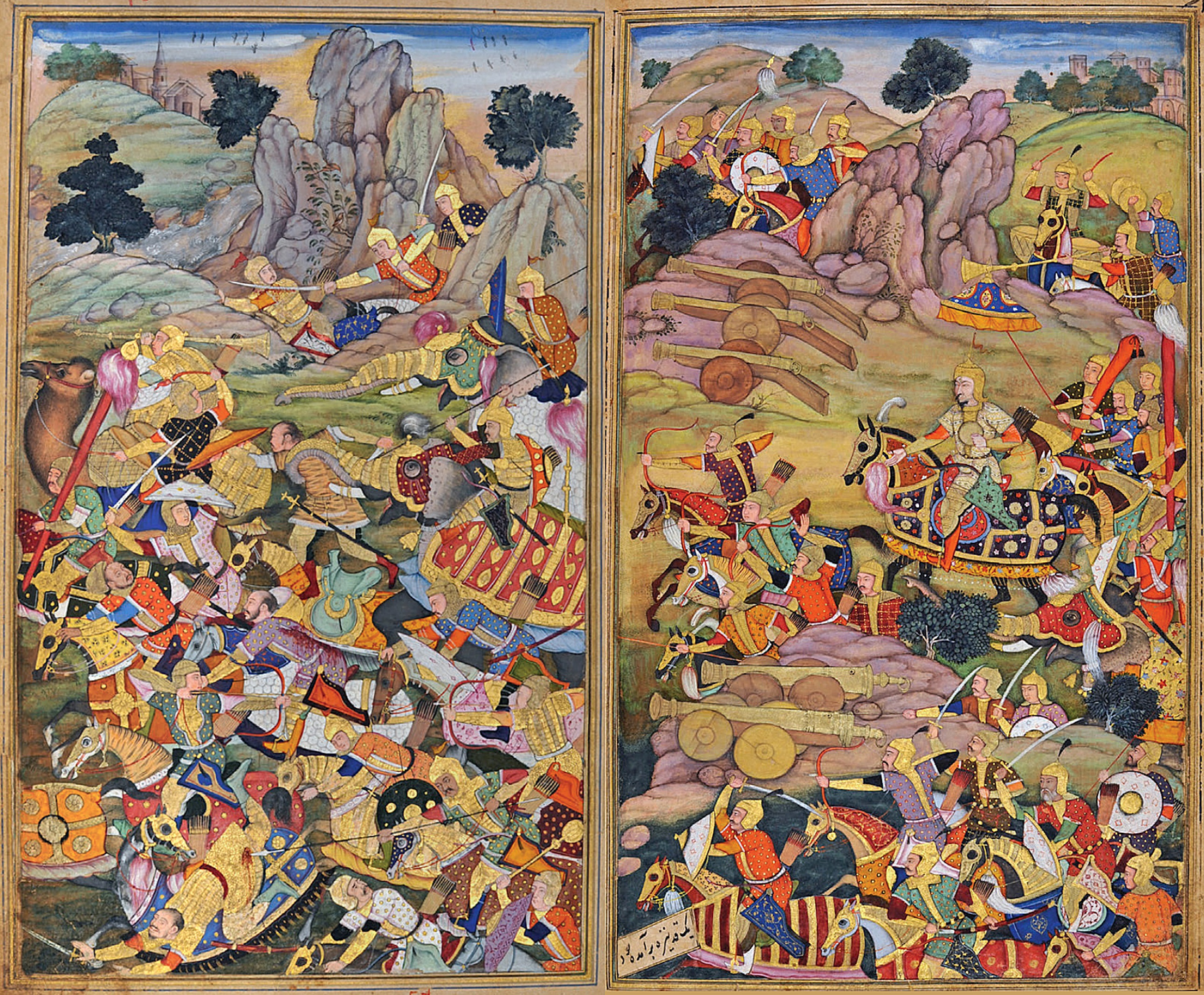
Taken together, these legacies reveal the Mughal Empire not merely as a political formation but as a civilisational moment whose cultural, linguistic, and institutional imprints remain deeply embedded in South Asian life.
TDS: Jadunath Sarkar famously attributed the decline of the Mughal Empire to the degeneration of its rulers and the decay of its administration rather than to a lack of resources. How far do you agree with this assessment? Was the empire's decline primarily driven by failures of leadership, or by deeper structural, fiscal, and economic forces?
SANR: It was basically William Irvine who spoke of the degeneration of rulers.
This emphasis on the “degeneration” of rulers and administrative decay captures an element of the late Mughal crisis, but it is ultimately too narrow to explain the scale and timing of imperial decline. There is little doubt that the quality of leadership after Aurangzeb was uneven and that recurrent succession struggles weakened the centre. Factionalism at court, the increasing inability of emperors to arbitrate among powerful nobles, and a perceptible slackening of administrative discipline all contributed to instability. Yet to treat these as primary causes risks mistaking symptoms for structure.
As scholars from Irfan Habib and M. Athar Ali to Satish Chandra and Muzaffar Alam have argued, the empire faced deep-seated contradictions within its military-fiscal system. The jagirdari-mansabdari framework depended on a continuous balance between available revenue resources and the claims of an expanding nobility, and by the late seventeenth century this balance was under severe strain. The so-called “jagirdari crisis” — a shortage of assignable, productive jagirs, pressure on the agrarian surplus, and intensifying competition among mansabdars — generated both rural distress and elite conflict.
At the same time, regionalisation was not merely a failure of control but a structural transformation. Provincial governors, zamindars, and emerging powers (the Marathas, Sikhs, the Nawabs of Awadh and Bengal, and Hyderabad) converted delegated authority into autonomous regimes while often retaining Mughal idioms of legitimacy. Economic shifts, greater commercialisation in some regions, disruptions caused by prolonged warfare (especially in the Deccan), and the reorientation of trade with the growing presence of European companies further complicated the imperial fiscal base. The empire’s administrative system, highly effective in an expansionary phase, proved less adaptable in a context of contraction and decentralisation.
Thus, while individual shortcomings and court politics accelerated the process, the decline of the Mughal Empire is better understood as the outcome of interacting structural, fiscal, and regional dynamics within an early modern empire that had reached the limits of its integrative capacity. Sarkar’s thesis remains important as a reminder of the role of leadership, but it cannot, on its own, account for the deeper transformations that reshaped the subcontinent in the eighteenth century.
The interview was taken by Priyam Paul.
Send your articles for Slow Reads to slowreads@thedailystar.net. Check out our submission guidelines for details.

The blind spots of Bangladesh studies

Rediscovering Santal history through Scandinavian archives

Asma Abbasi: The essence of orange
Tigers and the empire: A history of hunting, power and resistance
25th Death Anniversary / A life so full: Remembering Ahmed Sofa
Bengal's forgotten slave trade: Portuguese, Arakanese and Dutch trafficking networks
Mufazzal Haider Chaudhury and the idea of Bangladesh
The Tagore paradox: Why critique strengthens his legacy