


Governor’s Bangladesh Bank reform mission stalls


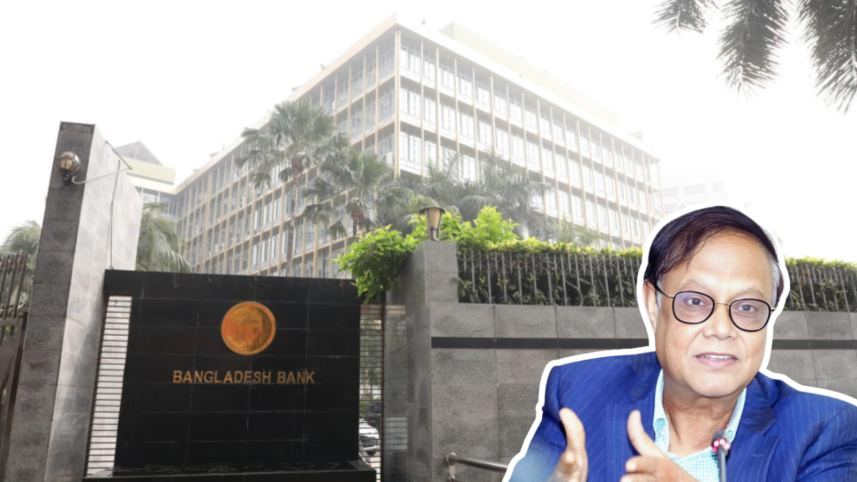
When Ahsan H Mansur took office as governor of Bangladesh Bank in August 2024, he spoke with the urgency of a reformer determined to rebuild credibility in a fragile financial system. About 18 months later, his tone has become more restrained, reflecting both progress in stabilisation and frustration that a cornerstone reform -- full legal autonomy for the central bank -- has suddenly hit the wall.
The shift in mood was evident at a monetary policy briefing at the central bank, where Mansur again pressed for stronger independence. The same day, Bangladesh Bank officials gathered inside the compound, expressing dissatisfaction over the government’s decision not to approve proposed amendments to the Bangladesh Bank Order, the foundational law governing the central bank.

At the briefing yesterday, Mansur did not conceal his disappointment. “It should have been done,” he said of the autonomy proposal. “We were hopeful -- that is why we submitted it. Why it was not done, I cannot say. But it is in the national interest, and we will present it to the next government.”
The autonomy plan, first formally proposed by Mansur in October last year, sought sweeping changes to strengthen the central bank’s legal protection and align it with global standards. The package included restructuring the central bank board, elevating leadership authority and revising appointment and removal procedures for top officials -- measures designed to shield monetary policy from political influence.
But in a letter to Mansur on Sunday, Finance Adviser Salehuddin Ahmed, himself a former central bank governor, struck a cautious tone, arguing that introducing major amendments to such a fundamental law during the tenure of an interim government would not be realistic.
“It would be more reasonable for the next elected government, after assuming office, to review and amend the Order as necessary,” Ahmed wrote, adding that any amendment required “detailed review” and consultation with experts and stakeholders.
As the interim administration neared the end of its term without acting on the proposal, Mansur publicly warned that delaying reform until after elections could make passage more difficult. The International Monetary Fund echoed that institutional reforms remained a priority but would fall to the next elected government.
Irked by Ahmed’s letter, officials under the banner of the Bangladesh Bank Officers’ Welfare Council held a protest rally yesterday, demanding the resignation of the finance adviser for shelving the proposal.
AKM Masum Billah, president of the council, accused Ahmed of taking a “dual stance,” adding that he had previously supported greater autonomy when serving as central bank governor.
“We are demanding his resignation, even if it is just a day before the end of his tenure,” Billah said.
The organisation urged whichever party forms the next government after the February 12 election to implement central bank autonomy swiftly, noting that major political parties have already pledged support in their election manifestos.
The episode highlights a shift in Mansur’s governorship. Early in his tenure, he framed reform as urgent and achievable. Now, his focus has turned toward preserving economic stability while waiting for political space to complete unfinished tasks.
“All central banks worldwide have legal protection,” Mansur said. “Politicians often seek short-term economic gains, but central bankers must ensure long-term sustainability. Pressure exists everywhere -- including here -- and legal protection is necessary so that financial discipline is not lost again.”
He warned that without stronger safeguards, past banking sector weaknesses could re-emerge. “If we do not act, the misuse and looting we saw in banking could return,” he said. “Autonomy is a permanent shield.”
Mansur acknowledged that broader reform remains incomplete. “Reform is a process, not a one-day event,” he said. “We drafted seven laws. Two have been implemented: the Bank Resolution Act and the Bank Deposit Protection Ordinance. If the others had passed, we could have progressed further.”
Mansur, former executive director of the Policy Research Institute, assumed office as the 13th governor of Bangladesh Bank on August 14, 2024, for a four-year term. Asked whether he would remain in office if his proposed reforms failed to advance under the next government, he avoided a definitive response, saying, “We will cross the bridge when it comes.”
 For all latest news, follow The Daily Star's Google News channel.
Comments