


Middle East war: global economic fallout
Here are the latest economic events in the Middle East war:
Thailand secures Hormuz transit

Thailand has reached an agreement with Iran to allow Thai oil vessels to travel through the Strait of Hormuz, its prime minister said Saturday.
"An agreement has been reached to allow Thai oil tankers to transit safely through the Strait of Hormuz," Thai Prime Minister Anutin Charnvirakul said, adding the development would alleviate concerns over fuel imports.
Fire at UAE industrial zone
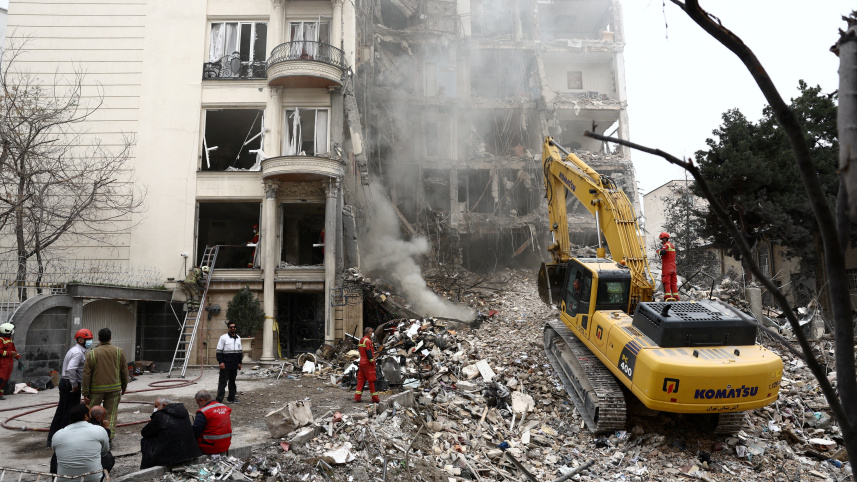
United Arab Emirates authorities said fires broke out early Saturday following a missile and drone attack from Iran, leaving five people with injuries.
The Abu Dhabi government media office said authorities were dealing with two fires in the area of the emirate's Khalifa Economic Zones.
Iran turns back ships
Iran's Revolutionary Guards said Friday that they had turned back three ships trying to transit the Strait of Hormuz, saying the route was closed to vessels travelling to and from ports linked to countries aiding the US-Israeli attacks.
Energy market intelligence firm Kpler said it had identified two container ships belonging to the Chinese firm COSCO that had attempted to leave the Gulf by crossing the narrow waterway, but had turned around.
Kuwait says port damaged
Kuwait's main commercial port was damaged in a drone attack, authorities said, as Iran pressed its campaign against Gulf targets in retaliation for US-Israeli strikes.
The Shuwaikh port was targeted at dawn "by enemy drones, preliminary reports revealed material damage but no human casualties", the Kuwait port authority said on X.
Oil rises
Oil prices rose sharply Friday as hopes faded among investors for a quick end to the conflict.
Global stock indices ended the week lower, with Wall Street's S&P 500 seeing its fifth losing week in a row.
'Significant slowdown' in Spain
Spain's economy could face a "significant slowdown" due to the Middle East war, the Bank of Spain said, warning of potential "episodes of financial market instability".
Separately, Spain's annual inflation jumped to 3.3 percent in March from 2.3 percent the previous month, driven by higher costs for petrol and heating oil, preliminary data showed Friday.
Iran all in on crypto
 For all latest news, follow The Daily Star's Google News channel.
 Iran has witnessed huge cryptocurrency flows since the start of the Middle East conflict.
Experts say they are being used to circumvent sanctions placed on Iran's Revolutionary Guards, and as a financial haven by civilians hit by soaring inflation.
Fewer flights cancelled
The percentage of Middle East flights cancelled has dropped considerably since the early days of the war, according to an aviation data firm, though the number of scheduled flights also fell as airlines trimmed serivces to the region.
Only 13 percent of flights to and from the region were cancelled on Friday, according to Cirium, compared to more than 65 percent in the first days of the war.
Germany to keep coal online longer
Chancellor Friedrich Merz said Friday that if the energy crisis sparked by the Middle East war dragged on and caused shortages, Germany might have to keep running coal-fired power plants longer than planned.
"I am not prepared to jeopardise the core of our industry just because we have decided on phase-out plans that have become unrealistic," he said, referring to a pledge to shut down coal-powered plants in favour of clean energy alternatives.
Egypt imposes business curfew
Egypt has ordered shops, restaurants and shopping malls to close at 9:00 pm (1900 GMT) from Saturday, hoping to curb energy bills that have more than doubled because of the Iran war.
Overnight queues in Ethiopia
Many Ethiopians slept in their cars in hours-long queues for petrol as shortages caused by the Middle East war began to take their toll.
The Horn of Africa country is particularly vulnerable as it imports all its petrol, primarily from the Gulf.
Tea stuck in Kenya
Around 6,000 to 8,000 tonnes of tea, worth $24 million, is stuck at Kenya's port of Mombasa because of the war in the Middle East, trade officials said Friday.
Around 65 percent of the east African tea market has been affected by the war that began on February 28, said George Omuga, director of the EATTA tea association.


Comments