


Middle East war: global economic fallout
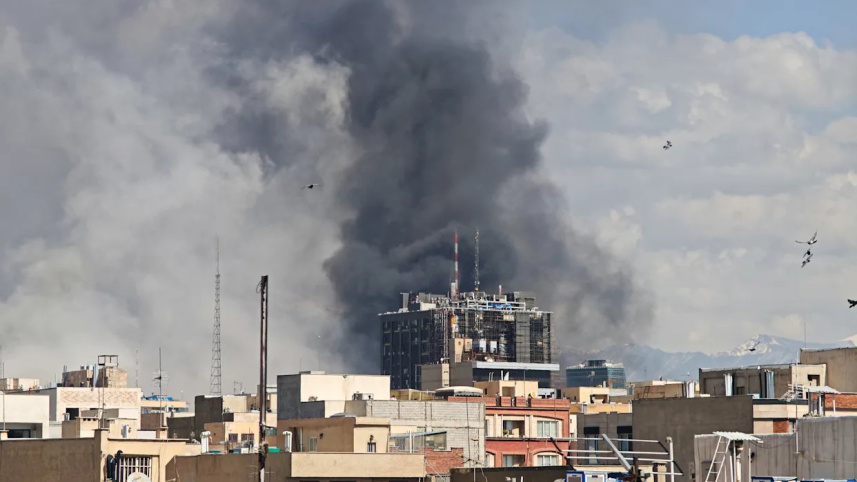
Here are the latest economic events in the Middle East war:
Oil rises, stocks fall

Oil prices climbed and stocks fell on Thursday as fears swirled over the nascent US-Iran ceasefire, after Tehran threatened to resume hostilities after Israel pummelled Lebanon.
Crude and gas prices initially plunged after US President Donald Trump announced the two-week halt in the war, and the Islamic republic said it would reopen the Strait of Hormuz as peace talks took place.
First ships through Hormuz
Traffic through the Strait of Hormuz remained extremely limited on Wednesday despite a fragile ceasefire announced between the United States and Iran.
At least two ships -- both bulk carriers -- have crossed the crucial waterway since Iran and the US said that the vital maritime passage would reopen, and a third was on course to do the same.
During the two-week ceasefire, passage through the strait "will be possible via coordination with Iran's Armed Forces", Iran's Foreign Minister Abbas Araghchi said on X.
German shipping giant Hapag-Lloyd said Wednesday its vessels would not resume transiting the Strait of Hormuz for now as the situation remains "tense" despite a ceasefire between the United States and Iran.
Six Hapag-Lloyd vessels are currently stranded in the Gulf.
ExxonMobil reports production drop
ExxonMobil on Wednesday disclosed a six percent drop in first-quarter petroleum production due to Middle East war-related outages, according to a securities filing.
Drone attack on Saudi pipeline
A drone attack targeted a vital east-west pipeline in Saudi Arabia on Wednesday, the Financial Times reported, marking the latest attack launched at key Gulf infrastructure after the US and Iran agreed to a ceasefire.
Saudi Arabia's Petroline has proven to be a critical economic lifeline during the war, with the 750-mile network of pipes connecting two waterways crucial for global commerce -- the Gulf in the east and the Red Sea to the west.
Bahrain reopening airspace
Bahrain said on Wednesday it had reopened its airspace, which had been closed since the start of the Middle East war, after Iran and the United States agreed a two-week ceasefire.
Iraq had earlier announced it was reopening its airspace.
Shell sees higher profits
British energy giant Shell said first-quarter earnings were set for a "significant" boost from oil prices soaring during the Middle East war, which nevertheless lowered its production. Results are due May 7.
 For all latest news, follow The Daily Star's Google News channel.
 Gas production is expected to be lower than at the end of 2025 because of damage to facilities in Qatar, it added.
Trump threatens tariffs
US President Donald Trump on Wednesday threatened to impose 50-percent tariffs on any country supplying weapons to Iran.
He also said in a separate post that his administration was "talking Tariff and Sanctions relief with Iran".
Jet fuel disruptions to linger
It will take months for jet fuel supplies and prices to normalise even with the Strait of Hormuz open, the head of the International Air Transport Association (IATA), Willie Walsh, said Wednesday.
"I don't think it's going to happen in weeks," he said, given the disruption to the refining capacity in the Middle East.



Comments