


Safe-haven dollar at six-week lows on hopes of fresh Iran talks
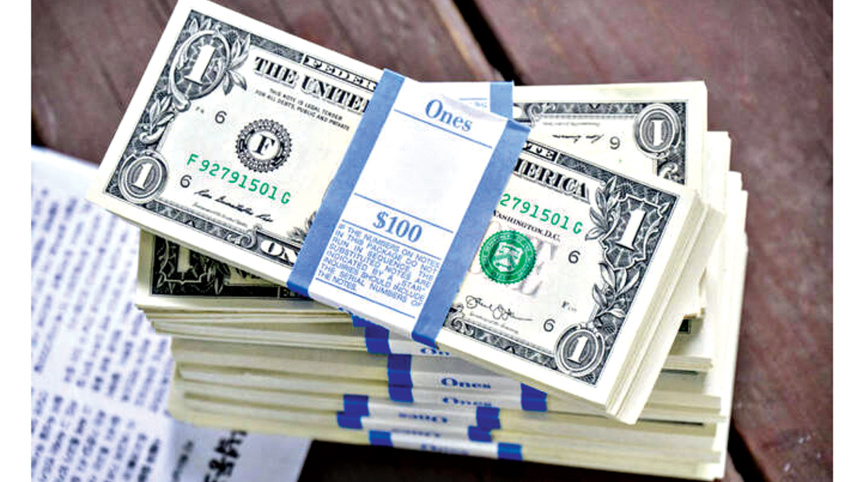
The US dollar lingered near six-week lows on Wednesday, surrendering nearly all the gains it had made since the Iran war erupted as signs of another round of talks between Washington and Tehran lifted risk appetite.
Tehran has effectively shut the Strait of Hormuz, a crucial waterway for a fifth of global oil and gas shipments, since the US-Israel war with Iran began on February 28, a move that has sent oil prices surging and dampened investor sentiment.

Washington imposed a blockade on Iranian ports after the collapse of weekend negotiations but hopes grew as US President Donald Trump said on Tuesday talks to end the war could resume in Pakistan in the coming days.
The euro bought $1.1791, hovering near its highest since March 2. Sterling was steady at $1.35715. The dollar index , which measures the US currency against six units, was at 98.13, near its lowest in over six weeks.
Although talks in Islamabad last weekend failed to produce a breakthrough - raising doubts over the durability of a two-week ceasefire that still has a week to run - investors are clinging to hopes that diplomacy could yet deliver a resolution.
The dollar had been the haven of choice in March as investors looked for safety but optimism around a ceasefire and a possible resolution has pushed the greenback down 1.7 percent this month against major rivals.
"There is a growing expectation that the standoff will soon be resolved, allowing the US administration to pivot towards declaring victory, before stimulating the economy ahead of the midterms," said Tony Sycamore, market analyst at IG.
Philip Wee, senior FX strategist at DBS, said the administration faces the risk of losing control of the Senate or Congress in November mid-term elections without a stabilized inflationary environment.
Investor focus will also be on the extent of the impact to the global economy from the energy shock. The International Monetary Fund cut its growth outlook due to the war-driven energy price spikes but said the world was already drifting toward a more adverse scenario with much-weaker growth.
Under the IMF's worst-case outlook, the global economy teeters on the brink of recession, with oil prices averaging $110 a barrel in 2026 and $125 in 2027.
Brent crude futures were 0.8 percent higher at $95.53 a barrel after tumbling 4.6 percent in the previous session. US West Texas Intermediate crude was up 0.24 percent at $91.46 after dropping 7.9 percent on Tuesday.
The drop in oil prices overnight spurred a risk-on rally across asset classes with stocks surging and the risk sensitive Australian dollar hitting its highest level since March 12. The Aussie was steady at $0.7124.
"Cross-asset moves suggest investors are increasingly pricing the conflict as a temporary energy shock that could fade if diplomacy holds," OCBC strategists said in a note. "The broader signal was decisively risk-on rather than defensive positioning."
The Japanese yen was a tad weaker at 158.975 per US dollar. Bitcoin was 0.16 percent higher at $74,234, below the two month high it touched on Tuesday.
Meanwhile, former US Treasury Secretary Janet Yellen sees one interest rate cut by the Federal Reserve as possible this year, even as the supply shocks from the war could put pressure on inflation.
"Short-term inflation expectations are up slightly, but they're going to watch all of that very carefully, and I think they have an open mind," Yellen said on Wednesday at the HSBC Global Investment Summit in Hong Kong.
Traders have priced out the chances of a rate cut from the Fed this year compared to expectations of two rate cut before the war, although the ceasefire and the prospect of a resolution could bring easing back in view.
 For all latest news, follow The Daily Star's Google News channel.



Comments