


US launches trade investigation into Bangladesh, others as Trump revives tariffs

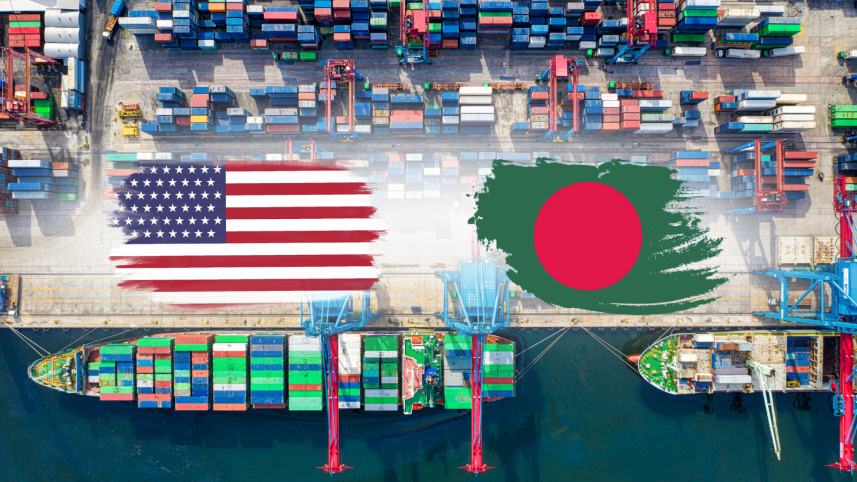
The United States has launched a fresh trade investigation into Bangladesh and more than a dozen other economies to examine whether their policies and production practices are contributing to global overcapacity that could harm American manufacturing.
The investigation was initiated today by the Office of the United States Trade Representative (USTR) under Section 301 of the Trade Act of 1974, a powerful trade enforcement tool used to challenge what Washington considers unfair foreign practices.

The investigation will determine whether the acts, policies, and practices in these economies are ‘unreasonable or discriminatory, and burden or restrict US commerce.’
The other countries are China, the European Union, Singapore, Switzerland, Norway, Indonesia, Malaysia, Cambodia, Thailand, Korea, Vietnam, Taiwan, Mexico, Japan, and India, according to a statement from the USTR issued on Wednesday.
The USTR took the move as part of its efforts to re-shore supply chains and provide good-paying jobs for American workers, the statement said.
“The United States will no longer sacrifice its industrial base to other countries that may be exporting their problems with excess capacity and production to us. Today’s investigations underscore President Trump’s commitment to reshore critical supply chains and create good-paying jobs for American workers across our manufacturing sectors,” said USTR Ambassador Greer.
The USTR said the Trump Administration’s reindustrialisation efforts continue to face significant challenges due to foreign economies’ structural excess capacity and production in manufacturing sectors. “Across numerous sectors, many US trading partners are producing more goods than they can consume domestically.”
It said evidence of structural excess capacity and production exists for Bangladesh, which has a bilateral goods trade surplus of $6.15 billion with the United States.
“This bilateral surplus is led by exports in the textiles sector. The government provides cash incentives for exports across forty-three sectors, including domestic textiles and leather products.”
Furthermore, Bangladesh’s cement industry is wrestling with significant excess capacity amid the industry’s worst downturn in years, with Bangladesh’s national consumption of cement dropping to 38 million tonnes in 2024—less than 40 percent of total capacity—and declining further in 2025.
Greer said that in many sectors the United States has lost substantial domestic production capacity or has fallen worryingly behind foreign competitors.
A docket for comments on the investigations will open on March 17, 2026.
Interested parties must submit written comments, requests to appear at the hearing and a summary of testimony by April 15.
USTR will hold a hearing on May 5.
 For all latest news, follow The Daily Star's Google News channel.
Comments