


How to fix your sleep schedule
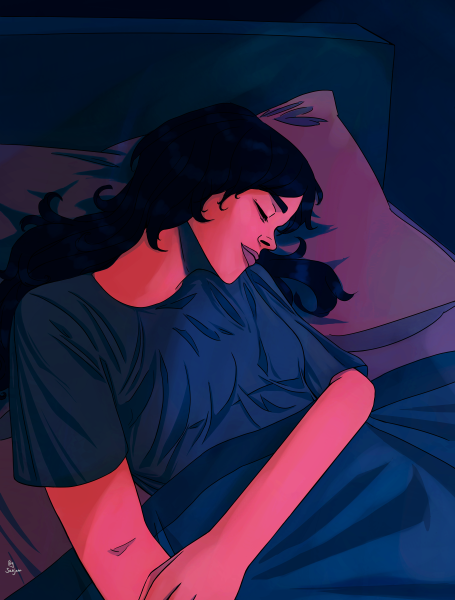
We know sleep matters, yet when midnight hits, our minds relive every awkward moment from the past decade. Fixing a sleep cycle isn’t just going to bed earlier—it’s a biological process involving hormones, the brain’s clock, and unconscious habits.
Inside your brain is a tiny structure called the suprachiasmatic nucleus. It's your built-in timekeeper, controlling your natural 24-hour circadian rhythm. Two hormones regulate your sleep-wake cycle: melatonin and cortisol. Melatonin is the “night mode” hormone; it helps you sleep by lowering alertness. Cortisol is the “day mode” hormone; it helps you wake up. With a steady sleep schedule, these hormones rise and fall in a smooth wave. But if you sleep at odd hours, scroll until 3 AM, or drink coffee late, your hormone timing gets confused. Cortisol surges when it should rest. Melatonin is released too late. You lie in bed, worn out.
 For all latest news, follow The Daily Star's Google News channel.
 Screens add a layer to the problem. Your phone emits blue light, which mimics daylight and signals the brain to reduce melatonin production. When you stare at your phone in bed, you’re basically telling your brain that the sun is out and it’s not time to sleep. But the physical light isn’t the only issue. Constant scrolling forces your brain to switch emotions rapidly, even if you don’t notice it.
A sad post, then a funny video, then a shocking headline – it’s emotional whiplash. Throughout the day, our brains accumulate tiny emotions: a small frustration during a conversation, a bit of stress from work, and a tiny insecurity from social media. Normally, the brain processes these micro emotions during quiet moments. However, we rarely allow silence or mindfulness anymore due to constant doomscrolling, and our brains never get the chance to sort and store those emotions.
So, when we finally lie down with no distractions, all those unprocessed feelings show up at once. That’s why your brain suddenly wants to analyse every decision you’ve ever made, right when you’re trying to sleep.
Fixing your sleep cycle means treating sleep like something intentional. Start by giving yourself a cue. About an hour before bed, dim the lights and step away from screens; even better, put your phone somewhere you can’t reach from bed. This signals to your brain to start producing melatonin again. If your sleep schedule is completely messed up, don’t jump to a perfect routine immediately. Instead, shift your bedtime 15–20 minutes earlier each night. Your brain responds better to gradual changes than to sudden discipline.
Another key factor is cortisol. Cortisol requires daylight exposure during the morning to function properly. Going outside early, even for just five minutes, has a significant impact on your internal clock. Morning sunlight signals to your brain to anchor your wake cycle, which helps melatonin rise automatically earlier at night. If you can pair morning light with movement, like a short walk, your sleep cycle stabilises even faster.
Personally, it was easier for me to fix my sleep routine by keeping my phone in another room, using an alarm clock instead of my phone, and keeping the curtains above my bed just an inch ajar for the sun to be available as soon as my eyes opened. I eventually practised smaller, better habits, such as drinking water as soon as I was awake and ensuring my first action of the day would be to go to the balcony.
Also, it helps if you pay attention to how you use your bed. Humans are creatures of association. If you scroll, work, eat, and watch videos in bed, your brain begins linking your bed with stimulation instead of rest. The goal is for your brain to associate bed with sleep. That means when you lie down, the body automatically starts the “power down” process.
At night, if your mind races, don’t fight it by scrolling. Instead, write down whatever is bothering you. Research shows that dumping thoughts onto paper reduces cognitive load, allowing your brain to let go. Your mind doesn’t keep replaying tasks or worries because it knows they’re stored somewhere safe.
We don’t fix our sleep by forcing ourselves to just sleep more. We fix it by creating a life that naturally leads us toward rest. And sometimes, that begins by putting the phone down and giving your brain a moment of silence to catch up to your emotions, instead of letting them attack you at night. When sleep improves, everything else falls into place.
References:
1. PLOS ONE (Feb 17, 2012). Amplitude Reduction and Phase Shifts of Melatonin, Cortisol and
Other Circadian Rhythms after a Gradual Advance of Sleep and Light Exposure in Humans.
2. CDC – NIOSH (March 31, 2020). Module 2 — The Color of the Light Affects Circadian
Rhythms.
3. Journal of Biological Rhythms (May 19 2010). Acute Effects of Bright Light Exposure on
Cortisol Levels.
4. Klin Spec Psihol (2022). Cognitive Behavioral Therapy for Insomnia (CBT-I): A Primer.
5. Harvard Health Publishing (Oct 13, 2017). Write Your Anxieties Away.
6. Harvard Health Publishing (July 24, 2024). Blue Light Has a Dark Side.
7. Cleveland Clinic (15 March 2024). Circadian Rhythm: What It Is, How It Works & What
Affects It.
Tinath Zaeba is an optimistic daydreamer, a cat mom of 5 and a student of Economics at North South University. Get in touch via tinathzaeba25@gmail.com
Comments