


Dr Arifin Sandhi on building Bangladesh's environmental future
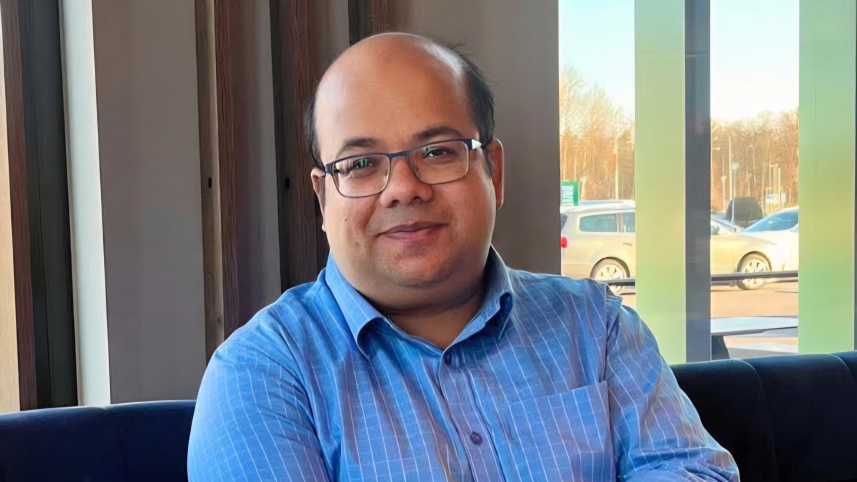
Dr Arifin Sandhi, a scientist in the domain of environmental biosciences in Sweden, has spent over a decade studying toxic metal contamination in ecological systems. This remains a crisis with direct stakes for Bangladesh, where groundwater arsenic is a perpetual concern for the rural masses with tubewells. He earned his PhD in Land and Water Resources Engineering at KTH Royal Institute of Technology, Sweden, and has since built a body of work in nature-based solutions. The weight of his work holds great implications for the revival of municipal rivers where open industrial dumping is practised, costing our government and citizens alike. Campus sat down with Dr Sandhi to get a closer look at his thoughts for the future.
Campus (C): What drew you to natural sciences?

Arifin Sandhi (A): Choosing environmental science was quite easy; it was my natural inclination towards the magic of ecosystems. Having attended Dhanmondi Government Boys School, Dhaka College, and Sher-e-Bangla Agricultural University in Bangladesh, I became closely acquainted with the realities of the urban sprawl. The metalloid-laden effluents that bring about a slow death to all rivers that were once the heart of the city tightened the grip. As such, it would be a lie if I went on to say the pastures and ruralities inspired me to pursue this particular modus operandi in academia. Since my master’s study at Stockholm University, I have focused on bioenergy plants and how to clean up the toxic metal mess. And for my PhD, I leaned towards arsenic remediation in mining waters and food crops. Sweden’s culture, entrenched in its policy, is one of stewardship. They are stringent on keeping industrial pollution in check. Industries pay fat margins in order to fulfil their binding obligations, quite a different scene when compared to what we’re used to in the rest of the world. I found this to align with my views. I then became a researcher at Linnaeus University, Sweden, and have been involved in several projects as a principal investigator. I am about to join the Department of Landscape Architecture, Planning and Management at the Swedish University of Agricultural Sciences as an assistant professor.
C: Bangladesh is home to one of the largest arsenic contamination crises in the world, affecting millions through groundwater and agricultural irrigation. From your vantage point, how would you describe the current state of the problem?
A: As far as I’m aware, the arsenic crisis in Bangladesh is still not fully resolved. In our review article published in Environmental Science and Pollution Research in 2023, we highlighted that although the Bangladeshi government has implemented vital awareness campaigns and alternative water sourcing initiatives since 1997, critical gaps remain in implementation. District-level data is scarce, and over five crore people are still at heightened risk. What we need now is a comprehensive nationwide survey and the development of an efficient, data-driven water monitoring system to effectively identify and mitigate arsenic exposure on a mass scale. International cooperation may abate this.
C: What kind of frontier research, particularly in bioremediation, do you think Bangladesh could benefit from in pursuing?
A: Generally, the application of phytoremediation is recommended, using local, endemic plant species, since it reduces the threat to biodiversity and genetically modified ones don’t adapt quickly to the monsoon climate. Moreover, this is an economically sound option. If research institutions come forward, then a number of potential bioremediation options could be developed in Bangladesh. Other than this, biofortification (breeding plant strains and introducing needed elements to increase their nutritional value) and hyperaccumulator species (plants capable of absorbing and storing exceptionally high concentrations of toxic metals) should be explored.
C: In 2018, you and your team identified a first arsenic hyperfilter aquatic moss species — a discovery that generated international attention, including a feature in The Independent. What does "hyperfilter" actually mean in practical terms?
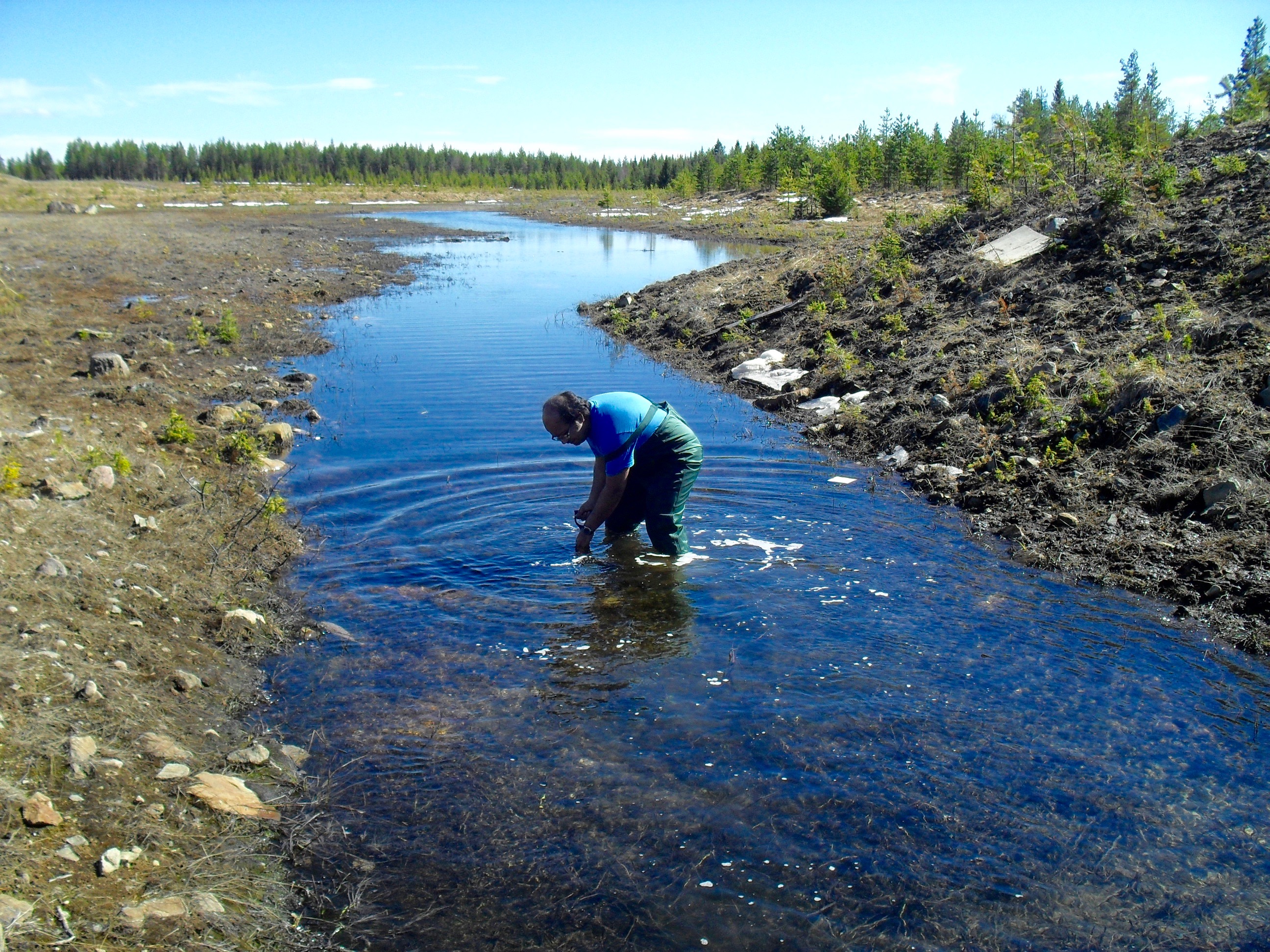
A: It started with the investigation of arsenic content in iron mining sites in northern Sweden. We found that these aquatic mosses grow naturally in arsenic-rich aquatic environments, and we became interested in investigating them. Fortunately, we received funding from the Swedish Engineers Association. We ran experiments in the lab to discover that this moss has a very high, very rapid arsenic uptake capacity from arsenic-contaminated waters. In waters containing 74 micrograms per litre of arsenic, the level of arsenic in water could reduce 82 percent within an hour by using this arsenic hyperfilter species (Warnstorfia fluitans). The World Health Organization (WHO) safety standard is 10 micrograms per litre, and the Bangladesh national standard arsenic limit for drinking water is 50 micrograms per litre.
C: Could a version of this technology be deployed in Bangladesh's river systems and industrial zones?
A: In one of our recently completed research projects, we tested constructed floating wetland systems in old industrial (glassworks) sites in Sweden. We obtained satisfactory results and are waiting to publish. So, from that point of view, the development of constructed wetlands near lead battery factories could also reduce the loading of toxic heavy metals from effluents. Sites like Kamrangirchar and Tongi, tannery sites in Hazaribagh, and the Buriganga River could benefit from an updated regulatory framework. Of course, before planning such a wetland system, both economic variables and viability simulations need to be assessed, and bureaucratic hurdles overcome. If corporate social responsibility (CSR) policy and government subsidies are implemented, these areas could finally be appraised.
C: For a student reader unfamiliar with biosensors, can you explain what these devices are and why they might be game-changing for environmental monitoring in a low-resource context like Bangladesh?
A: To clarify, the “biosensor” we developed is not an electronic gadget; rather, it is a biological unit utilising actomyosin, a protein that is also found in your muscles. This was an exciting collaboration between the Chemistry and Biomedicine and Environment Science departments at Linnaeus University. Our goal was to create a rapid, low-cost primary screening tool for developing countries where expensive high-tech instrumentation, such as ICP mass spectrometry or AAS, is unavailable. By placing these muscle proteins in water samples, we observe how toxic metals affect the mortality of the proteins. We then can flag high concentrations of toxicity in water samples in the field – useful for developing countries.
C: Bangladesh produces talented science graduates every year, yet much of the frontier environmental research on Bangladesh is being conducted from laboratories abroad. What, in your view, are the structural barriers in funding and institutional culture that prevent this research from happening at home, and what might it take to change that?
A: Research Funding plays a significant role in research, regardless of the country. To change this situation, universities should also approach different industrial partners, the private sector, and philanthropic networks. Frontier research should be advanced through collaboration between academia and industry. Universities could play a big role in promoting their research by organising more roadshows, conferences and grant-raising networking events.
C: If you were designing a curriculum for Bangladeshi university students to get an idea of the current market trends for environmental sciences, what would be the three topics you would introduce?
A: I could say the framework needs to be developed in such a way that it maps pollution sources and sinks, management philosophies, and modernised research methodologies. First, students need a comprehensive understanding of contaminant cycles, specifically tracking how agricultural and industrial pollutants migrate and accumulate within a country's ecosystem – the hard science. Second, this must be paired with practical and management strategies that focus on systems thinking and nature-based solutions to actively mitigate soil, water, and air contamination. Particular emphasis should be given to cultural change by comparative analysis of techniques used by developed nations and their practical adoption. Finally, to future-proof this knowledge in the era of artificial intelligence, the curriculum must urgently upgrade its research methodologies by equipping students with advanced skills in applied statistics, modern data management, ethics and stewardship, and most critically, the practise of AI applications.
C: For a Bangladeshi student reading this today, what is the most honest and useful advice you can give them?
 For all latest news, follow The Daily Star's Google News channel.
 A: First and foremost, protect your academic grading. Good grades are an essential gatekeeper for entering top-tier global institutions in the next level of academia and for securing funding. The transcript is a screening process, the first judgement – explain if you have low grades, show your ECAs, and explain properly any shortcomings and gaps you may have. Keep in mind that good grades don't require many explanations. Honesty goes further than you think. Being talented across multiple domains also helps. Second, a technical toolkit should be mastered. Think of data science, coding, and advanced modelling software, and place particular attention on the communication of your research to laymen. Modern research is entirely data-driven, and having strong dry-lab skills will instantly set you apart from your peers. Read up on contemporary developments in your domain in open-access journals. Finally, expand your horizons. Attend international seminars to understand how science is conducted globally and get involved in university clubs, academic societies, non-profits and think tanks to pad your CV.
Comments