Bangladesh and the Mecca Pact: The national security questions we are missing

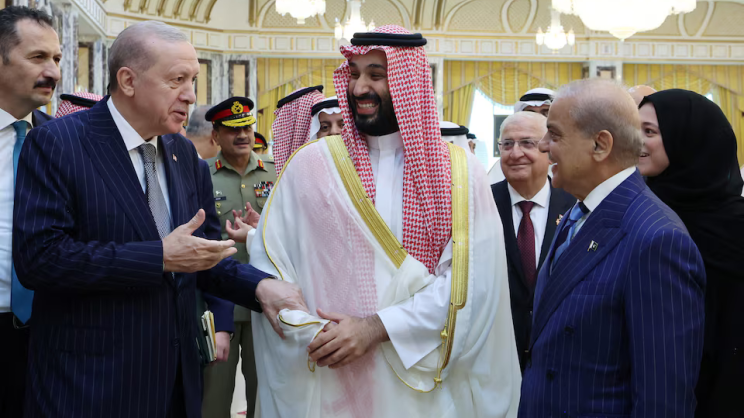
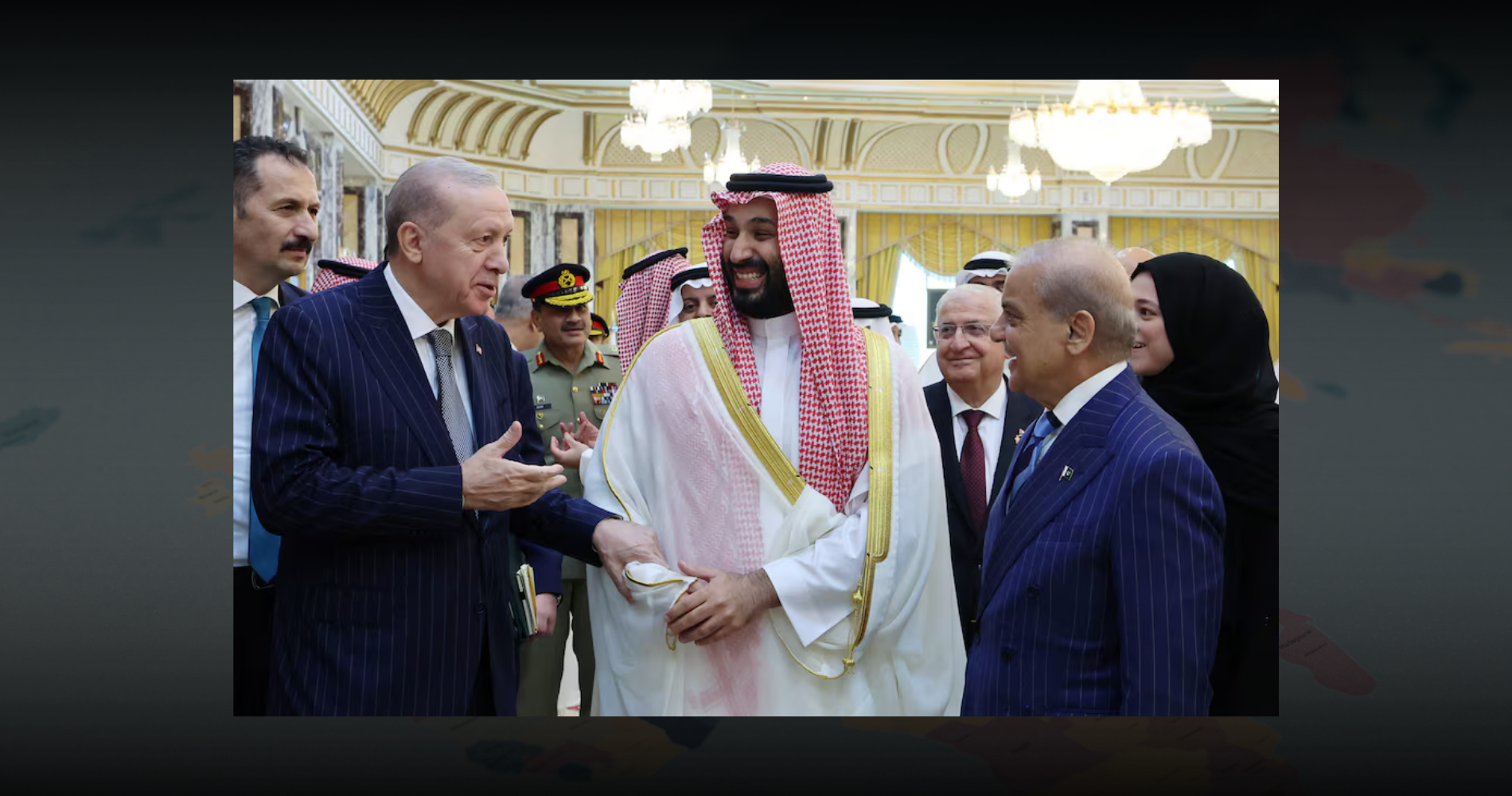
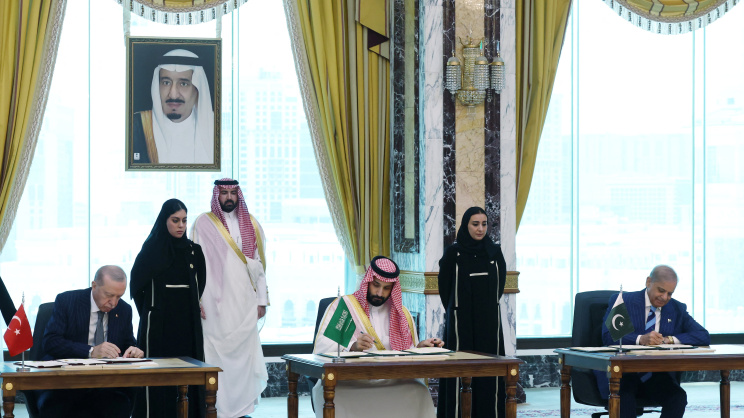
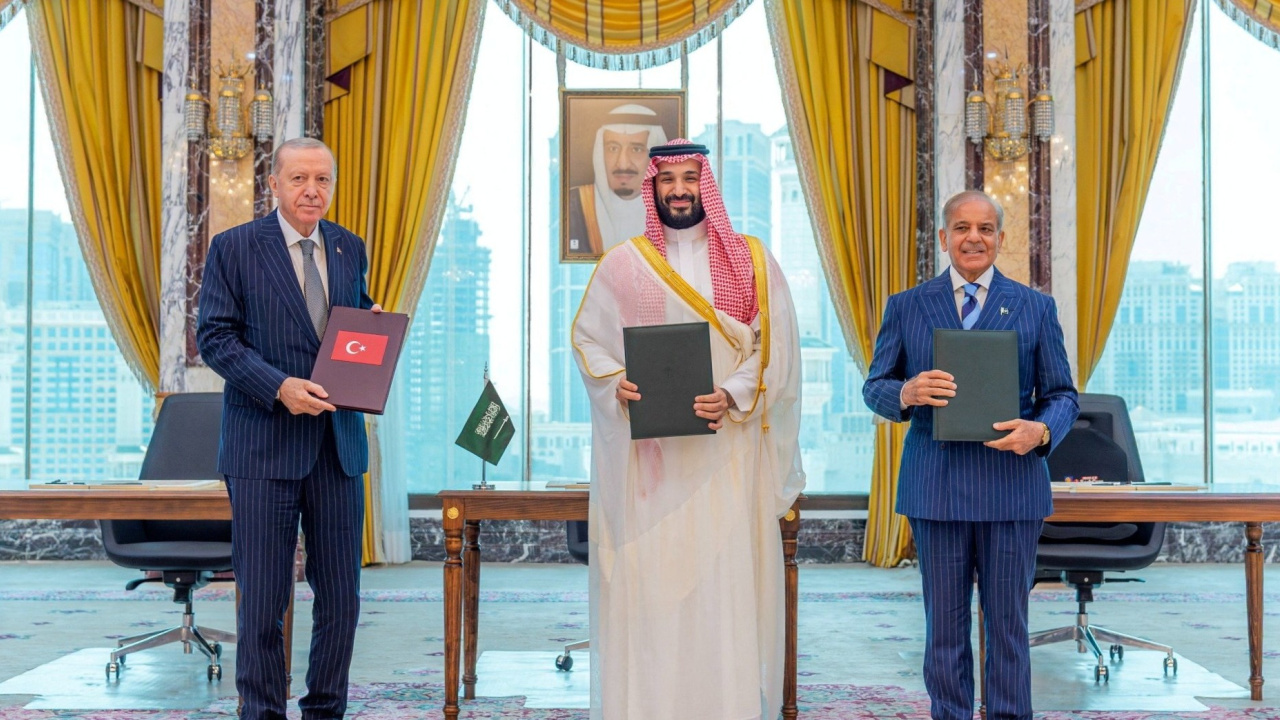
The trilateral Mecca Defence Pact between Pakistan, Saudi Arabia and Türkiye has triggered an unusually intense debate in Bangladesh—and, predictably, across the border. Speculation over whether Bangladesh should eventually join this security alliance has spilled into Parliament, social media and foreign-policy circles across the political spectrum.
Yet there is something striking about this debate: almost everyone is arguing about the Pact while remarkably ignoring a fundamental question—what exactly is Bangladesh’s national security strategy?
That should be the starting point.
Unlike India’s “NITI Aayog” model, Bangladesh does not appear to have a comprehensive National Security Strategy that clearly identifies the country’s principal security threats, establishes priorities, defines the roles of different state institutions and explains how different traditional and non-traditional security apparatuses should work together.
Notably, there was an attempt under the interim government to establish a National Security Council, an initiative later promised by the current BNP government in its election manifesto, but that conversation did not produce an institutional breakthrough.
Without such a framework, debating whether Bangladesh should join one particular security arrangement risks putting the cart before the horse.
Security policy cannot begin with an alliance
Those advocating Bangladesh’s participation in the Mecca Pact have yet to adequately explain what concrete security problem the arrangement would solve for Bangladesh. Who are the potential adversaries? What obligations would membership create? What would Bangladesh contribute, and what would it receive in return? Most importantly, how would membership fit into a broader national security strategy?
These are not technicalities. They are the questions on which sovereign security decisions should be based.
But opponents of participation are not necessarily asking the right questions either. Their principal argument often rests on Bangladesh’s longstanding preference for strategic autonomy, non-alignment and balanced relations with major powers. These principles remain important. But neutrality, or strategic ambiguity, is not in itself a security strategy.

Bangladesh has learned that ambiguity has costs. Border disputes, the Rohingya crisis, the need to assert rights over the blue economy and the persistent challenge of conducting an independent foreign policy all demonstrate that declaring oneself neutral does not insulate one from geopolitical pressure.
The real question, therefore, is not “Pact or no Pact?” It is: what combination of partnerships, capabilities and diplomatic choices best protects Bangladesh’s national interests?
India and Myanmar in the equation
Any serious assessment by Bangladesh must also consider how our two neighbours, India and Myanmar, would interpret such an arrangement.
This does not mean accepting the familiar geopolitical assumption that every Bangladeshi strategic move must ultimately be measured by how New Delhi, or occasionally Naypyidaw, reads it. That, too, is a form of intellectual dependency. But geography matters. India is Bangladesh’s largest and most consequential neighbour, while Myanmar is directly connected to Bangladesh’s security environment through the Rohingya crisis, border instability and the conflict in Rakhine.
The deeper problem is that Bangladesh is debating a possible alliance without first having a serious national conversation about its own security doctrine. What are Bangladesh’s principal security threats and strategic objectives? What are its red lines? Which partnerships strengthen its capabilities, and which risk creating new dependencies? How should diplomacy, intelligence, economic resilience and military power work together to advance the national interest? In an increasingly contested world order, Bangladesh needs greater clarity and consensus on these fundamental questions.
Dhaka therefore needs to ask: would participation enhance deterrence, diplomatic leverage and strategic space—or would it create new vulnerabilities and potentially narrow Bangladesh’s room for manoeuvre?
The military perspective
Another conspicuously overlooked aspect of the debate concerns the Bangladesh Armed Forces. If Bangladesh were to enter a formal or quasi-formal security arrangement, what would that mean for its military doctrine, intelligence cooperation, procurement priorities and operational commitments? Would Bangladeshi forces acquire greater strategic capabilities—or inherit commitments that constrain future governments?
National security cannot be the exclusive domain of the military establishment, the foreign-policy bureaucracy or political parties. It requires an institutional framework that brings together elected leaders, defence and intelligence institutions, diplomats, policymakers and independent experts to deliberate on competing assessments of the national interest.
The “Muslim NATO” trap
There is another dimension to this debate that deserves scrutiny.
Describing the Mecca Pact as a “Muslim NATO” is not only analytically simplistic; it also risks imposing a Western-centric framework on a very different security arrangement. NATO is typically understood through the language of strategic interests, collective defence and geopolitical alignment. Why, then, should an arrangement involving predominantly Muslim countries be defined primarily by the religious identity of its members rather than by the strategic interests that brought them together?
Such framing can become a form of intellectual colonisation, in which inherited Western categories shape how non-Western security arrangements are understood. Yet Bangladesh should be equally wary of the opposite tendency: romanticising the Pact as an expression of Islamic strategic unity. Neither framing helps us understand what the Pact actually represents or what interests it serves.
Pakistan’s membership, for instance, does not automatically make its relationship with Iran impossible, nor does participation in one strategic framework erase relations with other states. International politics is rarely a binary choice between friends and enemies. States routinely maintain overlapping and sometimes contradictory partnerships.
On sovereign decision-making
Bangladesh therefore has every right to consider joining or remaining outside the Mecca Pact. But that decision should emerge from a Bangladeshi conception of national interest—not from pressure, fear, religious sentiment or the assumption that neutrality is inherently virtuous.
The deeper problem is that Bangladesh is debating a possible alliance without first having a serious national conversation about its own security doctrine.
What are Bangladesh’s principal security threats and strategic objectives? What are its red lines? Which partnerships strengthen its capabilities, and which risk creating new dependencies? How should diplomacy, intelligence, economic resilience and military power work together to advance the national interest? In an increasingly contested world order, Bangladesh needs greater clarity and consensus on these fundamental questions.
Until then, the debate over the Mecca Pact risks becoming a distraction from the larger question of how Bangladesh should define and protect its national interests. A sovereign security architecture is not about choosing the “right” camp. It is about developing the intellectual, institutional and strategic capacity to make independent choices based on the country’s own interests.
Dr Anas Ansar is an assistant professor in the Department of Political Science and Sociology at North South University (NSU), Bangladesh, and a senior researcher at the Arnold Bergstraesser Institute, University of Freiburg, Germany.
Send your articles for Slow Reads to slowreads@thedailystar.net. Check out our submission guidelines for details.
From Chinese fighter jets to the Mecca Pact: Bangladesh’s strategic future?

Is Bangladesh the next base for Chinese scam networks?

The politics of fear: From Gaza's paper kites to ‘unsafe’ on campuses

Shanghai Cooperation Organisation at 25: Can China, India and Russia really speak with one voice?

Shared rivers, shared responsibilities: The case for water treaties

Bihar wants Delhi to not renew Ganges treaty. What does it mean for Dhaka?
Bangladesh and the United States: Beyond the tariff bargain

From the Carter Doctrine to the Mecca Pact: A changing Gulf security order

More capability, less autonomy? Bangladesh’s emerging security dilemma