The prospects of pursing a degree in theatre studies
The re-evolution of theatre in Bangladesh took place through social commentary, political engagement, and community dialogue. This intricate form of artistic expression has its roots in Sanskrit and indigenous traditions, where its prominent role as a space for entertainment, reflection, and cultural expression laid the foundation for the theatre we practise today across South Asia.
The emergence of theatre as a field for formal education in our country surfaced in the late 1980s, transitioning stage drama from a non-formal genre to a recognised academic discipline. Currently, several public universities, including Dhaka University (DU), Jahangirnagar University (JU), Chittagong University (CU), and Rajshahi University (RU), have active departments of theatre studies within the Faculty of Arts.

I spoke to Dr AKM Yusuf Hassan, a professor in the Department of Drama and Dramatics at JU, regarding the relevance of theatre in today’s landscape. According to him, “Theatre is an art form that has remained relevant time and time again because of its fundamental ability to connect people. The impact of this live art is far more potent than any audio-visual medium, as it thrives on the vibrant, immediate human interaction shared between the stage and the audience. This is precisely why theatre has endured for millennia, despite the rise of technology-driven mediums like film and radio.”
To master and rehearse the art of stage drama, numerous independent institutions also offer training programmes to enthusiastic learners. Why, then, is there a need to pursue a formal degree in theatrical studies?
In response to such a question, he says, “Pursuing higher education in the said discipline encompasses both the rigorous practice and the profound philosophy required to understand the human condition. Training is only a part of that education for enhancing skills. So, I may opine that actors may not necessarily require a formal education degree. However, a university curriculum in theatre, dramatics, or performance studies provides a comprehensive intellectual foundation. It cultivates an in-depth understanding of life, society, and art, equipping students with a critical lens that independent workshops cannot replicate.”
In the undergraduate curriculum, other than acting, courses on prop making, stage lighting design, set design, costume design, makeup, direction, dance choreography, and fieldwork are also included. This multi-disciplinary approach ensures that students understand the collaborative ecosystem required to bring a script to life.
Arpita Zohra, a third-year student in the Theatre and Performance Studies Department at DU, says, “When an artist performs in theatre, even if they are a solo performer, they require the support of a few other people. Suppose you are an actor; you are supposed to deliver a dialogue upon reaching the downstage. You arrive at the spot, but the light doesn't turn on. You will remain in the dark, and no one will be able to see your performance. In such circumstances, we absolutely need the assistance of a lighting designer who knows exactly when, where, and how much light to cast. Some people might think about working with AI or robots, but theatre is a live medium — where the audience and the actor coexist in the same space and time.”
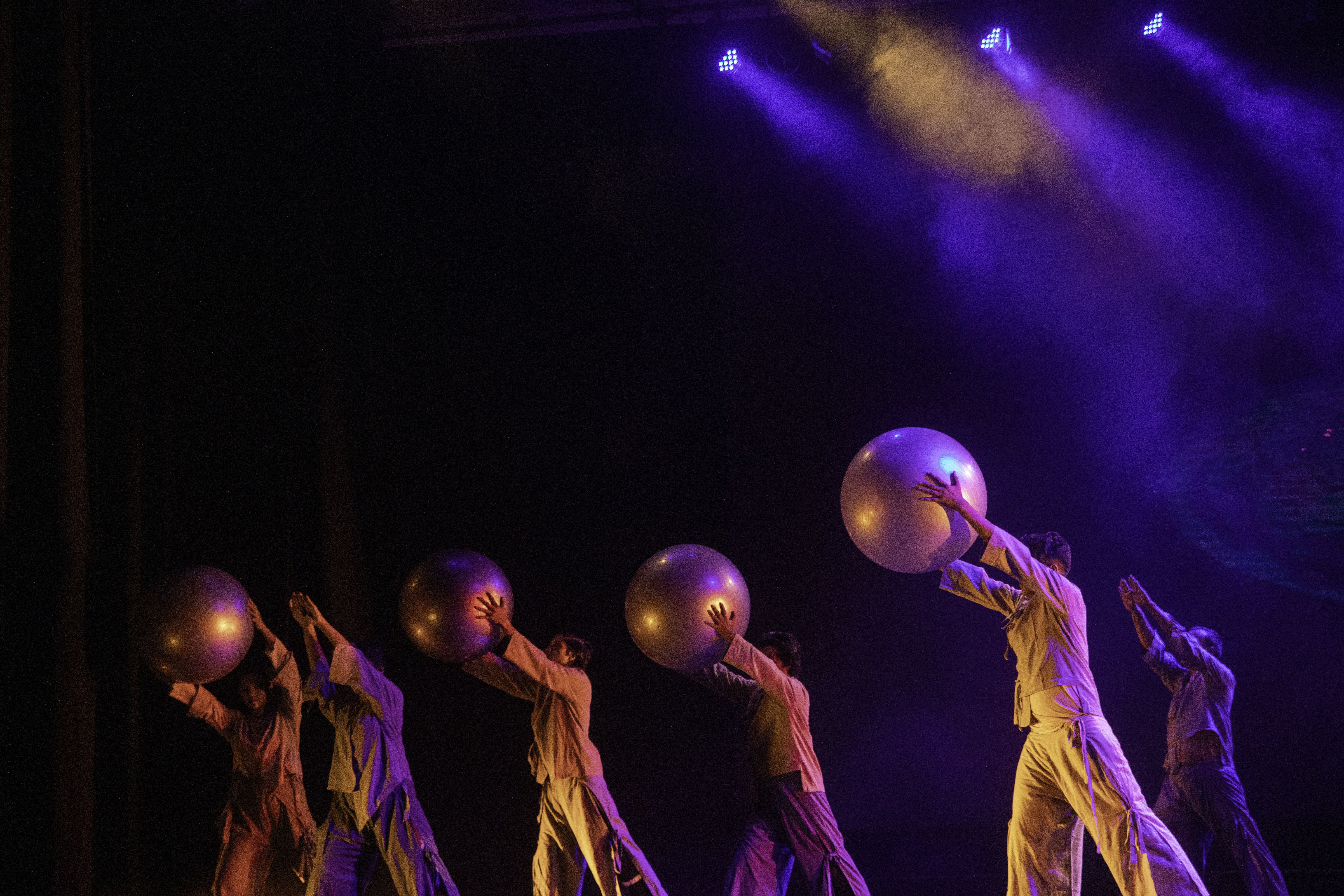
Alongside practical arts, students are acquainted with numerous theory-driven aspects, such as the history of global art and the socio-economic and political history of Bangladesh.
Erfanul Islam Iftu, an ongoing master’s student in the Department of Drama and Dramatics at the JU, mentions, “The core element of theatre is 'acting'. A student must understand the technical and theoretical concepts that shape an actor. Beyond that, a key arena for a student’s intellectual development is ‘writing’— the space for expressing creative thought.”
He elaborates, “At the bachelor’s level, we are taught the rules of dictionary usage, linguistic purity, syntax, and the use of rhythm and rhetoric as part of our coursework. Gradually, alongside writing analytically and editing any given subject, students can master the art of playwriting across various media. We also undergo rigorous training in elocution, phonetics, and vocal projection that helps us develop high proficiency in the vocal and verbal arts.”
Theatre majors are not confined solely to stage acting; another crucial lesson in art is cinema. Some universities also require students to take up certain courses related to media production, where they receive hands-on, foundational training on filmmaking. Hence, the academic and professional landscape for a graduate can be extensive.
With an undergraduate degree in this discipline, one can transition into a diverse range of career prospects. In the creative and entertainment industries, graduates can build careers as directors, scriptwriters, and actors across stage, television, and film or step into critical technical design roles such as scenographers, costume stylists, makeup artists, and light and sound designers. The training in broadcast media and cinematography also opens pathways into digital content creation, independent filmmaking, and technical positions within media houses and OTT platforms.
One of the students I spoke to talked about the success of her juniors with pride to exemplify how theatre can open doors to exceptional possibilities. The students of the 2022-23 academic session at her university, during their first year, made a documentary Pronayopakhyaner Satkahon based on the behind-the-scenes story of the play Pronayopakhyan as part of their final examination. That documentary was selected for the 24th Dhaka International Film Festival in 2026. This proves how diverse routes of new creation can emerge from theatre.
But there are more options if students want to pursue other avenues. In education, they can become teachers or researchers. Many students are also working with strong reputations in non-governmental organisations (NGOs), banking, and the corporate sector, while others are securing opportunities in government civil services.
When it comes to higher education, theatre studies offer excellent global pathways. For advanced studies in fields like applied theatre and dramaturgy, there are wonderful opportunities such as the Erasmus Mundus scholarship and the ICCR scholarship in India. Additionally, theatre students are eligible to apply for various programmes under prestigious fellowships like the Chevening and Commonwealth scholarships.
However, choosing to pursue dramatics, much like any other discipline, does come with its own set of challenges. One might dream of becoming a professional theatre artist after completing their studies, but for Bangladeshi students, that ambition faces a tough reality.
Igimi Chakma, currently completing her master's degree in the specialised discipline of Art of Performance at JU, shares, “As a theatre artist, choosing stage drama as a sole profession after graduation is extremely difficult. This is because most people who perform theatre in our country are involved in other professions alongside it. They continue to practise theatre and keep this art form alive primarily out of love, passion, and personal urge.”
“Another major challenge is commuting and financial pressure. When I first started practising theatre in my first year, I regularly had to travel from JU to Dhaka for rehearsals and then return. This commute became a huge pressure in terms of both time and money. Returning to the campus from Dhaka around 11:00 PM or 11:30 PM in an exhausted state after a full day of classes was a regular experience. On top of that, as a woman, one has to go through various types of harassment and safety risks within the social context, which makes this journey even more difficult,” she adds.
 For all latest news, follow The Daily Star's Google News channel.
 Most active theatre practices in our country are totally centralised within the capital due to inadequate halls and the absence of commercial platforms, which makes the profession inaccessible to a large number of people.
Reflecting on her own homeland of Rangamati, Igimi noted that attempting to pursue theatre as a core profession there is a difficult prospect. The acute scarcity of performance stages, a total absence of proper rehearsal rooms, minimal facilities, and severely limited sponsorships collectively choke regional practice. Furthermore, outside the capital's cultural hubs, artists face a major deficit in audience cultivation, as a large portion of the local community has yet to understand, recognise, or properly value the profound artistic gravity of stage drama.
Despite all, young artists continue to battle between optimism and passion. Arpita, who is also an on-camera actress, says, “Financial constraints have always been there. A few theatre groups or companies have managed to sustain their practice by securing political, government, or private funding at various times. On the other hand, the groups that could not access these benefits are fading away. We tend to judge people entirely by the metrics of money and social status.”
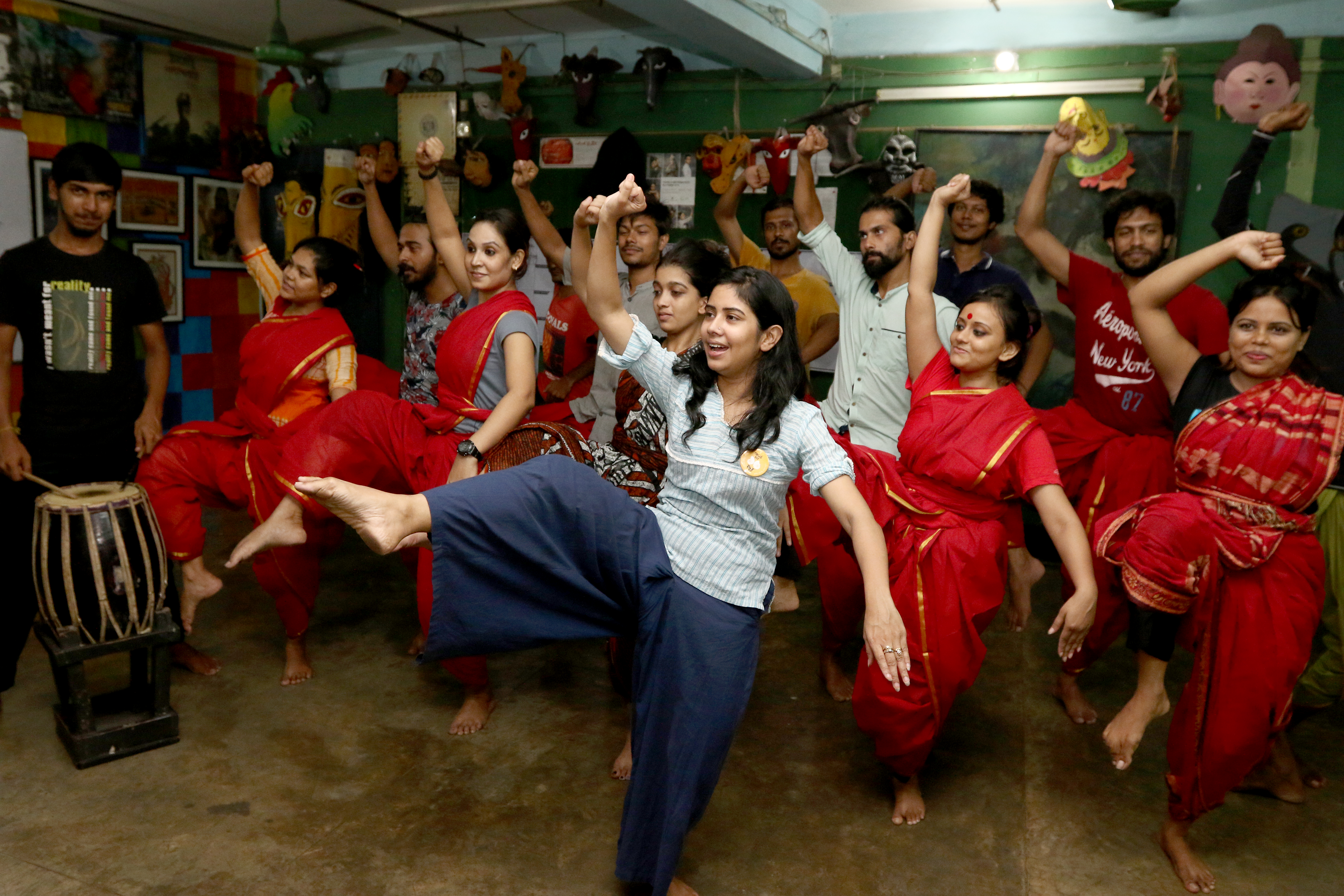
“An actor is an artist. If they want to survive by taking up acting as a profession, they must fight. In the context of Bangladesh, that battlefield is vast, yet the space to actually fight is extremely narrow. It often seems to me that compared to other countries in the world, being a Bangladeshi actor means that if you look from afar, it is a comedy, but if you look closely, it is the greatest tragedy,” she concludes with a sigh.
Theatre practice on the Bangladeshi stage is still primarily driven by the activities of group theatres. Outside of Dhaka, barring a few district towns, professionalism in theatre practice has not yet developed. In most cases, after graduation, students take up jobs in various production houses. Furthermore, there is a severe crisis in the institutional infrastructure of theatre. The remuneration that most artists receive is nowhere near adequate compared to the production costs and the intense labour required to create a play.
Despite these structural limitations, the passion for cultural preservation sparks visionary dreams among practitioners. As an indigenous artist, Igimi envisions building a dedicated platform that unites indigenous theatre students and artists from across Bangladesh to research, preserve and showcase their unique folklore, heritage and history to the world. She remains highly optimistic, believing that dramatising their traditional lifestyles can bridge generational gaps by bequeathing them to the next.
“My dream is that one day our theatre will reach a height where people will be inspired by our work and look at our culture and creativity with respect. There is a song in Chakma culture, ‘Nu-o dinor nu-o geet shunebong’, which translates to Bangla as ‘Notun diner notun gaan shunabo’ (I will sing the new song of a new day). Within these words, I see a new dream — to present our stories, our culture, and our art in a new light to the new generation in a new era.”
Titir is a contributor at The Daily Star. Contact her at punomirahman@gmail.com.
Off Campus / How BOT Engineers is building the infrastructure Bangladeshi robotics needs
CU classes, exams suspended for second day amid waterlogging

Humour / How to pretend to be a football fan this World Cup season

Press Release / State University of Bangladesh and SERAC-Bangladesh sign MoU
Press Release / UIU School of Business and Economics launches “NEXUS Seminar Series”
Press Release / ISU opens Department of Artificial Intelligence & Data Science

Movies / Obsession and the horror of a stolen self

FIFA World Cup / The emotional resonance that tethers us to underdogs
Press Release / 1st Bangladesh Formula Student & Automotive Engineering Summit held at MIST