


The emotional resonance that tethers us to underdogs

The story of David and Goliath has resonated with people for centuries. It is a tale of perseverance, courage, and above all, the triumph of the underdog; themes that are universal and timeless. David, a young shepherd, armed with nothing but a slingshot and stones, volunteers to fight the seemingly insurmountable Goliath. Against all odds, he emerges victorious. In contemporary contexts, the legend is evoked to flesh out the simmering tension that underlines the matchup between a dogged powerhouse revered for its quality and a team that perhaps doesn’t quite match up.
Yet, David’s triumph is called back to not simply assign the roles of the underdog and the favourite, but to establish the stakes of the clash firmly. What we expect to unravel might not necessarily materialise. It is precisely this possibility, regardless of how unlikely it may be, that pulls us towards such a matchup, one where the outcome is anticipated though not entirely consolidated. Against this backdrop, we find ourselves rooting for the underdog despite our prior allegiances. All matters concerning logic, rhyme, or reason are thrown out the window. It is the sentiment that spurs us forward. We are drawn to this ragtag team of underdogs because they give us something to cheer about: a slim chance borne entirely out of resolve and passion.

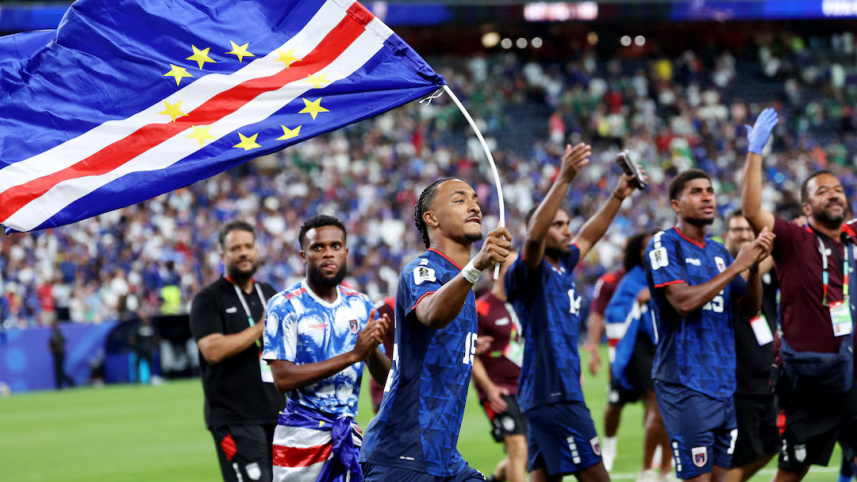
Such was the case in Argentina’s FIFA World Cup match against Cabo Verde. What was considered to be a fairly simple affair for the defending champion instead became one of the most entertaining matches of the tournament so far. Early on in the match, it seemed as though the stars were aligned for Lionel Messi and co. Cabo Verde, however, had other plans. Despite the captain’s opening goal, Cabo Verde fought back.
Here was a team that had never participated in the World Cup before, up against a force that is looking to win it again. Though the result surprised no one, Cabo Verde pushed Argentina to the very brink. They came back to equalise twice, put on a resilient defensive performance, and saw Vozinha forge his legacy on the biggest stage. A team that ranks 64th in the world rankings was up against one of the top teams, but the contrast was never stark.
It is often claimed that some teams are content to just qualify, but Cabo Verde did not settle. They put everything out on the pitch, maintaining composure, patience, and tenacity, all while wearing their hearts on their sleeves. From a neutral perspective, there was a part of me that wanted them to emerge victorious. A fleeting euphoria that emerged because of their relentless performance.
Yet, I wonder, why did I, along with a million others watching, have this urge? What is it about the prospect of the underdog winning that makes us blindingly hopeful?
We were beholden to a similar kind of elation when Morocco advanced to the semi-finals in the last World Cup, Costa Rica topped the “group of death” in the 2014 outing, and Curaçao momentarily drew level with Germany. However, it is perhaps this Cabo Verde team that has proven, time and again, just how capable they are despite their first time participating. They did not lose a single game in the group stages, putting on a bold display against favourites Spain as well as heavyweights Uruguay.
Beyond the sporting aspect, what many of these teams represent transcends results. Their narrative taps into one of our most innate urges, one that compels us to resonate with and root for heroes who are up against the impossible. Theirs isn’t a matchup of good and evil but one of defying the odds. When the underdogs manage to capture lightning in a bottle, they subvert expectations. It is precisely in this subversion that we find something to connect to.
Amidst the many challenges that the mundane relentlessly propels us towards, the feeling that we cannot quite put up with it lingers. The odds seem stacked against us as well, making us cave in to the belief that whatever hurdle stands in front of us cannot be conquered. Though there are times when that truly is the case, we still go at it, trying with whatever we have at our disposal. These underdogs do the same. Though it may be trite to claim that we see ourselves in them, it is undeniable that the tale of the common man is relatable.
It seems all the more prevalent against our cultural and social context when the rift between the average Joe and the elite seems wider than ever and growing. In turn, it feels like our individual liberties are also withering away, leaving us increasingly out of options. The underdog seems closer, more familiar, and a better representative of the challenges that plague us. So, when the underdog rises in the face of uncertainty, we find ourselves backing them through shared emotional resonance.
Although heartbreak followed Cabo Verde, the performance they put on demands recognition. Forged almost entirely out of sheer grit, passion, and belief, their performance went beyond the pitch and left an indelible mark on everyone who watched. As we had our eyes glued to the match near the crack of dawn, we clung to a sense of hope, one that was imparted by the unlikeliest of heroes. And though we might not have known who they were before the World Cup, we found something indescribably familiar amongst them.
 For all latest news, follow The Daily Star's Google News channel.
Comments