


Why students feel the need to opt for side hustles

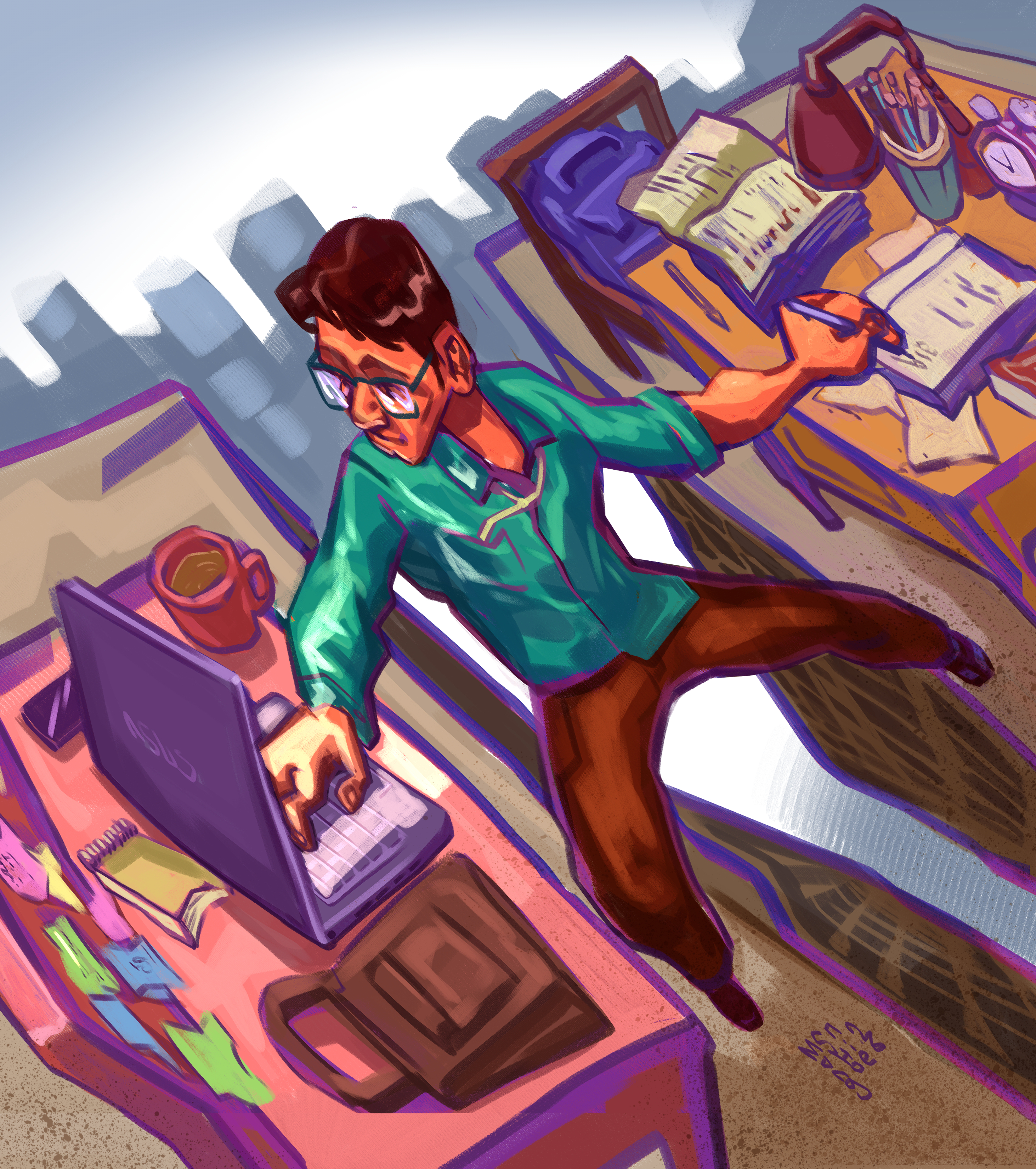
The university student of a decade ago was often defined by a singular pursuit: their undergraduate degree. Life mostly existed within the vicinity of textbooks, campus hangouts, and the eventual goal of a job hunt that supposedly began only after the convocation gown was tucked away.
The question of why students choose side hustles while studying is no longer just about extra pocket money. Waiting for a first job after graduation is increasingly considered a risk that many are unwilling to take. The Bangladesh Bureau of Statistics (BBS) reports that roughly 19.54 percent of young people aged 15 to 24, which is around 5.5 million, are economically inactive.

The policy brief titled “Harnessing the Potential of Youth: A Policy Framework for Youth Development in Bangladesh” highlights that the nation’s massive youth demographic stands at a crossroads, with the power to either catalyse an economic revolution or deepen the cracks in social stability.
The fear of a prolonged gap between graduation and employment pushes many young people to enter the job market while attending lectures. In a competitive and often unpredictable economy, the four years of university have become a testing ground for independence and survival. The promise that a degree leads directly to a desk job is no longer a given. As the job market becomes more competitive, the pressure to have a resume that features more than just a CGPA has become paramount. This irony has not escaped the current generation. They see the side hustle not as a distraction from their studies but as an essential extension of their education and a defence mechanism against an uncertain future.
Zakaria Tasrik, a recent graduate of robotics and mechatronics engineering from Dhaka University, represents a generation that has realised the potential of the global digital economy. Zakaria did not wait for an engineering firm to hire him; he turned to freelance 3D design during the pandemic. "I wanted to do something productive and somehow discovered Blender 3D, which was a stepping stone into 3D designing," Zakaria says. His initiative is a testament to the proactive effort of students who no longer wait to enter the professional world.
This sentiment is shared by Shad Nur Mim Bidhu, a recent computer science and engineering graduate from BRAC University, who started her artwork page “PeculiArts by Bidhu”. For her, the decision was a combination of creativity and a pragmatic look at her bank account. "It was a thought driven entirely by my financial situation. I was sceptical about doing it, but my friends kept encouraging me to go for it," Bidhu explains. Both students are bound by a common thread: the university years are now used to build a safety net. They are no longer just constrained to studying for exams; students are actively mitigating the risks of unemployment.
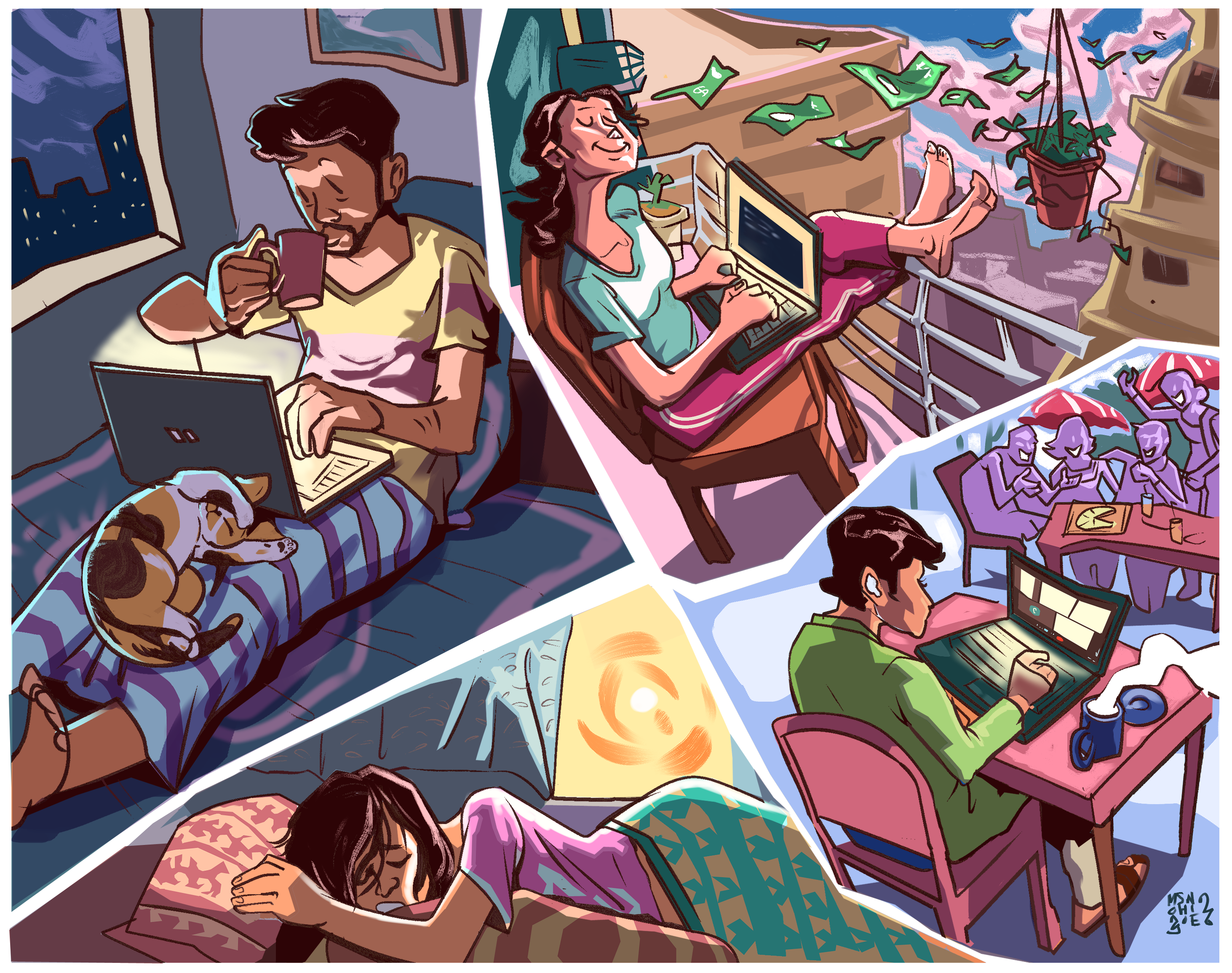
Finding independence through the digital economy
The rise of digital platforms has allowed students to bypass traditional routes of employment and earn significant incomes. Zakaria now earns an average of USD 1500 to 2000 a month, a figure that surpasses the starting salaries of most entry-level engineering jobs in the local market. This level of income has fundamentally altered his lifestyle and priorities as a student.
"It absolutely did make me financially independent. I generally contribute a chunk of my income to my family, and I don’t take any money from them," Zakaria shares. This financial freedom changes the dynamic within the household, as the student transitions from a dependent member to a contributor long before their graduation ceremony.
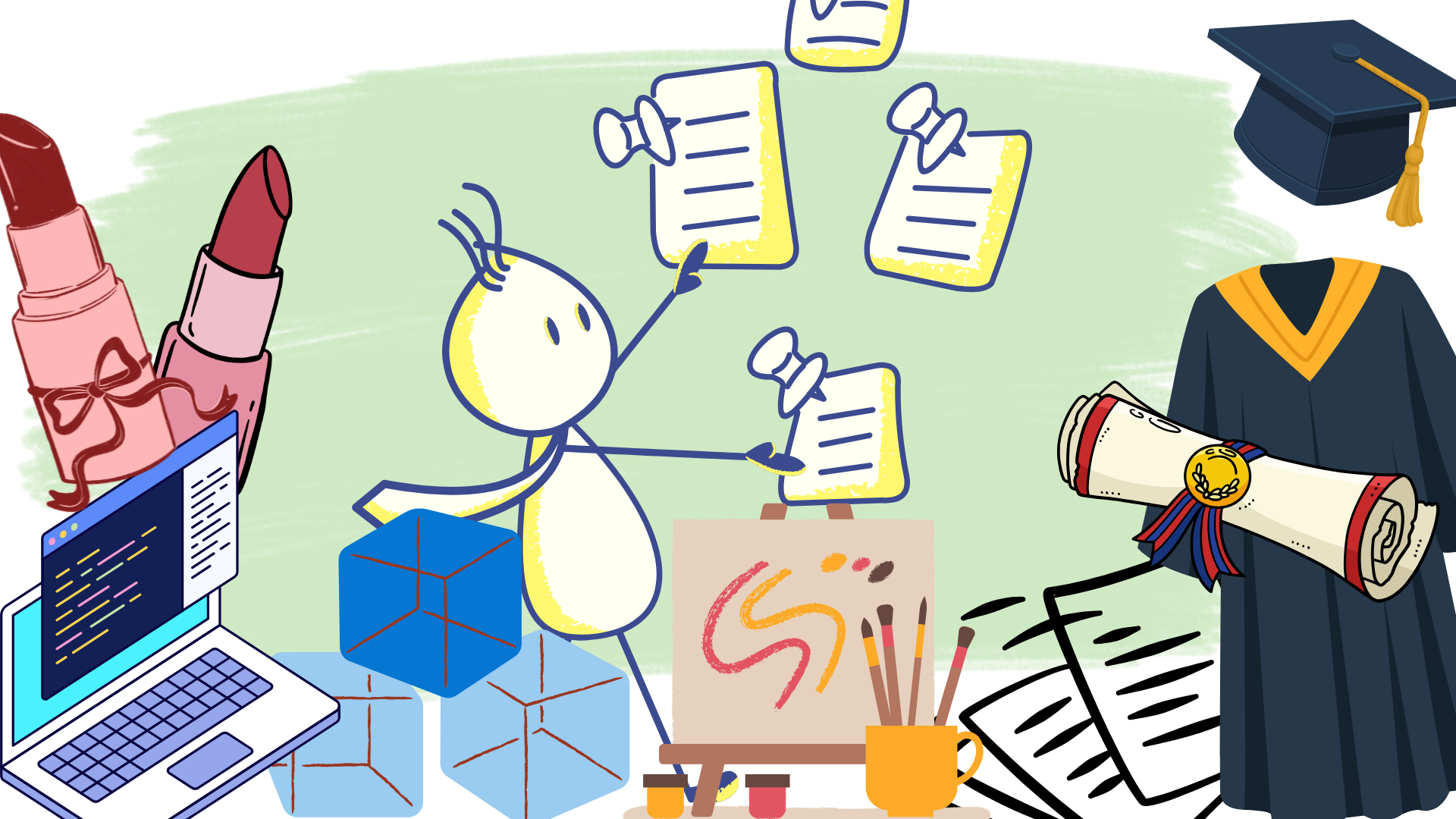
Arni Nilima, a BBA student at North South University, started her business “TrendMaker” with a shipment of lipsticks. Her journey toward self-reliance was a conscious choice to prove her capabilities. Beyond the profits, it was the real-world recognition that defined her success as a student entrepreneur.
"I was at the Kolkata Airport, and someone asked if I owned TrendMaker. It was such an achievement for me to be recognised in a foreign country because of my work," Arni recalls. Earning this kind of recognition allows students to build a sense of self-worth that goes far beyond a typical allowance or grade.
However, achieving this independence requires an immense amount of grit. For someone like Adrita Das, a third-year student at Bangladesh University of Textiles in the Department of Fashion Design and Apparel Engineering, the creative economy is a place to apply her academic skills immediately. She started a business selling curated tote bags and customised t-shirts. "Designing tote bags was more than a hobby for me; it's about proving that my degree has immediate market value in my surroundings and online," Adrita explains.
For these students, the ability to manage their own finances is a badge of honour that makes the stress of the hustle feel worth the effort.
Maintaining the double life
While the rewards of a side hustle are clear, the physical and mental cost of maintaining two separate lives is often staggering. The dual pressure of maintaining a CGPA while ensuring a steady stream of income is a heavy burden.
For Rakibul Alam*, a BBA student at Dhaka City College under National University, the hustle is driven by the raw need for survival. Rakibul stated that his college fees depend on him and his sister, who works in a garment factory in Mirpur. His late parents always wanted him to be educated and have a solvent job. This sheer ambition and the need to survive in this economy pushed him to undertake ride-sharing services through Foodpanda and Pathao.
“Riding through the suffocating heat of Mirpur Road after hours of lectures is exhausting, but I realised the bills won’t pay themselves while I study for my accounting midterm,” Rakib says.
His story is a sobering reminder that for many, the hustle is not about luxury but about keeping a seat in the classroom.
 For all latest news, follow The Daily Star's Google News channel.
 The lack of free time becomes a permanent fixture in the life of a student entrepreneur. Managing a business or a freelance career requires a level of consistency that university schedules rarely allow. Bidhu points out that the rigid demands of a side hustle often clash with the academic calendar. “Unfortunately, we don't get much free time in student life, and it's really difficult to manage such work along with studies and other activities," Bidhu admits. This adultification of student life means that the years typically reserved for social discovery are now consumed by order management and product deadlines.
The toll is not just mental but also physical, as sleep is often the first thing to be sacrificed. Zakaria notes that when deadlines loom during exam seasons, the pressure becomes unbearable. "If there is a tight deadline during exam leave for any reason, I kind of have to sacrifice my sleep to cover up everything," Zakaria explains. This constant state of high-alert productivity can lead to significant burnout. Students find themselves caught in a cycle where they are too tired to study effectively and too stressed about their grades to work efficiently. The romanticised image of the young entrepreneur often overlooks these late nights spent staring at a screen, wondering which is more important: the degree or the income.
Balancing the expectations
One of the most complex hurdles for Bangladeshi students is navigating the gap between their own career ambitions and the traditional expectations of their families. Even as students achieve financial success through their ventures, the cultural obsession with a reputed job remains a dominant force. Arni Nilima faced this conflict head-on after her graduation. Despite running a successful business, her father still envisioned a different path for her.
"I was confused about what to do in life, and I just didn’t know whether I should continue in business or look for a job, because my father still wanted me to become a BCS cadre," Arni says. Nonetheless, she went on to secure a job and also continue to enlarge her business.

This struggle to balance passion with tradition is a common experience for many who choose the unconventional path. Adrita feels that starting her tote bag business was a way to navigate this pressure by showing tangible results early. "My parents were sceptical about fashion design until I showed them my first profit from the customised t-shirts; it's about shifting their perspective one sale at a time," she explains.
The inspiration for these businesses often comes from the very parents who might later push for a traditional job. Bidhu’s artwork page was inspired by her father’s early, albeit clumsy, attempts to teach her how to draw. "My father taught me how to draw houses, trees, rivers, villages, and cows, and he was really, really terrible at it," Bidhu recalls with a smile. This early support often acts as the foundation for the student's ambition, even if it later takes on a form the parents didn't expect.
Reclaiming the narrative of student life
Despite the challenges and the burnout, the consensus among these students is that the hustle is a form of self-investment that pays off in ways a degree alone cannot. The independence earned during university years provides a sense of empowerment that carries over into postgraduate life. Bidhu believes that the struggle is a necessary part of growth. "All those sleepless nights and stressful days feel worth all the hustle. Ultimately, it's like an investment in yourself," she asserts. This mindset shifts the focus from the degree as the end goal to the skill set as the one true asset.
The confidence in one's own ability to thrive is perhaps the greatest reward of the side hustle. Zakaria feels that his years of freelancing have prepared him for a future that he can control. "Doing freelance work gave me confidence that I can survive in this field, and since I love doing it, why not do it for the rest of my life?" Zakaria reflects. This sense of agency is a rare commodity in a job market defined by rising unemployment and shrinking opportunities.
In the end, the shift toward student side hustles is a testament to the resilience of a generation that refuses to be passive. Students are choosing to face the complexities of adulthood early, armed with creativity and a relentless drive to survive. As they navigate the dual worlds of academics and employment, these students are earning their right to decide their own destinies in an increasingly demanding world. They are the new face of our workforce, one that values action and resilience.
Tagabun Taharim Titun is a content executive at The Daily Star.
References:
The Daily Star (March 27, 2026), Youth unemployment contributing to social risks.
General Economics Division (January 27, 2026), Harnessing the Potentials of Youth.
Comments