

Renewable energy production can draw Swedish investment
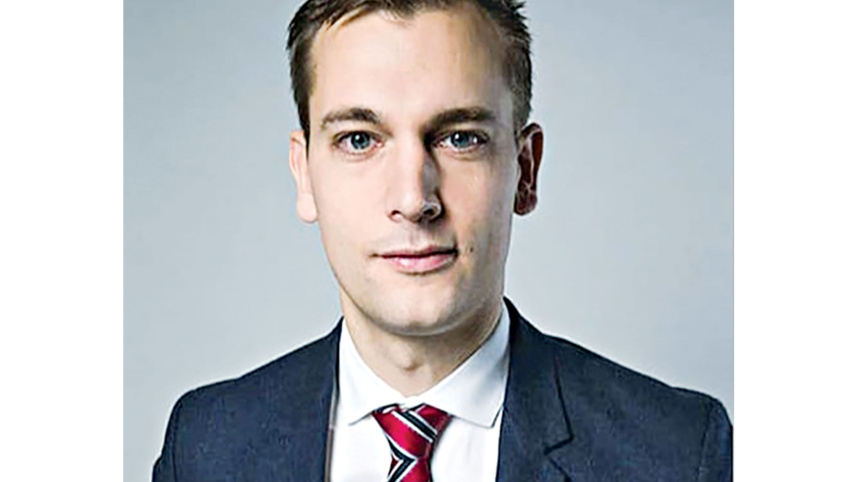
As Bangladesh transitions from least-developed to middle-income country, democratic values, rule of law and use of renewable energy will be some of the major issues that the country should improve on, said a Swedish minister.
"Our own development journey tells us that it is not just about growth of production and growth of investments. You need to have the preconditions, the institutions that guarantee that," Per Olsson Fridh, Swedish minister for international development cooperation, told The Daily Star.

"You need transparency, predictability in the systems and trust in institutions. You also need accountability, media, civil society -- the actors that hold decision-makers accountable," he said.
During a visit to Bangladesh last week, Fridh visited development projects and Rohingya camps in Cox's Bazar, and called on Bangladesh's prime minister, government officials, development partners, NGOs and civil society members. He also launched a new five-year development strategy for Bangladesh, as a trade partner, having bilateral annual trade of over $600 million.
Fridh shared the factors he thinks would help Bangladesh solidify its progress.
"I was thinking of the energy mix. A stable economy of tomorrow must be built on renewable energy, not fossil fuel," he said.
Stable market economy also needs transparency, accountability and strong social dialogue. It will be even more important post-pandemic. "We still need to work in Bangladesh on these issues," he added.
Sweden is very much supportive of Bangladesh's transition and wants to work with the country on these fronts, he stated.
Fridh said he spoke to some Swedish investors in Bangladesh, who said they want two things -- energy mix and social dialogue -- to enhance investment in Bangladesh.
"There is a clear demand on the consumer side for more carbon neutral products. So, if Bangladesh can guarantee that, we can produce renewable energy in Bangladesh," he said, adding that they will be more interested to continue investing.
"The other one is social dialogue. You need to make sure that people have the right to organise themselves, and that workplaces are safe and inclusive," said the minister.
Asked what he means by social dialogue, he said that men and women from all groups, irrespective of caste, creed and ethnicity, should be able to participate in democratic institutions.
Asked if development cooperation will change as Bangladesh is graduating from LDC, he said Bangladesh is a strong player in the UN and multilateral forums, and will continue to be so.
"Even if the country as a whole graduates, there will still be millions of people within the status of extremely poor. With pockets of success, there will also be pockets of vulnerabilities and poverty," he said.
Asked how Sweden can help solve the Rohingya crisis, Fridh said military coup in Myanmar worsened the preconditions for dignified and sustainable return of the Rohingyas to Rakhine state.
He stressed on South Asian countries' role, saying, "As long as regional actors accept the military leaders, they can continue holding power in Myanmar."
 For all latest news, follow The Daily Star's Google News channel.


Comments