


Huge rock dust unsold as demand falls
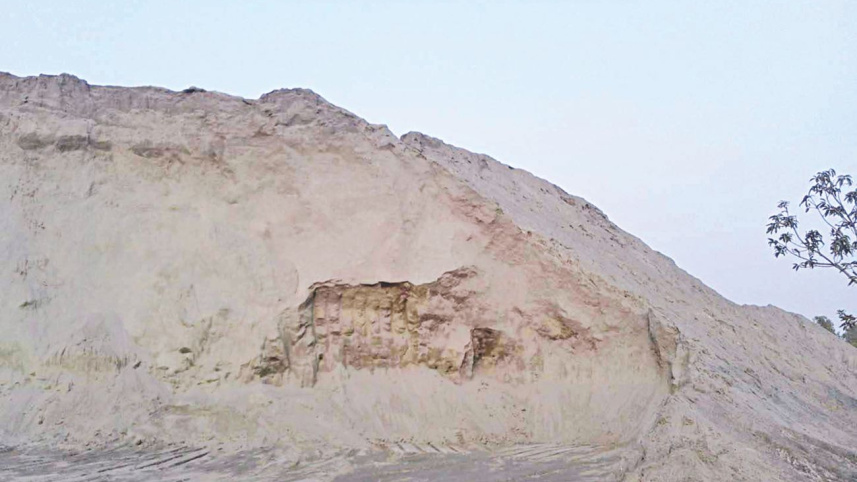
At Madhyapara granite mine in Dinajpur's Parbatipur upazila nearly 1.5 lakh tonnes of rock dust lie in seemingly forgotten heaps for a lack of buyers. Dust sales over recent months have seen serious decline.
The dust, which is defined as rocks up to 5 millimetres in diameter accounts for 13% of the mine's production, with up to 700 tonnes produced by underground drilling, blasting, crushing and sorting on an average working day. It currently sells for US $5.90 per tonne.
 For all latest news, follow The Daily Star's Google News channel.
 Rock dust can be used in floor and wall plaster, in construction of water tanks and irrigation tunnels, to build erosion protection blocks or as an alternative to sand. Cement plants and tile factories can use the dust for raw material.
According to mine officials the rock dust is durable, has high water exhausting capacity and combines easily in cement mixes.
While several companies including Basundhara and Meghna Groups regularly procure dust from the mine their combined demand of around 20 tonnes per day is far below supply.
Potentially, many state-run enterprises could also make use of the dust, including roads and highways, public works, the local government engineering department, railways and water development board.
"If it were made mandatory for public organisations to use Madhyapara's dust for many of their development projects, the excess supply problem would be solved," says one mine official seeking anonymity.
Indeed with good road and rail transport connections Madhyapara is well-placed as rock dust source for projects across much of the country.
While production at the mine has been suspended for the last 6 months, it is set to resume at the end of March, according to officials. Once production resumes the mine will face a serious shortage of storage space to accommodate the dust that usually accompanies rock production. As a result the operating company has been requested to cut dust production.


Comments