


Rediscovering medieval Mohammadi Bagh in Jhenidah
In the time when cargo boats were more plentiful; when they routinely set off from the grand seat of the Bengal Sultanate, in Gaur; when they sailed from Pataliputra in modern day Bihar in search of trade: there was a city on the River Bhairab in the area currently called Jhenidah that preserved the greatest navigable route between those inland places, the heartland of empire, and the untamed eastern sea.
Ten mosques, 11 freshwater tanks and four shrines: the now-quiet riverbank 11 kilometres south of current-day Kaliganj and 26 kilometres from the district town has an illustrious past. It was once an area that bustled with the cultural and community life to be expected of a local capital called Mohammadi Bagh.

The city attracted 12 Islamic mystics, locally called aulias, and from their fame arose 12 adjoining markets, one for each. From this feature comes the medieval city's contemporary name: the area is now called Barobazar, literally 'the 12 markets.'
The domes of the city's mosques are said to have resembled those of Shat Gambuj Mosque in Bagerhat and it must've been quite a feat to transport the stones from afar, down the Bhairab River, to build them. But as so often happens to human habitations of note, as the Sultanate period came to a close, with Mughal power rising, Barobazar's fortunes slipped away.
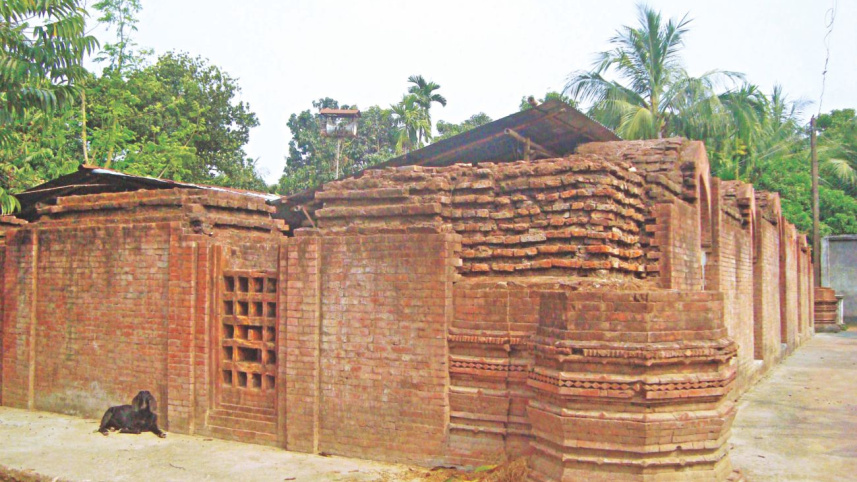
Galakata, Jore Banglar, Gorar and Charug Dani: the 500-year-old mosques feature walls up to 3.6 feet thick, concave roofs that rose to a height of 25 feet. Yet nowadays at Pir Pukur mosque stray animals wander and there is no shade for worshippers. At Monohar mosque which still awaits excavation, local Muslims have erected a basic tin shelter at their own cost; but the torn tin sheets can hardly protect the 150 families who the current imam, Solaiman Hosain, says rely on the mosque.
Although cracks have developed in many places, providing shelter to shrubs and trees and sometimes stray animals; although time has taken much of the detail from the red terracotta plaques, the shape and structure of the buildings still bear witness to a rich history. The remaining domes are particularly impressive.
According to Altaf Hossain, Khulna's regional director of the Archaeological Department, the sites were rediscovered in 1987 with a visiting team of five members appointed.
Atiar Rahman, caretaker of the mosques, notes that a stone inscription was recovered from Satgachia mosque at the time of initial excavation inscribed with the name Mahmood Ebn-a-Hossain Saha Sultan Al-Mozaffar. The inscription stone is now housed at Rajshahi University Museum.
Current Barobazar Union chariman Joynal Abedin believes in the tourism potential of medieval Mohammadi Bagh. He says that the roads leading to the mosques are uneven and rugged which makes visiting the sites difficult. He thinks barriers should be constructed to prevent cattle wandering in the ruins and that local rest houses are warranted to accommodate visitors.
Shukur Mollick, Noon Golla and Pargagar: with the Mughals came the centuries that would reduce Mohammadi Bagh's mosques to ruins as, without supervision or maintenance, centuries inevitably will. Nevertheless, although the most captivating artistic features have faded, Barobazar remains one of the best archaeological locations in the country.
 For all latest news, follow The Daily Star's Google News channel.
Comments