Harper Lee at 100: An enduring echo of justice

There are writers who build empires of words, and there are those who, with a single, exquisitely calibrated instrument, alter the climate of conscience.
Harper Lee belongs emphatically to the latter tribe.

On her birth centenary today, the ledger of her published work remains slender, yet its cultural yield is prodigious.
Her prose did not clamour, it settled. It did not sermonise, it suggested.
And in doing so, it carved a permanent alcove in the architecture of modern moral imagination.
Nelle Harper Lee was born on April 28, 1926 in Monroeville, Alabama, a small southern US town that would, with only modest fictional disguise, become the Maycomb of her most celebrated work.
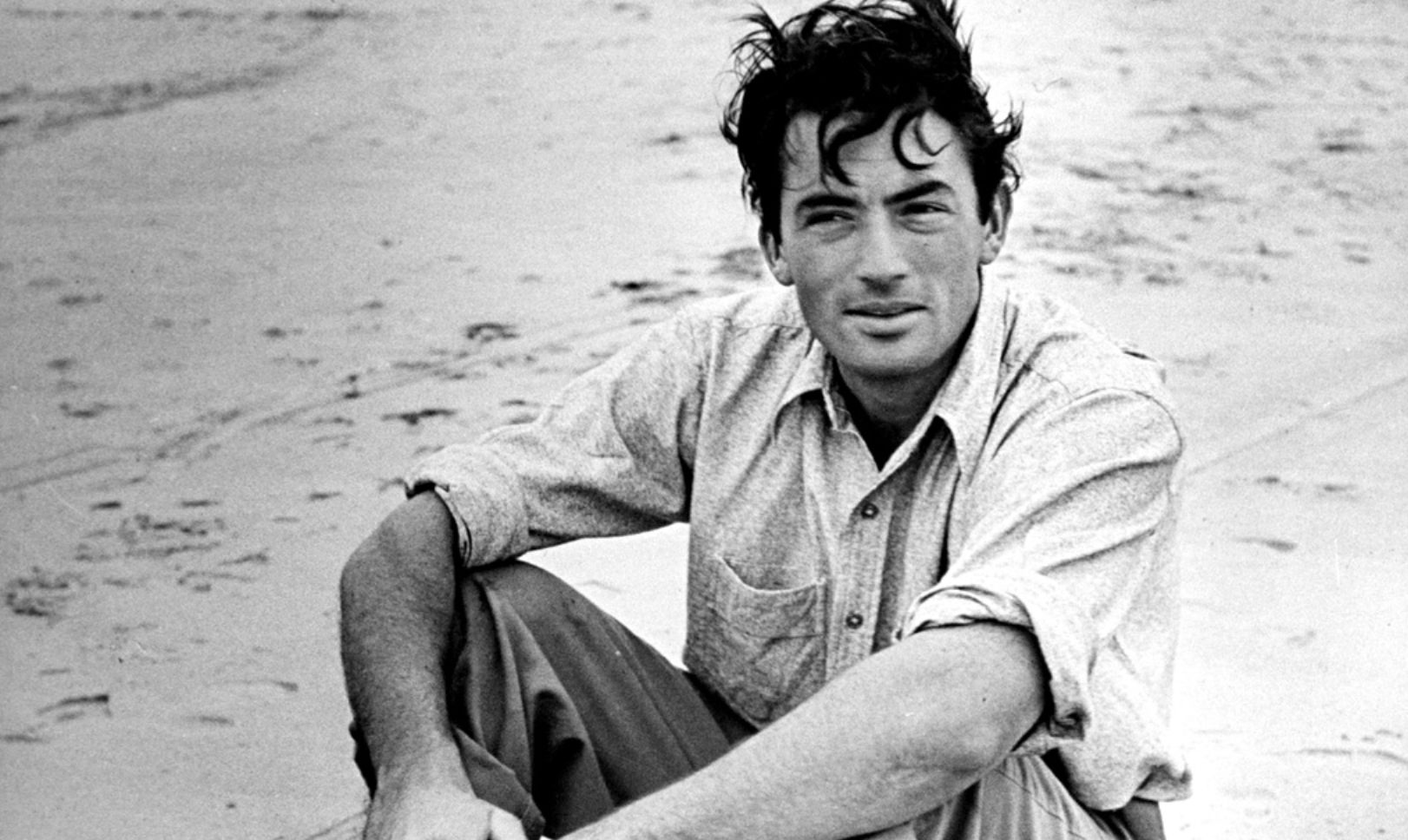
The daughter of a lawyer and state legislator, she grew up in a household where the law was both profession and parable. The courtroom was not merely a theatre of verdicts, it was a crucible where character was tested against the stubborn alloy of prejudice.
Lee’s early education took her through Huntingdon College and the University of Alabama, where she studied law but did not complete her degree.
New York beckoned, as it did for so many aspirants of mid-century literary ambition.
There, amid the anonymity and exhilaration of the city, she laboured in modest employment while quietly honing the manuscript that would become her legacy.
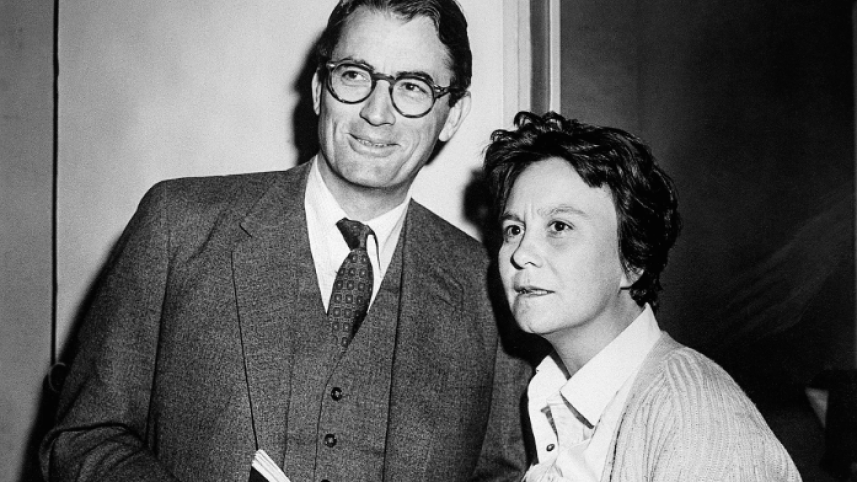
A fortuitous act of patronage from friends -- a year’s financial support to “write whatever you please” -- afforded her the rarest of luxuries: time unencumbered by survival.
The result was To Kill a Mockingbird (1960), a novel that would, with deceptive gentleness, detonate across the American literary landscape.
It is tempting to speak of To Kill a Mockingbird in the superlatives of acclaim -- the Pulitzer Prize, the classroom ubiquity, the cinematic afterlife.
Yet its deeper triumph lies in its tonal equilibrium. Lee achieved a rare alchemy -- a child’s-eye narrative that neither trivialises nor sentimentalises the brutalities it surveys.
Through Scout Finch’s observant candour, the reader is ushered into a world where innocence is not ignorance, but a lens of unsparing clarity.
At the novel’s ethical centre stands Atticus Finch, a lawyer whose moral rectitude has become almost archetypal.
Yet Lee’s genius is to render him not as an abstract ideal, but as a man of quiet stubbornness, navigating a society whose prejudices are both systemic and intimate.
 For all latest news, follow The Daily Star's Google News channel.
 The trial of Tom Robinson, a Black man falsely accused, is not merely a plot device, it is the novel’s fulcrum of moral gravity.
In that courtroom, the genteel façade of Maycomb fractures, revealing the sedimented injustices beneath.
Lee’s prose is unadorned but never artless. She writes with a clarity that resists ornament, yet her sentences carry a latent lyricism, arising not from flourish but from fidelity to voice.
The humour, too, is crucial -- a dry, affectionate wit that allows the narrative to breathe, preventing it from collapsing under the weight of its themes.
To read Lee in the 21st century is to encounter both resonance and complication. To Kill a Mockingbird remains a foundational text in discussions of race and justice, yet it is not immune to critique.
Some readers have questioned its centring of a white moral hero in a story of Black suffering, or its framing of racism through individual decency rather than structural critique.
Such readings do not diminish the novel’s significance; rather, they testify to its durability.
A work that continues to provoke interrogation is one that has not ossified into mere reverence.
Lee’s narrative invites, perhaps inadvertently, a dialogue across generations about the nature of allyship, the limits of liberal conscience, and the persistence of inequity.
If Lee’s first novel established her as a literary force, her subsequent silence elevated her into something rarer: an enigma.
For decades, she resisted publication, shunning the circuits of publicity and the expectations of a readership eager for a second act.
Her retreat was not theatrical but resolute, a refusal to commodify either her voice or her privacy.
This silence was broken, controversially, with the publication of Go Set a Watchman in 2015, a manuscript widely understood to be an earlier draft of Mockingbird.
Its portrayal of an older, more ideologically compromised Atticus unsettled readers who had canonised him as a paragon.
Yet, even here, Lee’s work performs a disquieting service -- it reminds us that moral heroes, when subjected to time and context, may reveal fissures that are all too human.
Harper Lee’s influence extends beyond literature into the broader cultural lexicon.
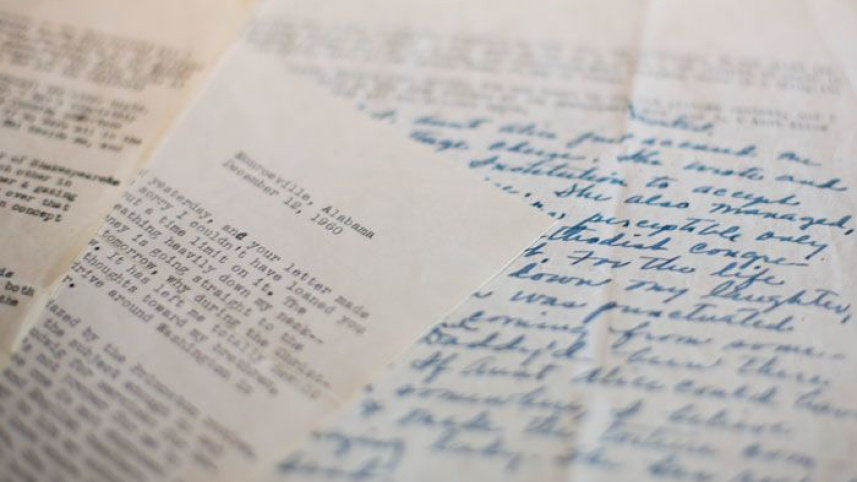
Atticus Finch has become shorthand for principled advocacy; Maycomb, a byword for the insidious normalisation of prejudice.
The novel’s presence in classrooms across continents has ensured that successive generations grapple with its questions, even as they revise its answers.
There is also, in Lee’s legacy, a lesson in restraint. In an age that often equates productivity with worth, her career stands as a quiet rebuke.
She wrote what she needed to write, and then she stopped. The paucity of her output is not a deficiency but a distillation. It compels us to consider the value of precision over proliferation.
On this centenary, Harper Lee’s life and work invite a form of commemoration that is less about nostalgia and more about reckoning.
The world she depicted has not vanished; it has merely altered its vocabulary. The moral questions she posed remain stubbornly unresolved.
Perhaps that is why her voice endures. It does not offer comfort so much as clarity. It asks the reader to look, and then to look again, at the ordinary injustices that masquerade as custom.
In the quiet streets of Maycomb, one hears an echo that refuses to fade -- the insistence that empathy is not optional, and that justice, however delayed, must be pursued with a patience that borders on defiance.
Harper Lee wrote one great novel, and in doing so, she ensured that it would never quite finish speaking.

Essay / Whose literary production?: Anthropic’s Project Panama

Flash Fiction / The knife seller
What Jamir Nazir’s Commonwealth win tells us about literature in the age of AI

POETRY / Take me to a hibiscus field won’t you

POETRY / Our Bangla
THE SHELF / Pages for freedom: Book recommendations for Victory Day

Alice Munro, Canadian Nobel Prize-winning author, dies at 92

POETRY / Be a tree

FICTION / The loss of essentiality