


How Kaaktaal became the soundtrack of a generation

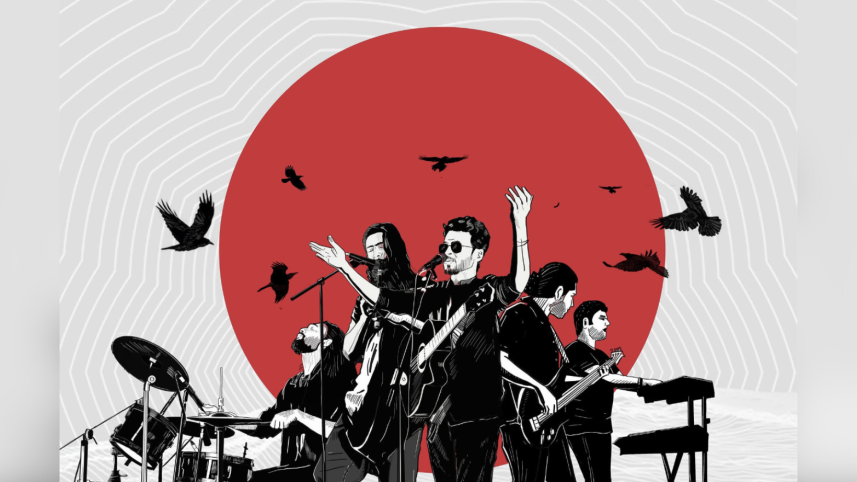
There are certain songs that belong to a particular age of your life. You remember the room where you first heard them, the person sitting beside you, the road you were walking down, the version of yourself that still believed certain things about love, friendship, home and the future. Then there are songs that seem to travel with you. They acquire new meanings as the years pass. A lyric that once felt romantic becomes nostalgic. A song about leaving home suddenly sounds like a song about growing up. A melody you once played casually on a late-night bus ride becomes attached to a city you eventually left behind. The song remains the same. You become someone else around it.
For a generation of young listeners in Bangladesh, Kaaktaal became that kind of music. Their songs entered people’s lives quietly, almost conversationally. They arrived through friends, small live shows, social media links, university campuses, headphones on long journeys and evenings when a particular kind of sadness needed company. Their world carried guitars and flutes, rain and roads, old houses and moonlight, flowers and birds, longing and resignation. The arrangements often felt intimate enough to hear the person behind the song.
There was a rare generosity in that intimacy. Kaaktaal left enough space for listeners to bring their own lives. That quality becomes especially visible in “Abar Dekha Hole”, perhaps one of the band’s most enduring songs. At its surface, the song carries the longing of reunion. Yet reunion itself can take countless forms. It can mean meeting a lost lover again. It can mean imagining a friendship surviving years of distance. It can mean returning to a familiar neighbourhood after years away. It can even mean meeting an older version of yourself, the person you remember from another chapter of your life. That last possibility gives the song a particular ache. As we grow older, reunion becomes an increasingly complicated idea. People move. Relationships change. Cities transform. Childhood homes acquire new owners. Friends become names in contact lists. The person we once loved becomes a memory with a face attached to it. “Abar Dekha Hole” lives inside that uncertainty. It holds onto the possibility of seeing someone again while leaving the circumstances of that meeting to the listener.
Their songs rarely behave like explanations. They feel more like emotional objects that listeners pick up and examine according to whatever life they happen to be living. “Chorki” carries a similar quality. There is intimacy in its emotional landscape, yet its longing remains wonderfully fluid. One listener can hear a person in it. Another can hear a feeling. Someone else can hear an entire period of life condensed into a few minutes. That is how nostalgia often works. We rarely miss a moment in isolation. We miss the atmosphere surrounding it; the light in a room, a particular voice, a street after rain, the feeling of being younger and less certain about where life was taking us. “Chorki” can become a vessel for that kind of memory. It carries the feeling of reaching towards something beautiful while sensing its distance at the same time.
Then comes “Ghorchara”, a song that understands perhaps one of the strangest experiences of growing up: the moment when home becomes a memory. Leaving home carries a physical dimension, but its emotional consequences stretch much further. The childhood bedroom remains somewhere in the mind. Familiar streets become imagined landscapes. A house can survive in memory long after the person who lived there has changed beyond recognition. “Ghorchara” speaks to that displaced feeling. It captures the tension between leaving and belonging, between becoming someone new and carrying the old self along. For anyone who has left their hometown for Dhaka, left Dhaka for somewhere else, moved away for university, watched friends scatter or simply grown into a life that feels distant from childhood, the song can become intensely personal. It feels less like a song about geography and more like a song about identity.
Kaaktaal repeatedly found this emotional depth in ordinary things. A bus stop can become a place of transition. An old house can hold abandonment and memory. Moonlight can suggest beauty surviving difficulty. A shiuli flower can evoke something delicate, temporary and easily overlooked. A road can become a quiet companion. Rain can carry the emotional rhythm of change. “Shiuli”, in particular, carries the tenderness of impermanence. The flower appears quietly, blooms briefly and becomes part of the ground almost before we have fully registered its presence. That makes it a beautiful image for all the things people give us without spectacle: affection, sacrifice, companionship, small acts of care. The song can therefore sound like a meditation on loss while also feeling like an appreciation of what briefly existed.

Kaaktaal’s melancholy often works this way. It gives sadness somewhere to sit. “Golokdhadha” takes that emotional openness somewhere else entirely. Its very idea evokes a labyrinth; a place of turns, confusion, repetition and the search for an exit. In Kaaktaal’s world, that maze can become a metaphor for the self. We spend so much of our lives trying to arrive at a stable version of who we are. We choose careers, relationships, cities, friendships and identities, imagining each decision will bring some clarity. Then life changes the map again. “Golokdhadha” speaks to that uncertainty. Its emotional power comes from the tension between knowing and searching. There are moments when we understand ourselves with startling clarity, followed by moments when the person in the mirror feels strangely unfamiliar. We can carry contradictory desires, hold onto something while wanting to leave it, love someone while knowing the relationship has changed, or crave certainty while feeling drawn towards the unknown. The labyrinth therefore becomes deeply personal. Everyone has one. And Kaaktaal leaves enough room for every listener to draw their own map through it.
“Udhao” can similarly evoke the feeling of losing an earlier version of oneself. “Kichu Nei” carries emptiness, helplessness and a peculiar kind of emotional independence. Each song leaves its door open. That openness has allowed listeners to write their own biographies around the band’s music. One listener can connect “Abar Dekha Hole” to a particular person. Another can hear it years later and realise the song has become about themselves. “Chorki” can recall a relationship for one person and a vanished feeling for another. “Ghorchara” can become a university student’s homesickness, a migrant’s loneliness, or simply the quiet realisation that childhood has ended.
The music grows because the listener grows. Perhaps that explains why Kaaktaal became so deeply associated with a particular generation. Their songs arrived during years of enormous personal and social change. Young people were moving between cities, careers, relationships and identities. The country itself was moving through political upheaval, uncertainty and transformation. Kaaktaal’s music offered a language for that emotional instability. Their relationship with listeners carried the same intimacy. The songs felt discovered. And discovered songs become personal possessions in a peculiar emotional sense. We attach them to people and places. We send them to someone at two in the morning. We play them after a breakup. We listen to them while leaving home. We return to them years later and realise that the song remembers something we had forgotten.
Perhaps that is what makes Kaaktaal feel less like a band we simply listened to and more like a band we lived alongside. Their songs gathered our memories without asking for them. They became attached to people we loved, places we left, versions of ourselves we outgrew and feelings we struggled to name. Years later, the songs still carry those traces, even as we hear them with older ears and different lives. And somewhere in that familiarity lies the quiet magic of Kaaktaal: they gave us songs that could hold our stories, then allowed those stories to change. When the music returns to us, we return to it carrying everything that happened in between.

 For all latest news, follow The Daily Star's Google News channel.
Comments