


Suhrawardy and the tensions that shaped his politics

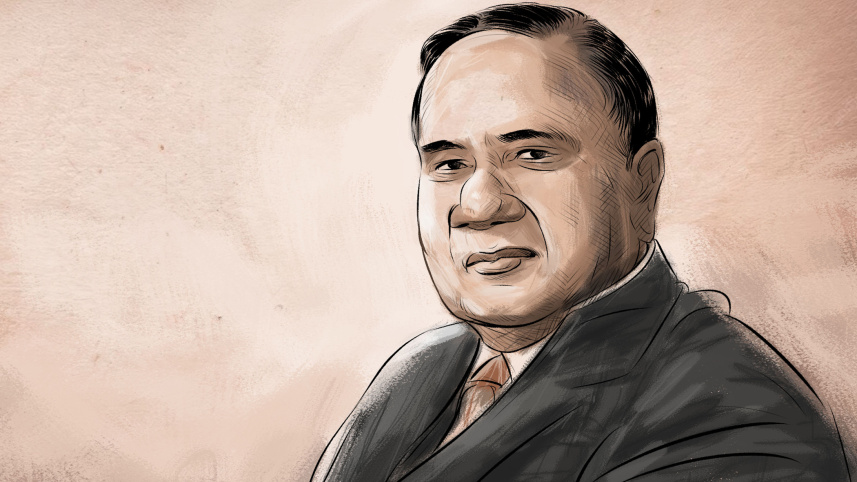
Huseyn Shaheed Suhrawardy’s politics were never merely a sequence of offices held or crises endured; it formed a dramatic, often tragic, arc in the political evolution of Bengal, Pakistan, and ultimately Bangladesh. His political life reads like a long, conflicted novel—full of ambition, idealism, rivalry, and relentless tension between principle and pragmatism.
Suhrawardy’s political imagination was shaped in Bengal—one of the most politically charged regions of British India. Born on September 8, 1892, into the illustrious Suhrawardy family, he inherited both intellectual privilege and political expectation. His education at Calcutta University and Oxford sharpened his legal mind and gave him a cosmopolitan sensibility, but his politics remained rooted in Bengal’s social complexities.

In the 1920s and 1930s, he moved through the Swaraj Party, the then All-India Muslim League, learning the art of coalition-building and mass mobilisation. His political style was unmistakably modern: urban, populist, and grounded in the belief that politics must speak to ordinary people. He was not a romantic nationalist like many of his contemporaries. Rather, he was a strategist who understood that Bengali Muslims needed both representation and protection in a rapidly polarising colonial landscape. This conviction would later shape his controversial role in the 1940s.
Suhrawardy’s tenure as prime minister of Bengal (1946-47) was the most dramatic chapter of his political life. The summer of 1946, marked by “Direct Action Day” and the communal violence in Kolkata, cast a long shadow over his legacy. Critics accused him of failing to prevent the riots; supporters argued that the violence reflected a broader collapse of colonial authority rather than the failure of one provincial leader.
This moment reveals the core tension in Suhrawardy’s politics. Firstly, he believed in mass politics, but mass politics can turn volatile. Secondly, he believed in Muslim political rights, but communal polarisation could undermine those rights. Thirdly, he believed in constitutional negotiation, but Bengal in 1946 was beyond negotiation. His role in these epochs remains debated. What is undeniable, however, is that Bengal’s political tragedy shaped his later commitment to constitutionalism and interregional cooperation.
After the partition of India in 1947, Suhrawardy moved to Pakistan, a country he had helped imagine but now had to navigate as a political outsider. He aligned himself with the emerging political forces of East Pakistan, becoming one of the architects of the Awami League, alongside figures like Maulana Abdul Hamid Khan Bhashani and Sheikh Mujibur Rahman. Here, Suhrawardy’s politics took on a new dimension. He became a bridge between East and West Pakistan. He championed equal representation, which became central to Pakistan’s first constitution in 1956. He advocated for civil rights for Bangalees, anticipating the future liberation movement of Bangladesh. His politics were no longer provincial. They were national, even visionary.
Suhrawardy’s premiership in Pakistan in 1956-57 was a brief but pivotal moment in the country’s early political history. He inherited a fragile state marked by a new constitution struggling to balance two wings of the country, and he had to navigate a bureaucracy wary of populist politicians, a military establishment growing in influence, and a political class fractured by regional suspicion. His government was a coalition of the Awami League and the Republican Party. But coalition politics in Pakistan was notoriously unstable. Key political battles of his premiership involved, among others, equal representation between East and West Pakistan, economic justice, civilian political supremacy over bureaucratic and military elites, and federal cohesion in a country already showing signs of fracture.
Ultimately, political infighting, regional tensions, and elite resistance forced his resignation in 1957. After leaving office, Suhrawardy remained a vocal critic of authoritarianism. He opposed military rule and sought to revive democratic politics through the National Democratic Front (NDF). His politics in this period were marked by fearless opposition to military dictatorship, advocacy for constitutionalism, support for Bangalee political rights, and a growing sense of political isolation. He died in Beirut on December 5, 1963—far from the land he had served, mourned by many but still politically contested.
To write about Suhrawardy is to write about the contradictions of South Asian politics itself. His life embodies: (1) the tragedy of divided nations—he fought for Muslim political rights in India, only to witness the violent birth of Pakistan; (2) the fragility of democracy—his premiership showed how difficult it was to build democratic institutions in a polarised, unequal state; (3) the loneliness of political visionaries—he imagined a Pakistan where East and West could coexist as equals, a vision that died before he died.
Suhrawardi’s life shows the paradox of political legacy. He is remembered as both a founding father of Pakistan and a pioneer of Bangalee civil rights—two identities that history later placed in opposition. During his political life, Suhrawardy contended with two of his compatriots as well as adversaries: K. Fazlul Huq and Maulana Bhashani. If Fazlul Huq was Suhrawardy’s rival in Bengal, Maulana Bhashani became his challenger in Pakistan.
Bhashani saw Suhrawardy as too cautious, too tied to the establishment, too willing to negotiate with West Pakistani elites. Suhrawardy saw Bhashani as dangerously radical—someone who could ignite mass movements but not govern a fragile state. Their conflict was ideological. Bhashani wanted revolutionary transformation. Suhrawardy wanted constitutional evolution. Within the Awami League, their rivalry became a struggle for direction. Bhashani wanted the party to champion peasant rights and confront the Pakistani state head-on. Suhrawardy wanted to work within the system to secure autonomy and representation for East Pakistan. The split was inevitable. Bhashani eventually broke away, forming the National Awami Party, leaving Suhrawardy to lead a more moderate Awami League. Their conflict foreshadowed the future: the radical energies that would later fuel Bangladesh’s liberation movement, and the constitutionalist path that would shape its early political institutions.
Seen through a literary lens, the conflicts among Suhrawardy, Huq, and Bhashani resemble a tragic play—three protagonists, each carrying a fragment of Bengal’s destiny, yet unable to unite their visions. Huq embodied the land—the peasant’s hunger, the rural cry for justice. Suhrawardy embodied the city—the modern, strategic, institutional mind. Bhashani embodied the storm—the revolutionary spirit that refuses compromise. Their conflicts were not failures of character; they were failures of history. Bengal was too vast, too diverse, too wounded to be led by one philosophy. Each man represented a necessary truth, but none could contain the whole truth. In their rivalry, we see: the tension between tradition and modernity, the struggle between constitutionalism and revolution, the conflict between elite negotiation and mass mobilisation. Their story is the story of Bengal itself—brilliant, divided, and forever searching for unity.
The conflicts among Suhrawardy, Huq, and Bhashani echo in the political culture of Pakistan and Bangladesh. Their disagreements shaped institutions, movements, and ideologies that still define the region. Suhrawardy’s constitutionalism, Huq’s populism, and Bhashani’s radicalism remain three strands of South Asian political DNA—intertwined, inseparable, and perpetually in tension. Their rivalry was not a tragedy of individuals; it was the tragedy of a nation struggling to be born.
Mohiuddin Ahmad is a writer and researcher of Bangladesh’s political history.
Views expressed in this article are the author's own.
Follow The Daily Star Opinion on Facebook for the latest opinions, commentaries, and analyses by experts and professionals. To contribute your article or letter to The Daily Star Opinion, see our guidelines for submission.
 For all latest news, follow The Daily Star's Google News channel.
Comments