


Masud Hasan Ujjal’s poetic journey with ‘Bonolata Sen’

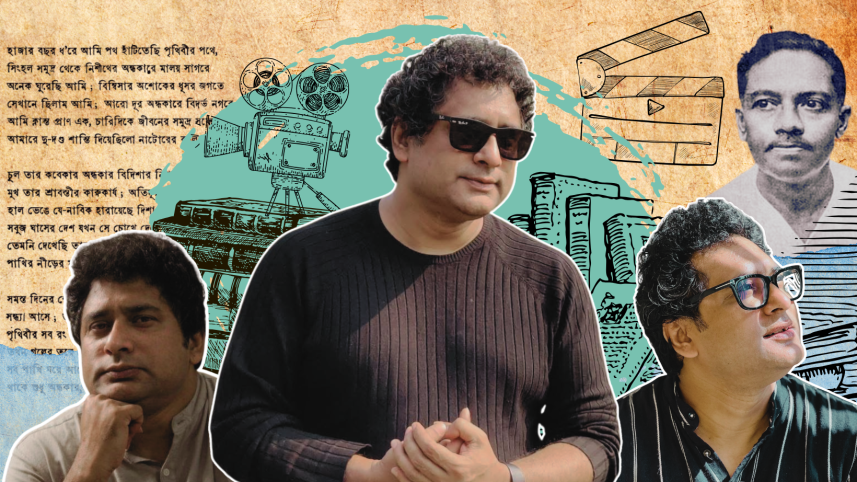
Masud Hasan Ujjal makes films in a way that differs from most other directors. He feels them first, visualises them inside his head, and only then brings them to the screen. His recent film, “Bonalota Sen”, released this Eid-ul-Azha, is perhaps the clearest proof of that process yet.
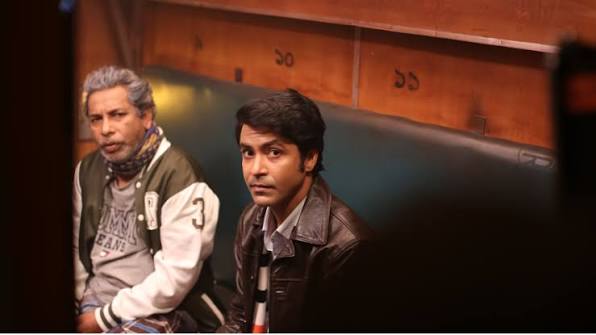
Ujjal is best known for his acclaimed feature “Unoponchash Batash”. Years have passed since that film, but he has returned with something quieter, deeper, and far more personal. “Bonolata Sen” is rooted in the poetry of Jibanananda Das. The film stars Masuma Rahman Nabila in the title role, with Khairul Basar portraying the poet Jibanananda Das.

The choice of subject was not accidental. Ujjal has carried Jibanananda Das within him for most of his life. “I have read a great deal of his poetry,” he says. “I wrote poetry myself from a very young age, and I read poems a little differently from others. I can visualise the stories inside the poems through my imagination and that is exactly how I have made this film.”
He is careful to draw a line between adaptation and creation. “I have not simply used Jibanananda’s poems or lines. The dialogues are entirely my own writing. This has my own signature style.”

He makes clear that the film is not a conventional love story. “‘Bonolata Sen’ is something else entirely. Whether the character of Bonolata is different from the character in the poem, that is something the audience will have to go to the cinema to find out for themselves.”
Part of the film was shot in Natore, the district associated with the poem’s famous lines. Ujjal acknowledges that locations mentioned in poetry are not always cinematic. “Fortunately, there was a particular scene in this film that was shot there.”
What makes Ujjal different is not just his approach to cinema but his relationship with the language itself. Every word he speaks feels like a line from a poem, and his answer to that observation is disarmingly direct. “I write poetry, not just since my youth, but throughout my entire life. I have thousands of poems. In fact I write poetry every day. But I do not publish them. Because talking to publishers feels like talking to traders. That is why I do not print them. Perhaps that is why I have not been recognised as a poet. But I prefer to think of myself as one.”
He adds with quiet conviction, “Anyone who reads poetry will understand that this person writes poetry. Anyone who watches ‘Bonolata Sen’ will understand the same.”
When it comes to communicating such literary and philosophical material to his actors, Ujjal brushes aside the idea that art is inherently difficult. “Art is not a complicated thing. Art is simple, but you need to have the capacity to understand it.” He explains his method through a line from Jibanananda. “‘Alo-ondhokare jai, mathar bhitor shopno noy, kono ek bodh kaj kore.’ There is nothing to translate in this line,” he says. “There is only something to feel.”
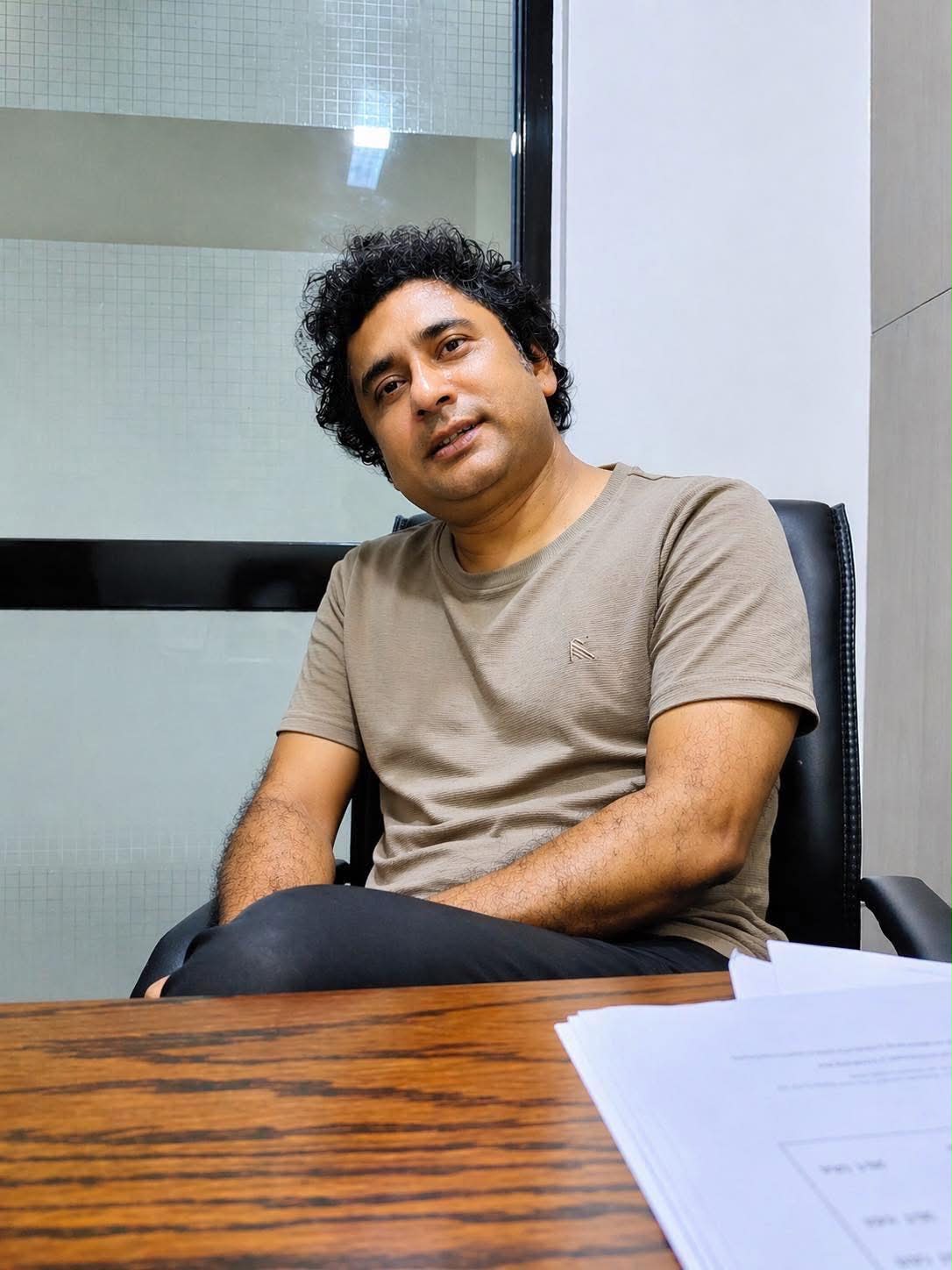
For Ujjal, the job of a director is simply to communicate what he has genuinely felt. “When you feel something with your heart, you can present it simply to people. There is no need to make it complicated.” Because he has lived with Jibanananda’s literature for years, helping his actors inhabit that world came naturally to him.
Ujjal has thought deeply about where cinema sits among the arts. “Cinema is the youngest member of the art family,” he says. “And when cinema was born, the word ‘Industry’ was born alongside it. So when people hear the word ‘Cinema’, they think of investment and return on investment.” He believes this has held the medium back. “Cinema has not yet reached the maturity of literature. Some films have, certainly, but most have not. Globally, cinema tends to stay in a shallow place.”
His response to that shallowness has been simple and consistent from the very beginning. “I have never wanted to make a shallow film. Since I do not want to make something shallow, it is only natural that I will make something deep. I do not feel any challenge in doing that. Yes, obstacles come, but since I know my job and I enjoy my job, I do not feel challenged.”
On the broader question of artistic versus commercial cinema, he is equally direct. “The filmmakers who truly have artistic vision will find their own path.” He adds, “Those who already have the knowledge, the ability, the filmmaker’s instinct, they will make wonderful things on their own.”
“Bonolata Sen” is a film of rare poetic beauty. It is a film about searching for a person, for a feeling, for something that always seems to slip away just as it comes into reach. Ujjal has spent years trying to bring Jibanananda’s vision to the screen, not as biography, not as adaptation, but as something altogether his own. “I tried to make this different and artistic,” he says. “Not like any ordinary love story.”
For a filmmaker who writes thousands of poems, who thinks of himself as a poet first and a director second, perhaps, that is the only kind of person who could have made this film.
 For all latest news, follow The Daily Star's Google News channel.
Comments