


The heads we are taught to hate: A poignant adaptation fit for our political climate

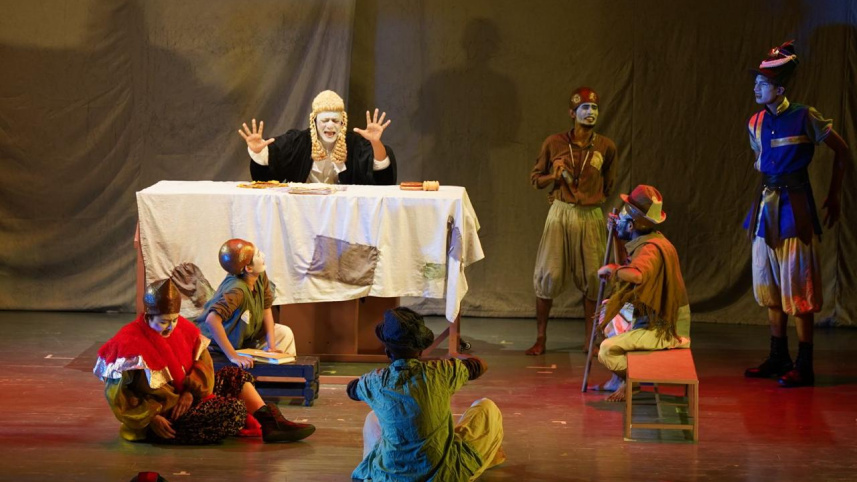
Mohsina Akhter's adaptation of Bertolt Brecht's "Round Heads and Pointed Heads" ("Golmatha Ar Chokhamatha") arrived with an uncomfortable familiarity. This is not a story about something we have never experienced. Its world reaches back to the histories of the subcontinent and, perhaps, further still—to every moment when power has found ways to divide, confuse, manipulate and subordinate ordinary people.
Translated into Bangla by Aniruddha Anu, the play's script has always felt familiar—both in Brecht's original and in the realities it reflects today, when the same old machinery of power continues to divide people and redirect their anger.
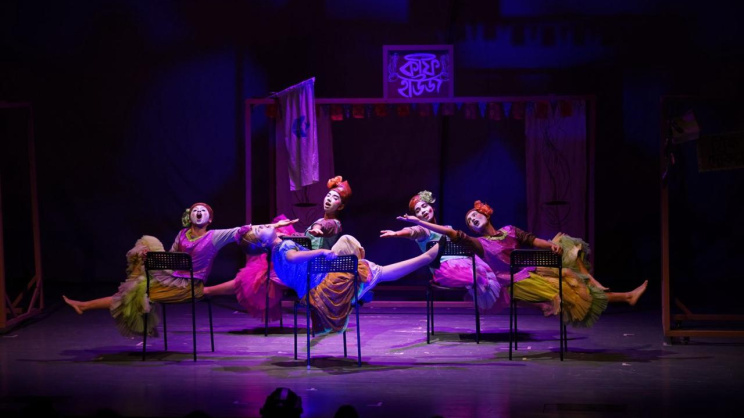
Staged from July 23 to 25 at the Nilima Ibrahim Auditorium of Bangladesh Mohila Samity, "Golmatha Ar Chokhamatha" felt particularly relevant to Bangladesh's present political moment.
The rulers may change faces, the sword may change hands, but the machinery of power remains remarkably familiar. At every national crisis, uprising and conflict, the same strategy returns: divide people, manufacture an enemy, redirect their anger and leave the architects of power untouched.

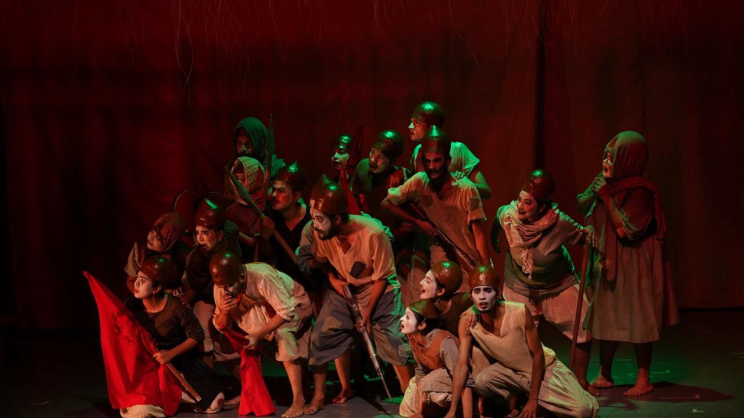
What happens to a people when they are swiftly and effectively placed against one another? They become pawns in a game they did not create and rarely understand—sometimes victims, sometimes perpetrators, and often both.
This is the central nerve of Brecht's political satire. In the play, the pointed-headed Ziks are declared responsible for society's ills, while the poor but numerically dominant round-headed Zaks are told that they are pure, superior and destined to prevail. The absurdity is obvious. The consequences are not.
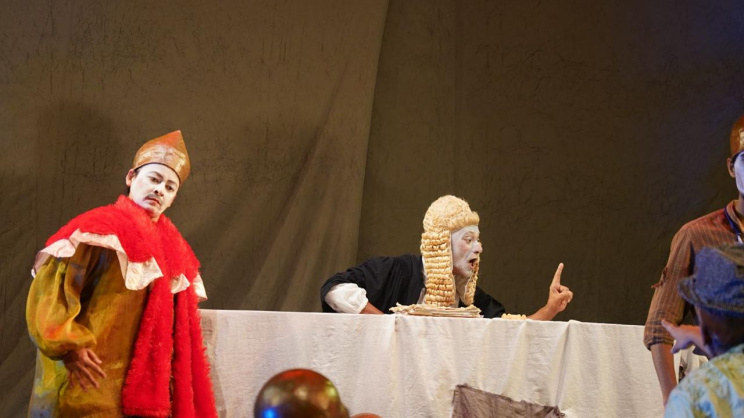
The poor are encouraged to take pride in a physical difference while forgetting the economic and social conditions that keep them poor. Religion, caste, skin colour, nationality and ethnicity can all become ammunition in the hands of power. Brecht simply makes the division more absurd by giving it the shape of a human skull.
That absurdity is precisely what makes the reality so difficult to dismiss.
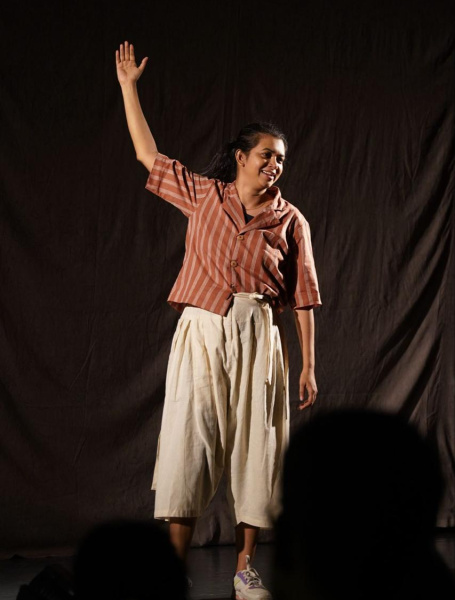
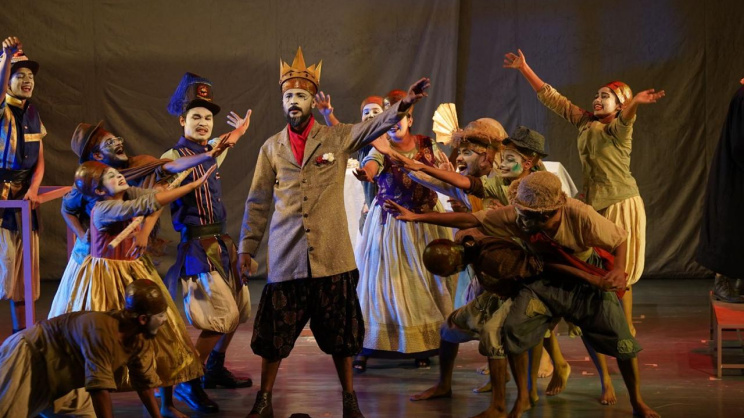
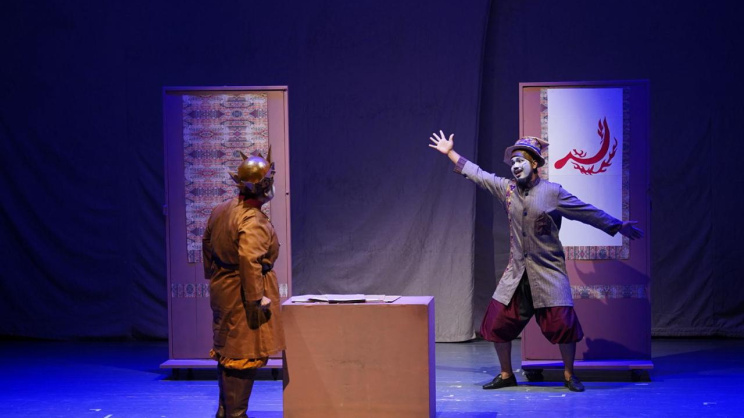
Akhter's production turned this political satire into a vibrant, musical and often chaotic theatrical experience. The 24-member ensemble from Spardha Academy of Performing Arts brought an infectious energy to the stage, opening the performance outwards and making the audience feel less like passive spectators than participants in the same organism.
The production's visual language was one of its considerable strengths. The stage design, costumes, lighting and props worked together without overwhelming the actors. The costumes were particularly effective in establishing the social divisions at the heart of the play, while the props were used as active elements of the performance rather than static decoration. Transitions between scenes were smooth, and the production maintained its momentum across a demanding canvas.
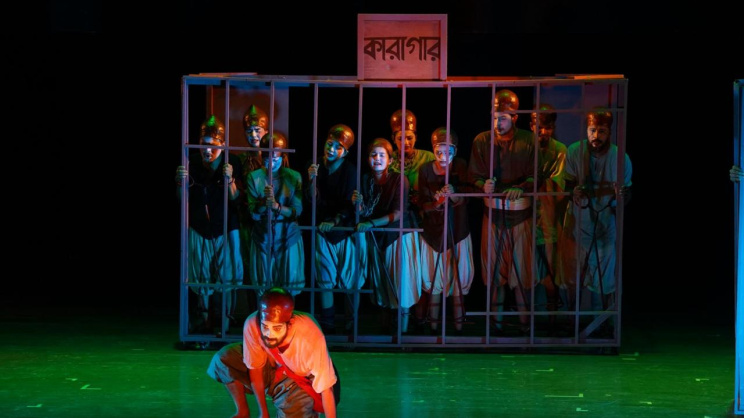
The audience responded accordingly. They cheered, answered back, sang and shouted. There was a sense of collective recognition in the room—as though the absurdity on stage was only a slightly distorted version of realities the audience already knows.
Akhter's decision to stage the play now was rooted in that recognition. "We have seen how rulers and those around them benefit by spreading propaganda and changing the issue when necessary," she said at the beginning of the play. "Power changes every time, but the fate of the people does not. Changing the ruler will not change the fate of the people until the structure of power changes."
The production was also a considerable gamble. Most of its performers are relatively new to the stage, and Akhter placed them inside a large, politically dense and theatrically demanding work. The result was not flawless, but that was part of its appeal. There was something compelling about watching an ensemble discover its collective possibilities in real time.
The play's most affecting character, for me, was Callas, the poor round-headed farmer played by Titas Zia. Brecht does not make him heroic. He is simply an ordinary man—and that is precisely what makes his transformation so disturbing.
When the authoritarian ruler declares round-headed people superior, Callas is swept into a false sense of pride. His economic misery momentarily disappears behind the intoxicating idea that he belongs to the "right" group. When he steals two horses from a landowner, he attempts to justify the crime as a form of racial entitlement.
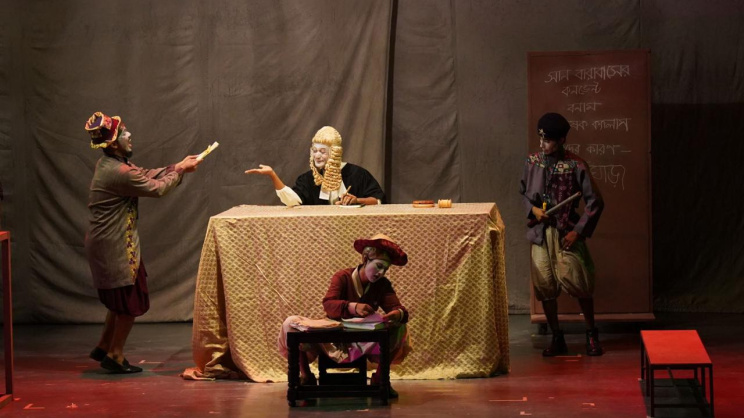
The courtroom sequence was among the production's sharpest moments: funny, absurd and deeply uncomfortable at once. Callas is not merely a victim of propaganda. He absorbs it, believes it and begins to use it. This is the more frightening side of political manipulation: it does not simply deceive people. It changes how they understand themselves.
Zia played Callas with admirable restraint. He did not rush to make the character sympathetic. Yet by the second half, when Callas had lost almost everything, sympathy became difficult to resist. His despair followed the audience out of the theatre.
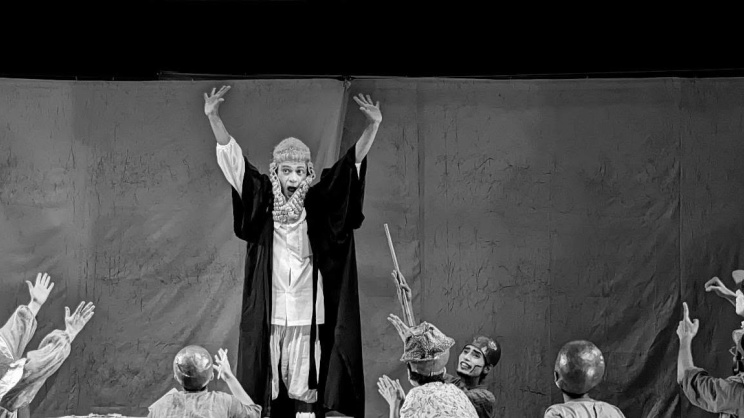
And then there was the maestro, Syed Jamil Ahmed.
After more than four decades away from acting, one of Bangladesh's most influential theatre practitioners returned to the stage in the role of a judge. The significance of his appearance extended beyond the novelty of seeing a celebrated director perform again. Ahmed is part of the history surrounding this production. He is Akhter's former teacher, and his presence became a quiet generational exchange between a director and her mentor.
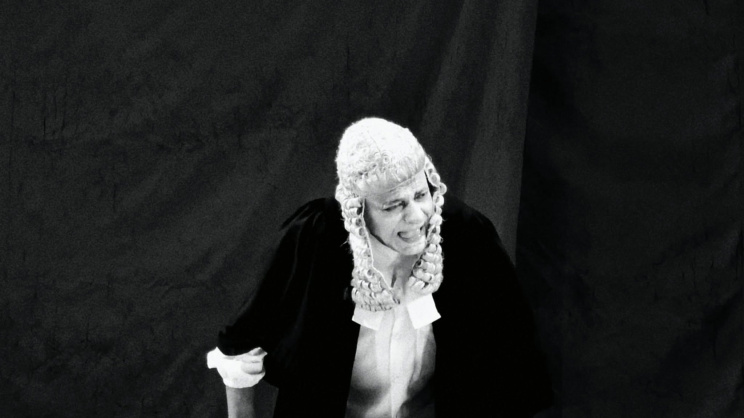
What was most striking, however, was how little he tried to make the role about himself. The towering presence of one of Bangladesh's great theatre practitioners was greeted with a standing ovation that seemed reluctant to end. Yet Ahmed's brilliance lay precisely in his refusal to command the stage. We did not see the Jamil Ahmed audiences know; we saw an opportunistic, corrupt and exploitative judge, steeped in the irony of a man close to power. He blended into the ensemble without overpowering it.
His performance was wry, precise and quietly devastating. He shone because he chose not to.
That restraint was also a credit to Akhter, who allowed her former teacher to become simply another cog in Brecht's machinery of power.
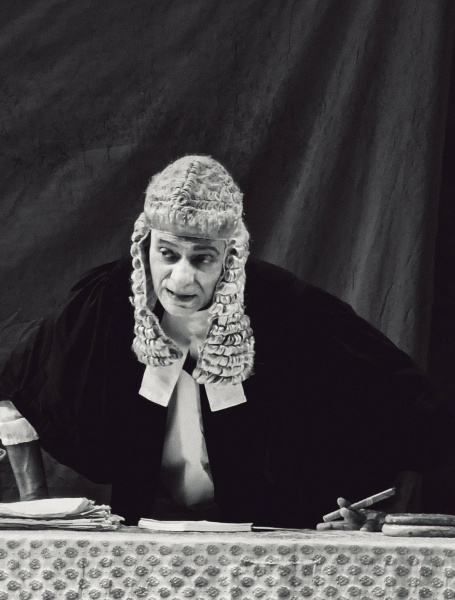
Ahmed's own return to acting has reinforced his understanding of theatre as an actor's medium. "A director has very little to do once the play is on; it is the actors who weave the performance at one go," he said. "If they make a mistake, that mistake stays." Returning to the stage, he added, made him see more clearly "the vulnerable condition in which our actors work."
His return was also prompted by a practical reality: the scarcity of actors in Dhaka willing to commit to long, rigorous rehearsal processes. With no professional theatre system to sustain performers, time is increasingly difficult to give. Ahmed's decision to join the production helped Akhter gather a committed ensemble around her.
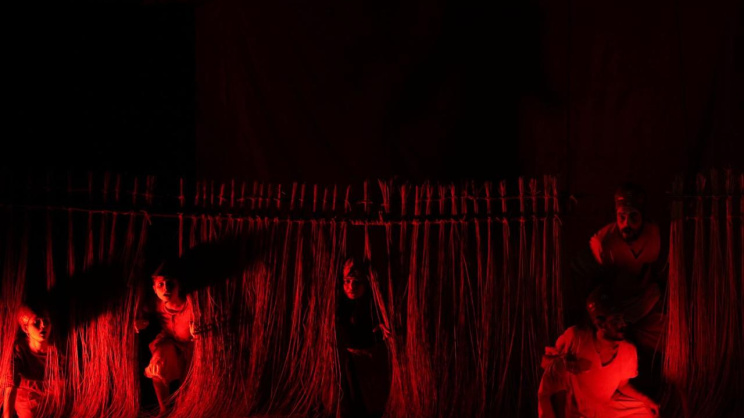
That commitment was visible. The performers, technicians and creative team worked with a cohesion that kept a production of this scale from collapsing into disorder. The ensemble was not entirely flawless, but it was alive, willing and visibly invested in the work. "Golmatha Ar Chokhamatha" is the kind of production that can be watched more than once because its political ideas continue to reveal themselves through performance.
Akhter has described the production as an act of faith in her actors. Watching it, I found myself thinking that it was also an act of faith in the audience—to trust that we can recognise the absurdity of division, and then recognise ourselves within it.
Because the pointed head and the round head are, ultimately, beside the point.
The more frightening question is how easily we agree to hate one another for whatever difference power places before us, and how quickly we forget who benefits from that hatred.
Brecht's heads are different. The machinery is not.
 For all latest news, follow The Daily Star's Google News channel.
Comments