


Not just child’s play: Bengal’s rhymes as cultural memory

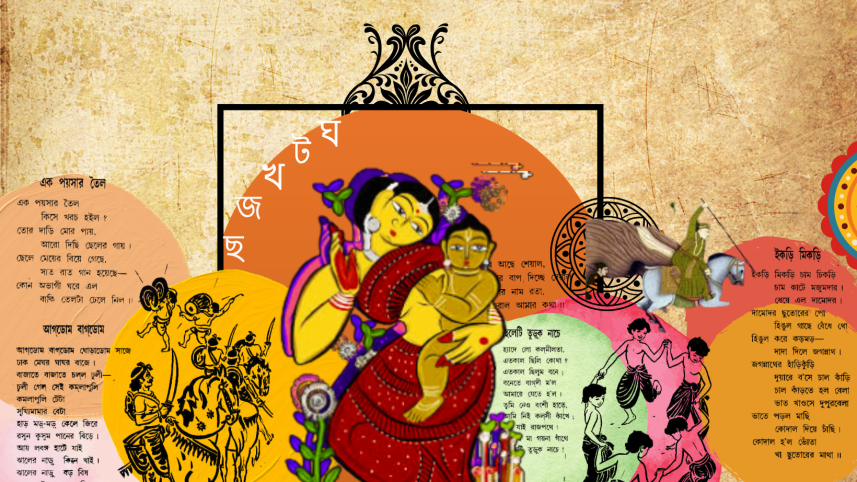
“I think I had a learning disability as a child. I took my time with words,” says Faria Raisha, a homemaker and former corporate employee. “But my mother and grandparents kept repeating chhoras and folktales. I began speaking through rhythm before I understood meaning.”
Now a mother, she sees the same process unfold. “My son doesn’t fully understand yet. But he reacts to rhythm, to gestures. Bengali chhoras have their own way of communicating.”
For journalist Tanim Ahmed, memory resides elsewhere. “I don’t quite remember what the stories were about. I just remember the sense of the stories, chhoras and most of all, Dadijaan’s (grandmother’s) voice. Dadijaan, who is very dear to me, used to tell me these stories. Later on, in life, Dadijaan caught dementia, and she started to forget things; she sometimes could not recognise me. But every time I looked at her—and now that I miss her—I miss her voice telling me these stories most.”
These are not simply memories. They point to a structure. To speak of Bengali rhymes—chhora—only as child’s play is to miss their cultural gravity. Embedded in everyday speech, games, lullabies, counting chants and ritual contexts, these short verses function as a vernacular archive of social experience, historical memory and collective imagination.

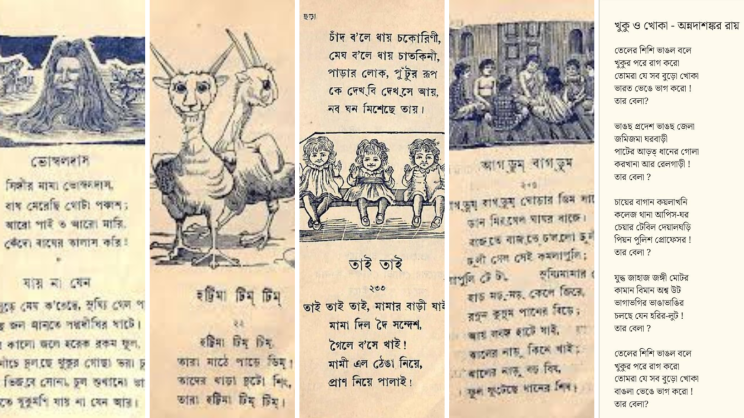
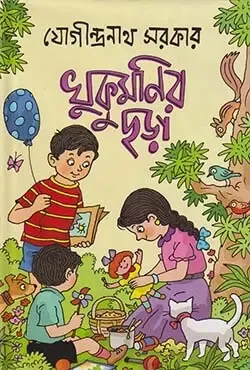
The recognition of this form is not new. As early as the late 19th century, Jogindranath Sarkar, in his work on “Khukumonir Chhora”, formally identified rhymes as a literary category—Chhorasahitya (rhythmic literature). Later, Dinesh Chandra Sen’s extensive documentation of Bengali folk literature further established their anthropological and historical value.
They circulate where formal records never reached— in rural compounds, in play circles under mango trees, in kitchens and in the rhythms of work and rest. As a cultural practice and as a form of early cognition, they are among the most enduring modes through which people in Bengal have learned language, absorbed social relations and, often without conscious intent, encoded history.
This is not mere assertion. Folklorists have long recognised multiple categories within Bengali folk literature—songs, proverbs, riddles, and rhymes. Rhymes are not homogeneous; they appear in distinct functional types: nursery rhymes, social or satirical rhymes, occupational rhymes, ritual rhymes, and those associated with games. That diversity signals not triviality, but embeddedness. In their rhythmic repetition are folded patterns of labour, hierarchy, crisis and adaptation.
To understand why this matters, one must return to the verses themselves.
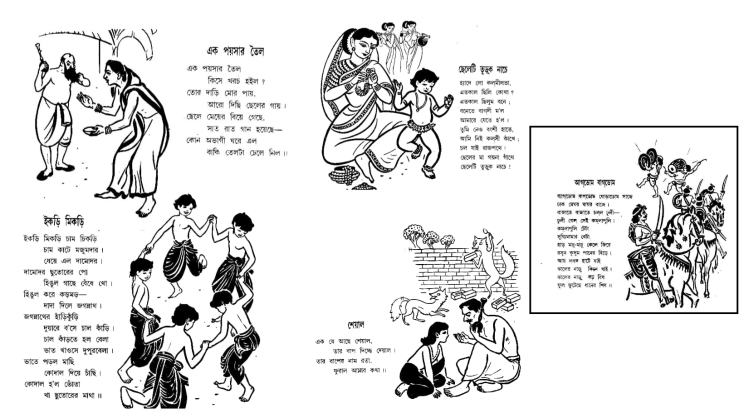
"Agdom bagdom ghoradom saje, dhak mridang jhanjhar baje…”
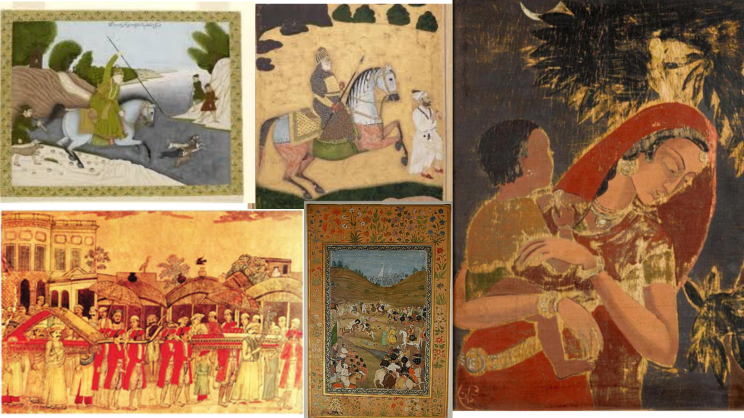
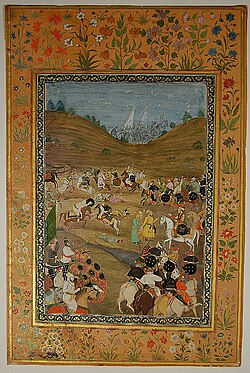
At one level, it is soundplay. At another, structure. Scholars—including interpretations referenced by Haraprasad Shastri—have read within it traces of Dom military formations in pre-modern Bengal. Roughly translating to vanguard, flank, mounted movement: formations now largely absent from formal historiography. Yet they persist in rhyme.
What history omits, rhythm retains.
“Ikir mikir chamchikir, chame kata Majumdar…”
Now a counting chant, the line carries a sharper edge. Some readings connect it to Mughal expansion under Jahangir and campaigns led by Man Singh I, with the “Majumdar” figures positioned as intermediaries. Whether historically exact or not, the rhyme encodes a pattern: proximity to power invites suspicion. Even play preserves critique.
More explicit are rhymes like:
“Elating belating shoi lo—
kisher khobor ailo?
Rajamashai ekta balika chailo…
Structured as a game, it stages negotiation. A ruler demands a girl; terms are set; value is assigned. Across South Asian history, systems of patronage and coercive exchange involving women are well documented. The rhyme does not narrate this analytically. It normalises the structure through repetition.
Then there is:
“Upen ti bioscope, nine ten taiscope, saheb babur boithokkhana…”
Here, the colonial world enters. The “saheb babu” marks hierarchy; the “boithokkhana” becomes a site of access and control. The insertion of “bioscope” suggests temporal layering—oral forms absorbing modern technologies without losing their structure.
The most enduring example remains the lullaby:
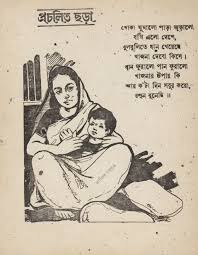
“Khoka ghumalo para juralo, Bargi elo deshe… khajna debo kise?”
Rooted in the Maratha incursions during the reign of Alivardi Khan, this rhyme compresses an entire economic crisis into four lines: crop loss, taxation, dispossession.
“Dhan furalo, pan furalo… ar k’ta din shobur koro, roshun bunechi.” A plea for time under extraction.
Its logic reappears, centuries later, in Satyajit Ray’s "Hirak Rajar Deshe", where rhyme becomes overt political critique. This continuity is not accidental. It reflects the structural capacity of rhyme to carry power relations across time.
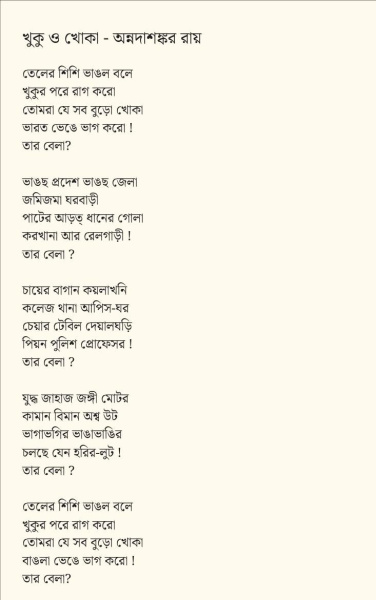
That capacity was also explored differently by Sukumar Ray in "Abol Tabol", where nonsense becomes satire, and by Rabindranath Tagore, who collected and analysed children’s rhymes as part of a broader cultural inquiry. Later, Annada Shankar Ray would push the form into direct political commentary, proving that brevity need not limit ideological force.
Equally important is authorship. Much of this corpus emerges from women’s voices—mothers, grandmothers, caregivers—composing in motion, in labour, in intimacy. Like nakshi kantha or alpana, these rhymes are not authored in the literary sense; they are accumulated, adapted, and transmitted. As Tagore noted, their language moves like breath—unforced, continuous.
It is within this structure that personal experience sits.
In rural Bengal, these rhymes were not separate from life. They accompanied eating, playing, sleeping. My grandparents, my maternal aunt, my sisters repeated them as part of daily rhythm. My khalamoni (aunt) would narrate them at night, shaping figures—horses, warriors, princesses—from dough or arranging them on plates of rice and vegetables. Through repetition and gesture, narrative became tactile. Language arrived not through instruction, but immersion.
This is not exceptional. It reflects a broader cultural method—learning through rhythm, memory through repetition, imagination through participation.
And yet, in contemporary preservation, this dimension is often flattened.
During Pahela Baishakh or Chaitra Sankranti, visual and performative traditions are foregrounded—alpana, nakshi kantha, music. Rhymes remain present, but often unexamined, reduced to children’s content. In that reduction, their analytical depth is lost. What disappears is not the rhyme itself, but its formal reading through text.
To treat these forms as trivial is to detach them from the histories they carry. They are not simply tools for language or play. They are ways of remembering without writing, critiquing without declaration, teaching without institution. The question is not whether these rhymes will survive.
They likely will. The question is whether we will continue to recognise what they are doing. Because within these short, rhythmic lines lies a method—of compressing experience, transmitting structure, and making sense of power and vulnerability through play.
 For all latest news, follow The Daily Star's Google News channel.
Comments