


Photo Adda: An evening of stories in flight

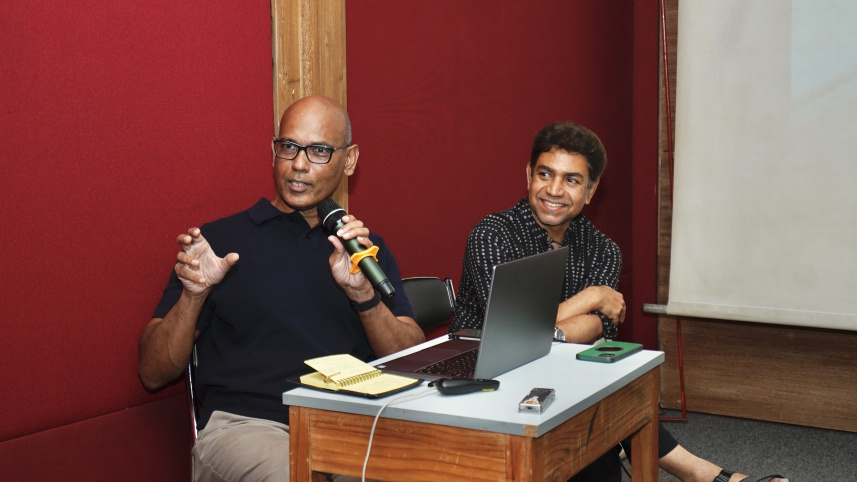
The red-walled auditorium at Alliance Française de Dhaka hummed with anticipation as photography enthusiasts, students, and storytellers gathered for an intimate Photo Adda.
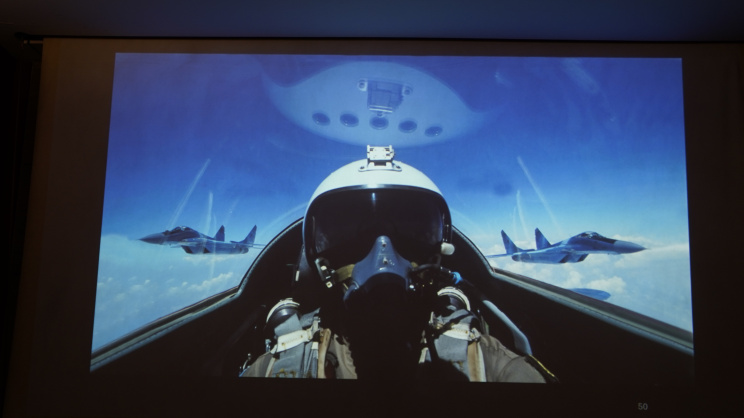
At the centre of the evening was acclaimed aviation photographer Sharif Sarker, whose work has long captured the poetry of flight. Hosted by photographer and educator Abir Abdullah, the session moved fluidly between conversation and reflection, offering the audience a rare glimpse into the mind behind the lens.

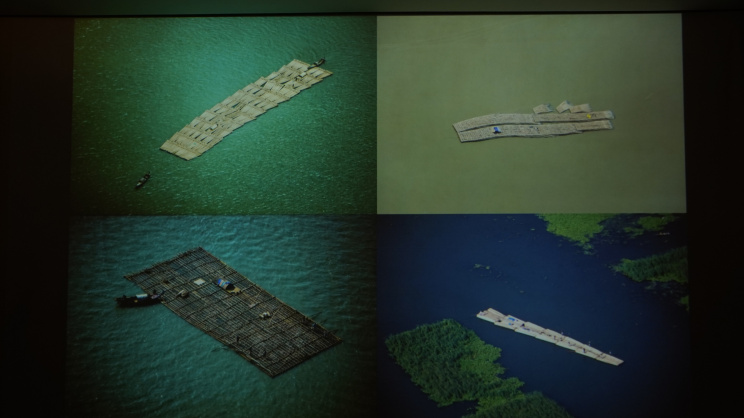
The first half consisted of pictures of rivers, salt cultivation, the making of the 300 feet road, and the Sundarbans. Sarker said, “Aerial photography is challenging.” Sarker spoke not only of aircraft and altitude, but of perspective—how distance can reveal the bigger picture, and how the sky, vast as it is, holds deeply personal stories. His journey, spanning decades, has evolved from documenting aviation to exploring street life, culture, and identity. Each frame, he suggested, is less about what is seen and more about what is felt.
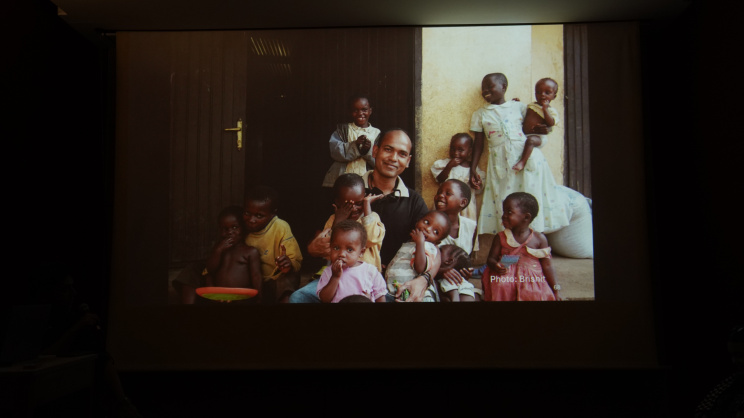
While the first half of the discussion showed the audience a collection of pictures that captured the many attractions as well as negative aspects of Bangladesh, the second half was more personal. In these pictures, he visited an orphanage. Sarker talked about his experience with the kids, talking in an emotional tone about a specific picture where a baby is holding one finger of an adult. He shared how the baby somehow uttered the word ‘baba’ as he held him and he was at a loss for words. He talked about how he forgot that he was a photographer for a moment and stepped into the role of a father. After that, he visited them often as the kids waited for a father they never had.
The audience listened intently—some leaning forward, others lost in thought—absorbing the pictures as if they were there in flesh. What made the discussion even better is how the audiences also participated in highlighting the concerns of health hazards in certain parts of the country. Some questioned how a specific picture was taken, from what distance and what was the reason behind it. It was in these exchanges that the adda truly came alive: a space where curiosity met experience.
Abir Abdullah, guiding the session with jokes and insight, anchored the discussion in storytelling—reminding the audience that photography, at its core, is about bearing witness. His presence ensured that the conversation remained grounded, accessible, and deeply engaging.
By the end of the evening, the room felt fuller with ideas, inspiration, and a renewed appreciation for the art of seeing.
In a city constantly in motion, “Photo Adda” offered a moment to look closer, think deeper, and remember that behind every photograph lies a story waiting to be told.
 For all latest news, follow The Daily Star's Google News channel.
Comments