


Casting, controversy and cultural memory in the age of adaptations

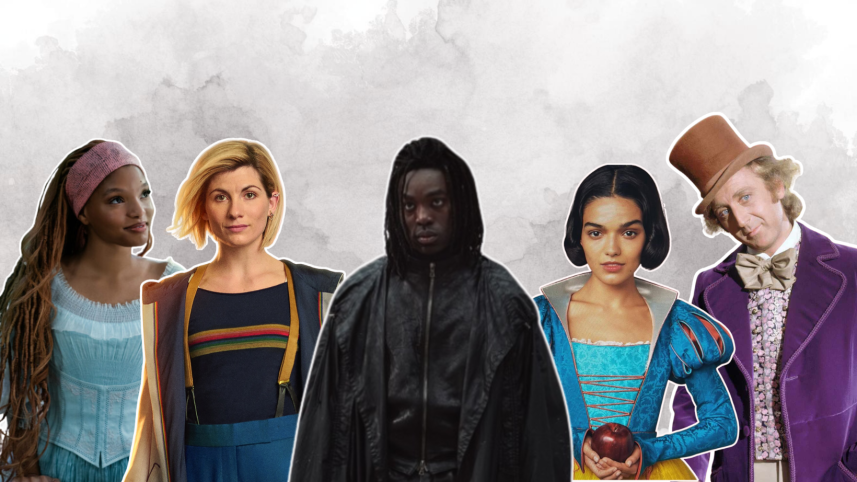
The announcement of HBO’s upcoming "Harry Potter" has reopened a familiar fault line in popular culture. Casting decisions, particularly a Black actor as Severus Snape and renewed interpretations of Hermione Granger, have prompted a wave of intense reactions. Some of that response reflects attachment to earlier portrayals. A visible portion, however, reveals something more uncomfortable: how quickly aesthetic preference can blur into racial bias when long-held images are challenged.
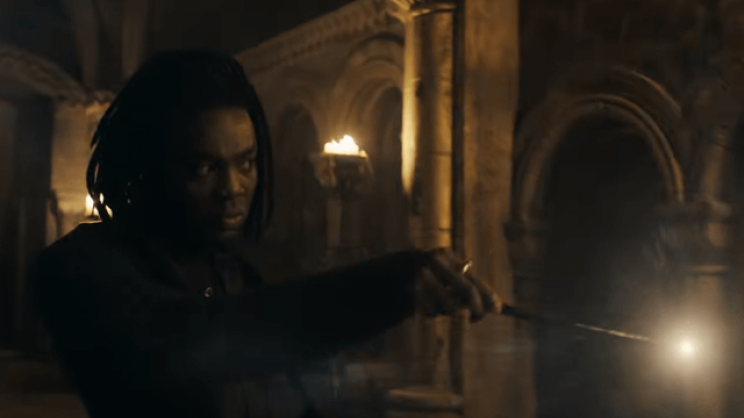
Casting debates rarely begin with neutrality. By the time a new adaptation appears, characters already exist in the public imagination as fully formed visual identities. The original "Harry Potter and the Philosopher’s Stone" established faces that have circulated for over two decades, reinforced through sequels, merchandise, and constant replay. Over time, these faces ceased to be interpretations and became reference points. For an entire generation, they defined what these characters would look like. This is exactly what makes the current reaction so predictable. The new series does not only adapt a book; it attempts to reinterpret an already fixed visual canon. Audiences are not comparing casting choices to text alone; they are comparing them to a reinforced image. A reinterpretation, therefore, does not enter a blank space; it encounters a fixed image that feels familiar, even correct. That sense of correctness is where the reaction becomes revealing. When a casting choice diverges along racial lines, the response often shifts from preference to judgment. The language used appears neutral on the surface, but it frequently rests on an unstated assumption: that the default image of a character is white unless explicitly stated otherwise. This assumption persists even in cases where the original text leaves room for interpretation.

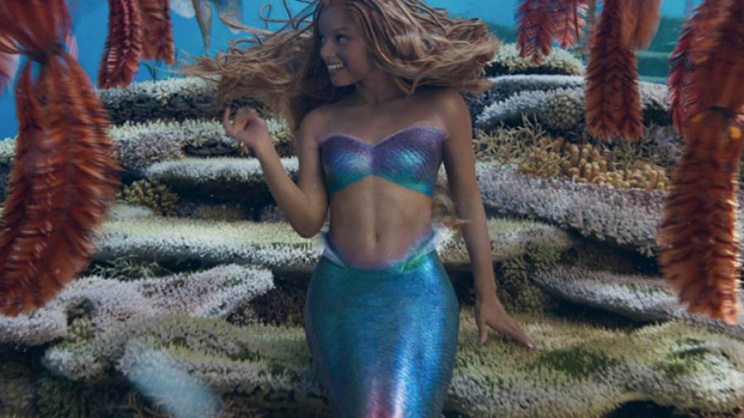
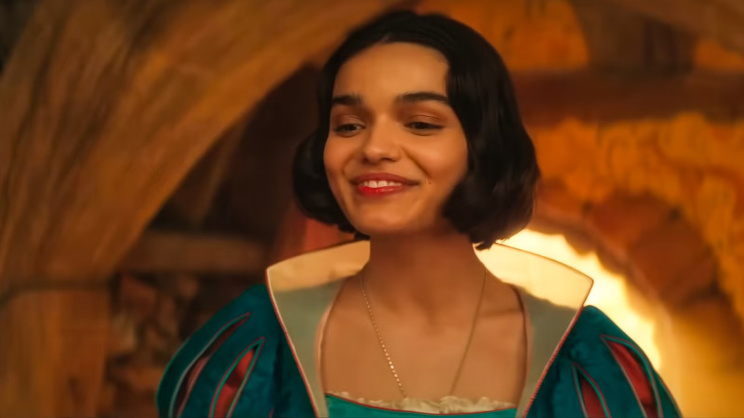
Children’s literature adaptations often produce even sharper reactions, largely because their visual identities are reinforced through illustration and merchandising. Disney’s "The Little Mermaid" became a focal point when Halle Bailey was cast as Ariel. The reaction was immediate and global, framed by many as a question of faithfulness. Yet Ariel’s defining traits in the original fairy tale are narrative rather than racial; the insistence on a specific look emerged largely from decades of animated standardisation. What appeared as fidelity to source material was, in practice, fidelity to a corporate visual template. The same pattern is visible in the ongoing discourse around Disney’s live-action reimagining of "Snow White and the Seven Dwarfs". Casting Rachel Zegler prompted immediate debate, often framed around fidelity to the original description. Yet Snow White, as popularly understood, owes far more to Disney’s 1937 animation than to the Grimm fairy tale itself. The insistence on a singular visual identity reflects how deeply that animated version has been embedded across generations. What appears as loyalty to the source material is, in effect, loyalty to a reproduced image; one that has been circulated so widely that it feels definitive.
In some cases, the reaction is shaped less by books than by prior screen versions. Tim Burton’s "Charlie and the Chocolate Factory" reintroduced Willy Wonka to audiences who had already internalised Gene Wilder’s portrayal in "Willy Wonka & the Chocolate Factory". Despite both films drawing from the same Roald Dahl text, the earlier performance had become definitive. A similar dynamic surfaced around "Aladdin", where casting debates centered on who could authentically represent a fictionalised Middle Eastern setting. In this case, the reaction moved in multiple directions as concerns about cultural accuracy intersected with expectations shaped by animation. The result illustrated how audiences draw from layered references, often without distinguishing between them.
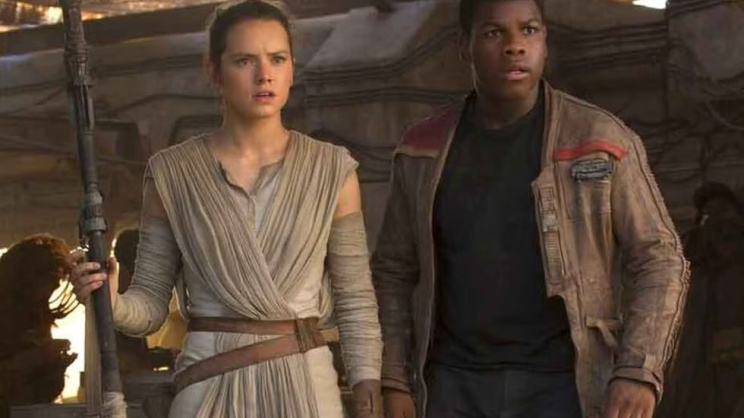
Long-running franchises illustrate how this process compounds over time. In "Doctor Who", each regeneration of the Doctor brings a new face to a long-standing role. While change is built into the narrative, the casting of Jodie Whittaker as the first female Doctor triggered a particularly strong reaction. The response revealed how expectations around identity, gender as well as race, can become embedded in a character over time, even when the text allows for transformation. All these cases point to a broader pattern: audiences often treat visual familiarity as authenticity. Once a character has been widely represented in a particular way, that representation begins to feel definitive. Deviations are then interpreted as inaccuracies rather than alternatives. When those deviations involve race, the reaction frequently exposes underlying biases that might otherwise remain unarticulated. "Star Wars: The Force Awakens" introduced John Boyega as a central character, prompting a wave of racist backlash that extended far beyond critique of performance or narrative. The intensity of the response highlighted how deeply ingrained certain visual expectations remain, particularly in properties historically centered on white protagonists. The issue was not simply that the image had changed; it was that the change disrupted an implicit hierarchy of who occupies central space in these stories.
This is not to say that every critique of casting is inherently prejudiced. Viewers form attachments to performances, aesthetics, and interpretations for a range of reasons. However, the speed and intensity with which racialised casting changes provoke backlash suggest that something deeper is at work. The discomfort often exceeds what would be expected from a simple mismatch of imagination. It reflects a broader cultural tendency to associate certain identities with central roles and others with the margins. Popular culture both reflects and reinforces these tendencies. For decades, major franchises have presented a narrow range of faces in leading roles, shaping audience expectations in the process. When new adaptations expand that range, they challenge the visual norms that audiences have internalised. The reaction, therefore, becomes a response not only to the casting itself, but to the shifting boundaries of representation.
Hence, the cycle of imagination, fixation, disruption, and eventual normalisation, has become a defining feature of modern adaptation culture. Each new version of a familiar story participates in an ongoing negotiation over what a character looks like and, by extension, who gets to decide. The reaction to the new "Harry Potter" fits squarely within this pattern. Casting choices, in this sense, function as a kind of cultural mirror. They do not simply determine who appears on screen; they expose how audiences see, interpret, and sometimes limit the possibilities of who belongs there.
 For all latest news, follow The Daily Star's Google News channel.
Comments